SHEHDS Stage Lighting Guide: Moving Heads, PAR, Beam & Laser Explained
A beginner-friendly breakdown of SHEHDS stage lighting: what moving heads, LED PARs, beam fixtures, lasers and DMX controllers actually do, and how to combine them for DJ, church, band and small-venue setups.
What is SHEHDS stage lighting?
SHEHDS stage lighting spans five core fixture families — moving heads, LED PARs, beam lights, lasers, and DMX512 controllers — and understanding what each one actually does is the fastest way to stop guessing and start building a rig that fits your venue. Whether you run a mobile DJ business, light a church sanctuary, tour with a band, or run sound and lights for a small club, the same building blocks apply; only the mix changes. This guide from Velextrics breaks down each category in plain language, then walks through how to choose and combine fixtures by venue type.
SHEHDS stage lighting = moving heads + LED PARs + beam + laser + DMX control, mixed to fit your venue
Most small-to-mid venues get the most mileage from combining one or two moving heads for featured effects with several LED PARs for ambient wash, then adding beam, laser, or wireless DMX control as the budget and room size grow.
What you'll learn
- What each SHEHDS fixture family (moving head, LED PAR, beam, laser, DMX controller) actually does
- The practical difference between moving heads and LED PARs, and why most rigs need both
- How to match fixture types to DJ/club, church, band, and small-venue setups
- Common beginner mistakes with DMX addressing and control
- Where to go next if you're ready to compare specific models
What is SHEHDS stage lighting?
SHEHDS stage lighting is a category of DMX512-controlled fixtures built for live events — clubs, churches, touring bands, and small venues — rather than home or architectural use. Instead of one all-purpose light, the category is split into families that each solve a different visual problem: motorized fixtures for movement and focus, flood fixtures for color wash, high-output beams for cutting through haze, lasers for animated patterns, and controllers that tie everything together on one lighting board or app.
The reason this matters before you buy anything is that no single fixture does all five jobs well. A moving head that produces a sharp, narrow beam is not built to flood a stage with soft color, and a wide-wash LED PAR cannot punch a beam through haze across a large room. Venues that look professional almost always combine two or three of these families rather than relying on one.
Every SHEHDS fixture family below is DMX512-compatible, meaning it can be run from the same lighting console or app once addressed correctly — the categories differ in the light they produce, not the protocol that drives them.
The core SHEHDS fixture families
These five categories cover almost every lighting need a DJ, church, band, or small venue will run into. Read them in order — moving heads and LED PARs are the two most common starting points, and the rest layer on as your setup grows.
Moving head lights
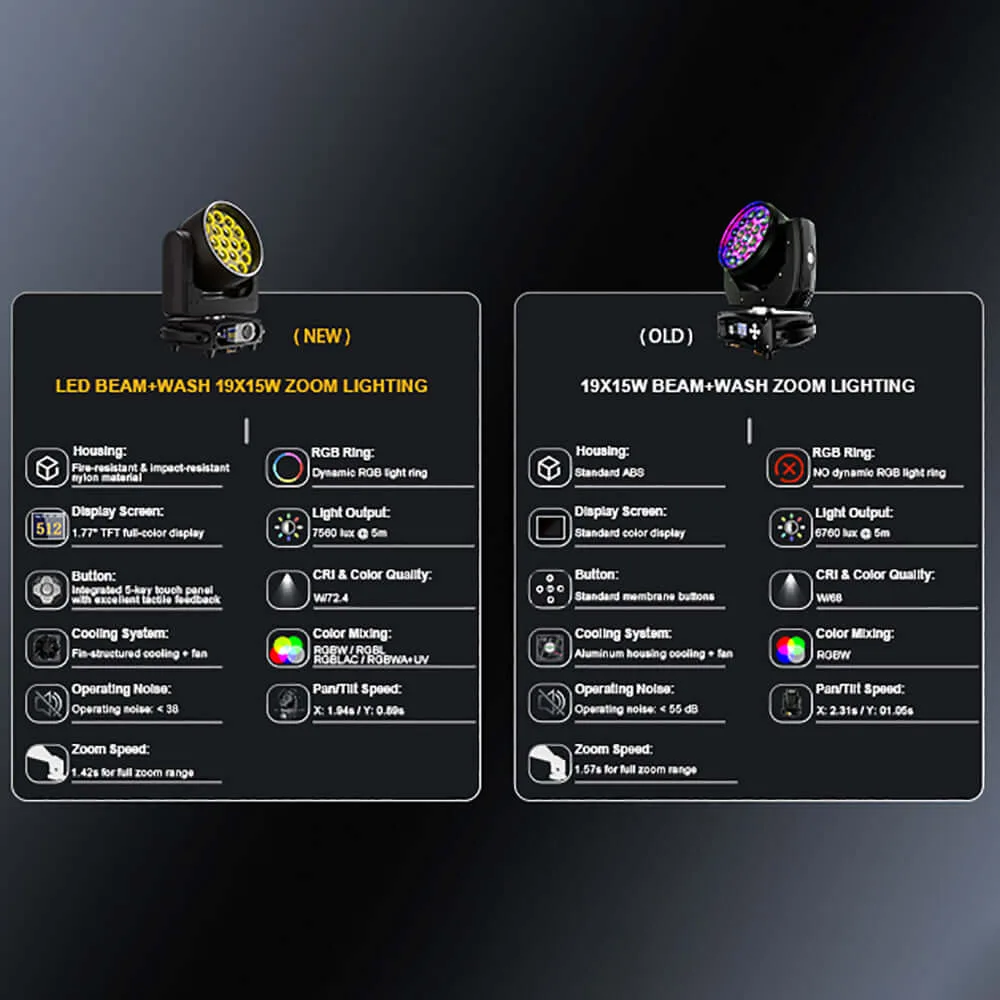
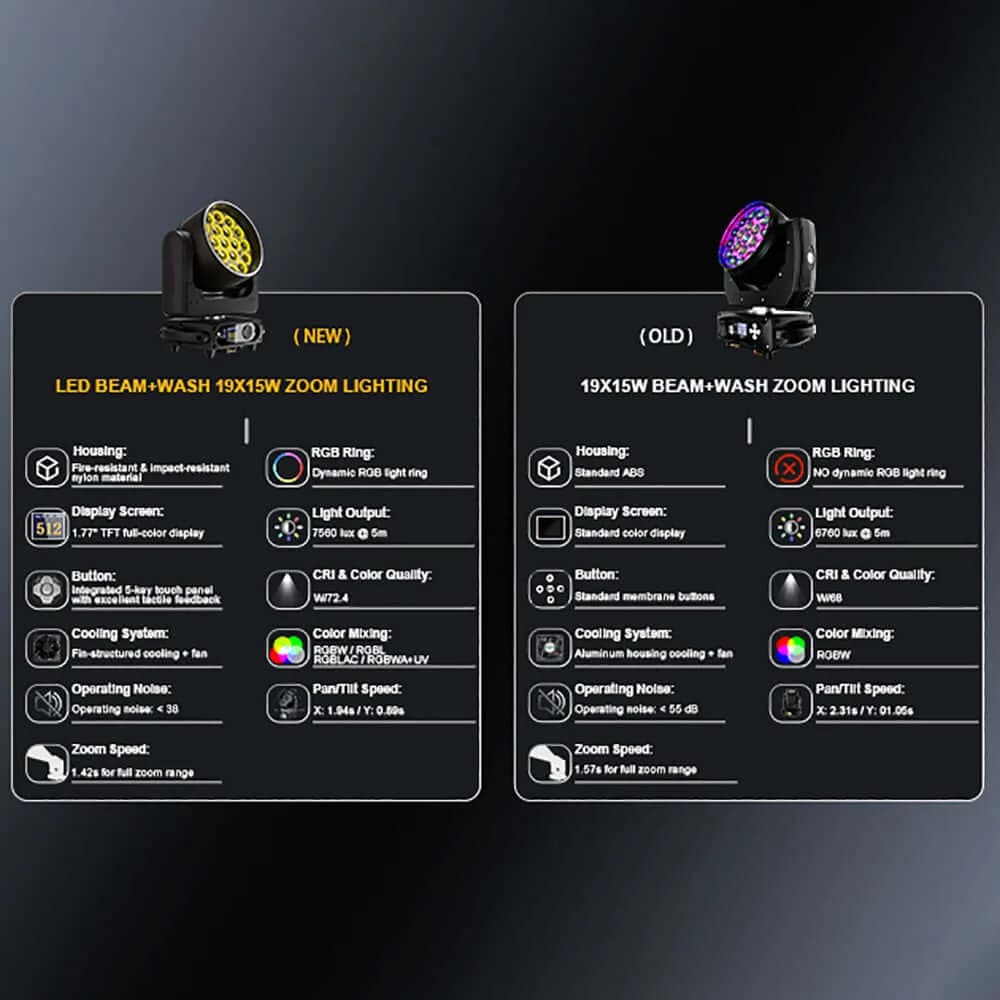
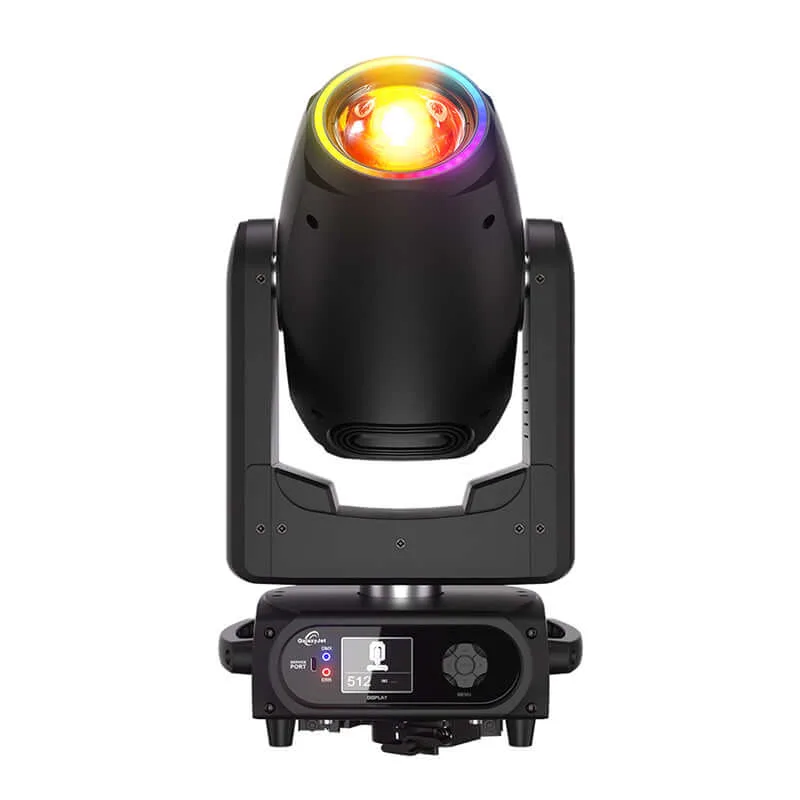
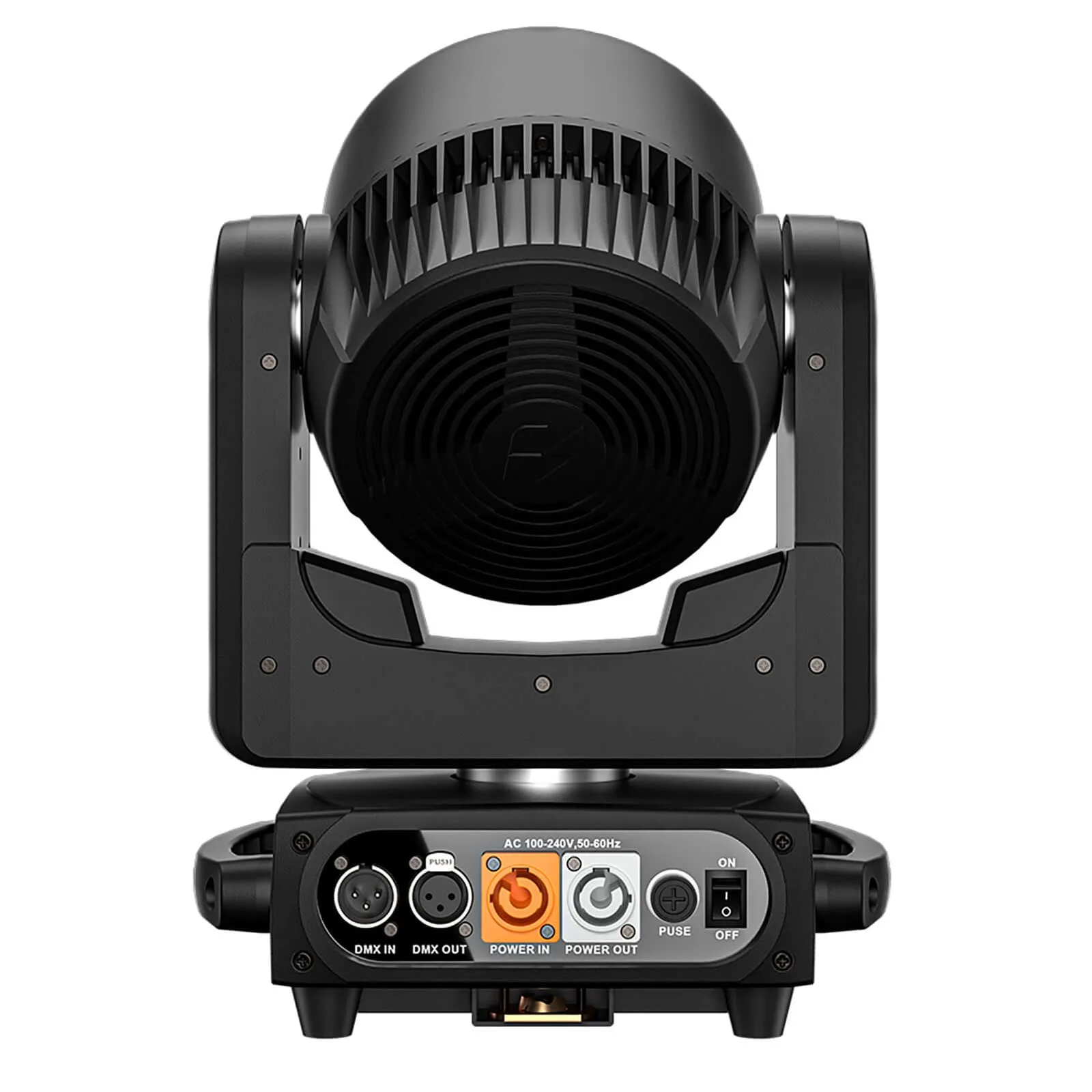
Moving head lights project a narrow, focused beam and use a motorized head to pan, tilt, and refocus in real time, often adding gobo patterns or prism effects. SHEHDS offers moving heads from an entry-level 19x15W LED unit up to professional 275W 10R beam fixtures, with configurations split into beam-only, wash-only, and 3-in-1 beam/wash/gobo models. This narrow, dynamic beam makes moving heads the best choice for dramatic spotlighting and featured effects on larger stages, though they run hotter and cost more per fixture than a comparable LED PAR. Most venues use one or two moving heads to highlight a DJ booth, a lead singer, or a focal point, rather than covering an entire room with them.
LED PAR lights
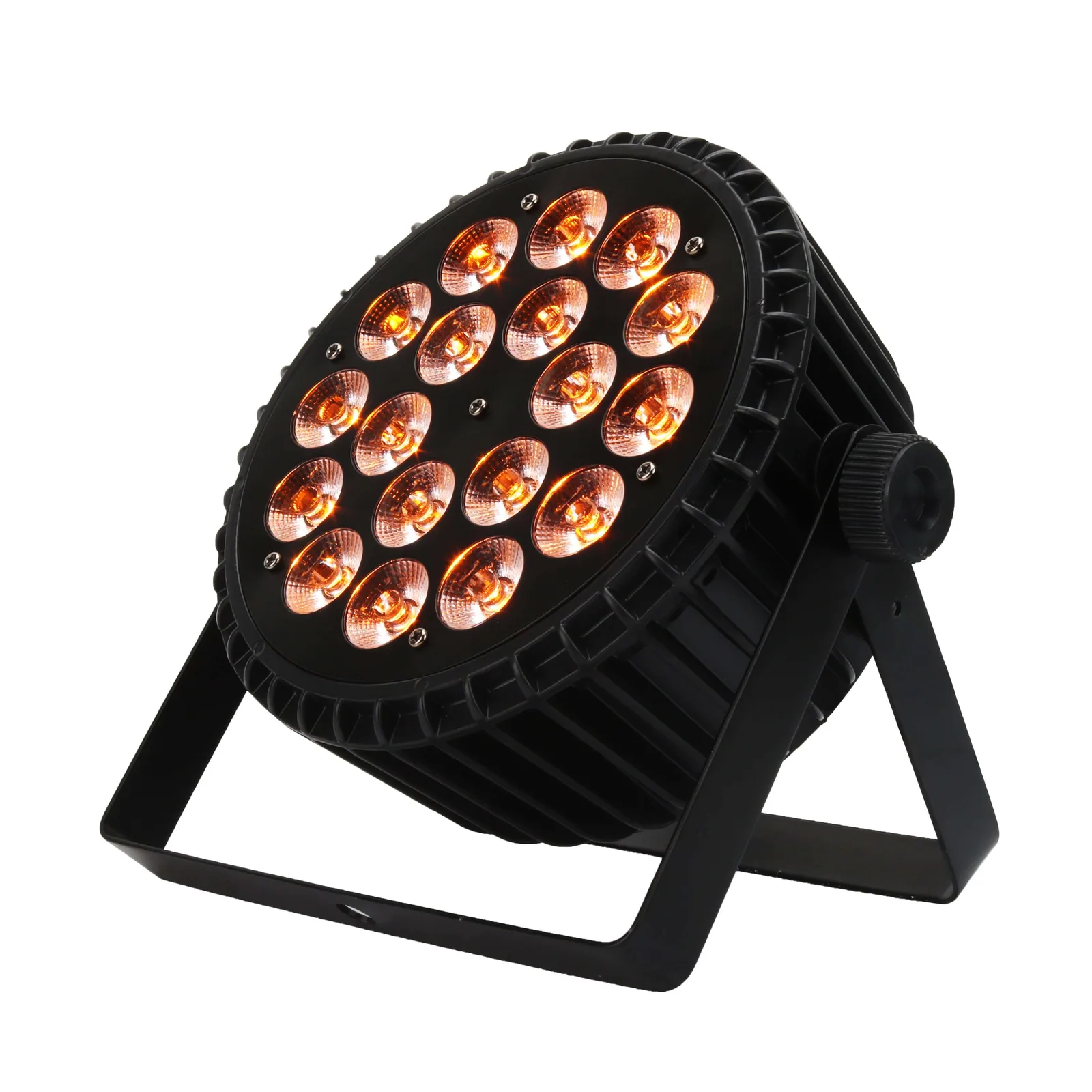
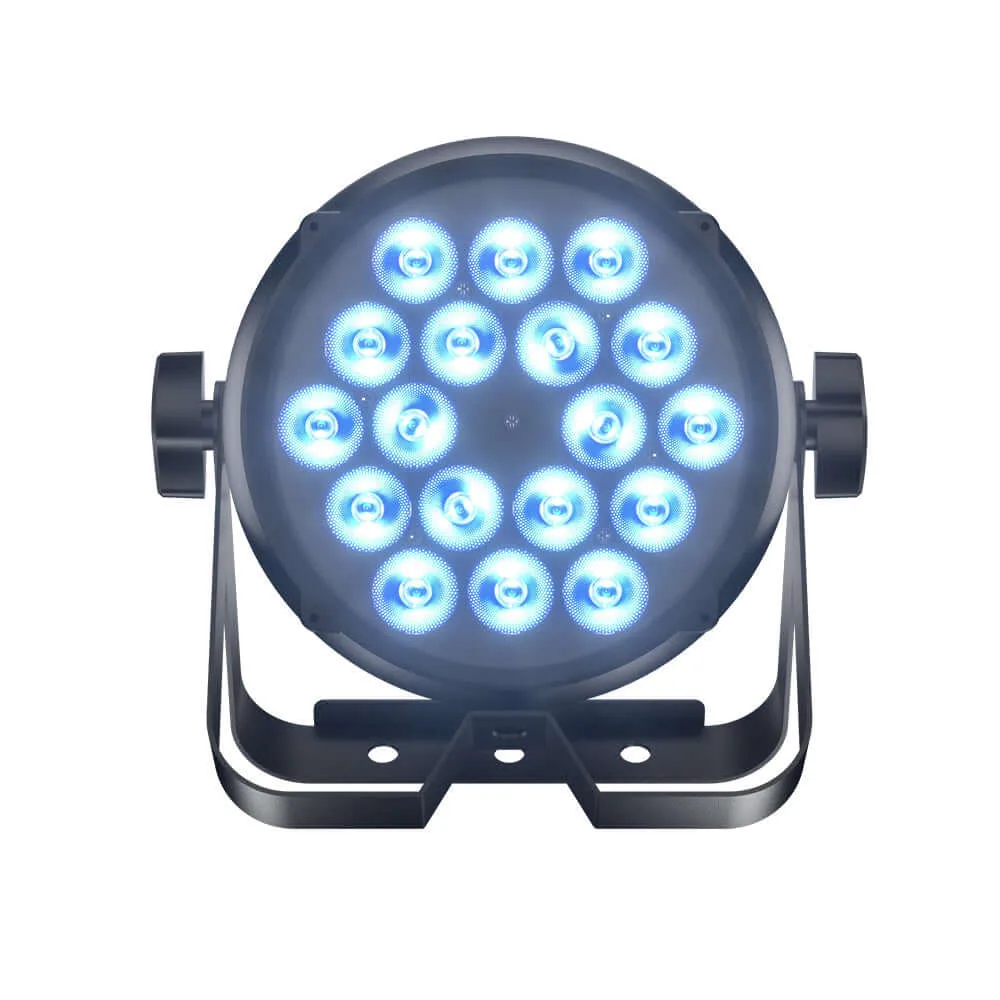
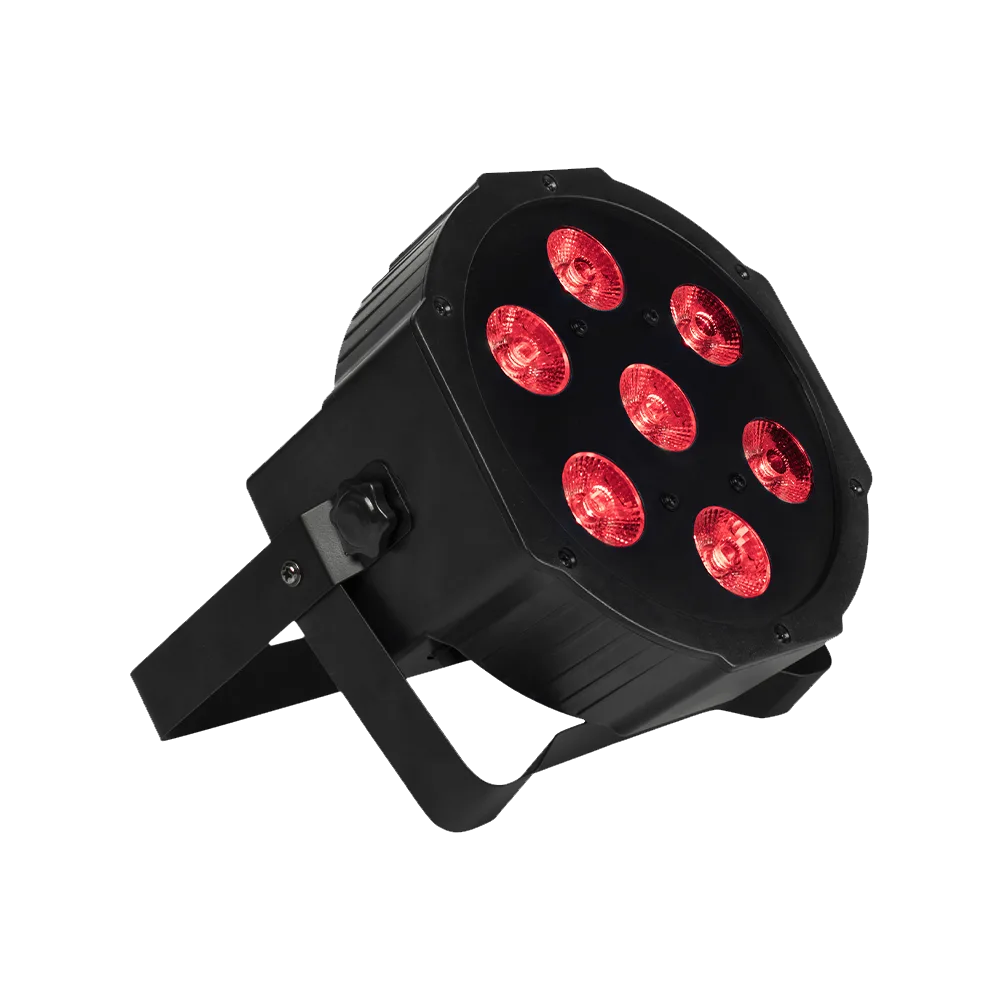
SHEHDS LED PAR fixtures are flat aluminum-alloy par cans with 6-in-1 color mixing (red, green, blue, white, amber, ultraviolet), all DMX512-compatible with silent fan-cooled operation. A waterproof CORALPAR variant adds an IP65 rating for outdoor use, and mini versions suit tighter venues where a full-size par can would overwhelm the space. Unlike moving heads, LED PARs are stationary and project a broad, diffuse wash rather than a focused beam — which is exactly what makes them better suited to ambient color and general room wash. They're also more affordable and cooler-running than moving heads, which is why most rigs use several LED PARs as the base layer of color before adding anything more dramatic.
Beam lights
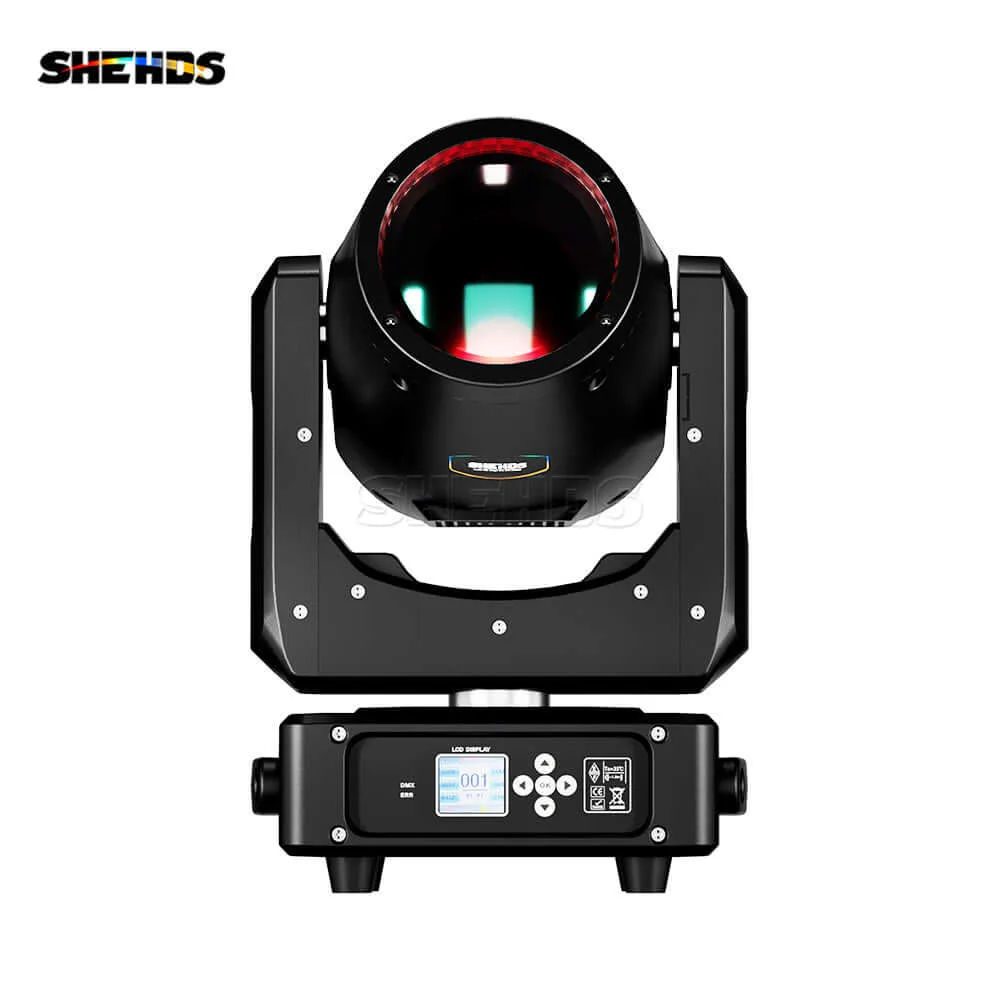
Beam lights are a specialized subset of moving heads built around one job: producing a tight, high-intensity shaft of light that stays visible even across a large room or through haze, rather than illuminating a surface. SHEHDS' higher-power moving head line includes 275W 10R beam-focused fixtures, positioned above the general-purpose 19x15W entry models for venues that need the beam to reach further or cut through more haze. Because the light column is so narrow, beam fixtures are typically used in groups — arrays of four, six, or eight — to build sweeping visual patterns rather than as a single stand-alone light. They pair naturally with a haze machine, since the beam itself is nearly invisible in clean air.
Laser lights
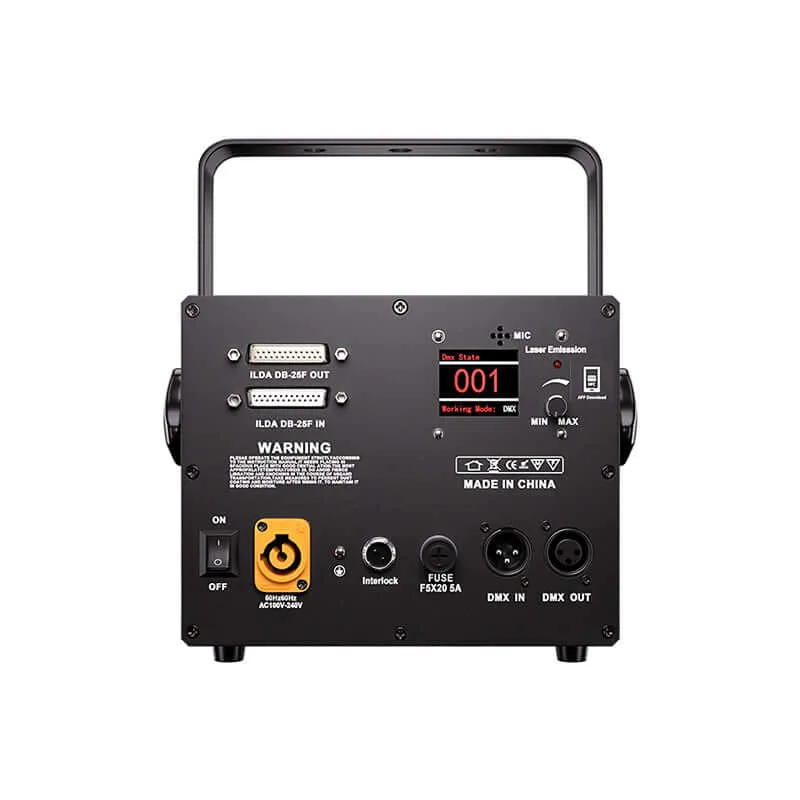
SHEHDS' laser line ranges from compact 3W RGB scanners up to high-power 12W animation lasers, all supporting app-based wireless control and professional protocols including ILDA, DMX512, and RJ45. Some models add an IP65 waterproof rating or rechargeable battery power, and the Constellaser sub-line focuses on semiconductor lasers built for pattern animation in clubs and smaller stages. Lasers are the one category that draws attention on their own — a single unit can fill a room with moving beam patterns — but they're also the most regulated: venue size, ceiling height, and local safety rules for audience-scanning lasers should be checked before buying, since higher-power units are not appropriate for every room.
DMX512 controllers
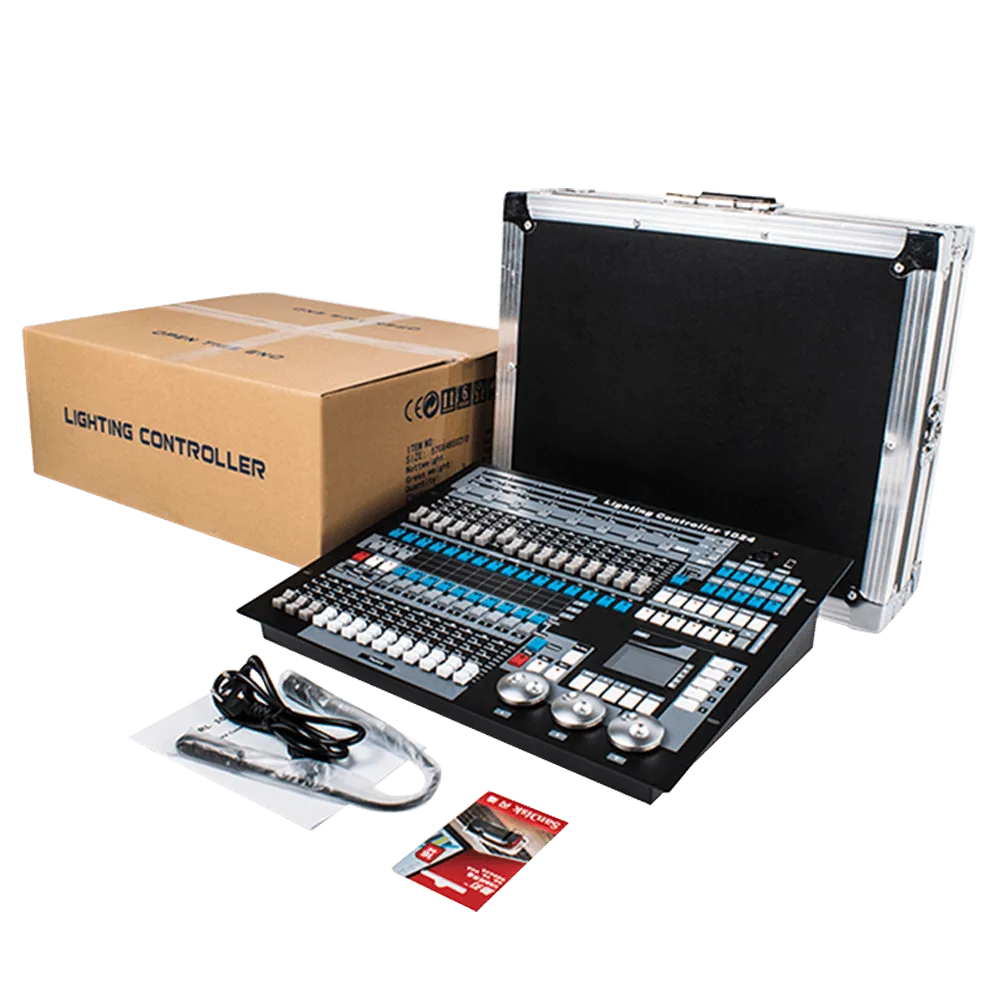
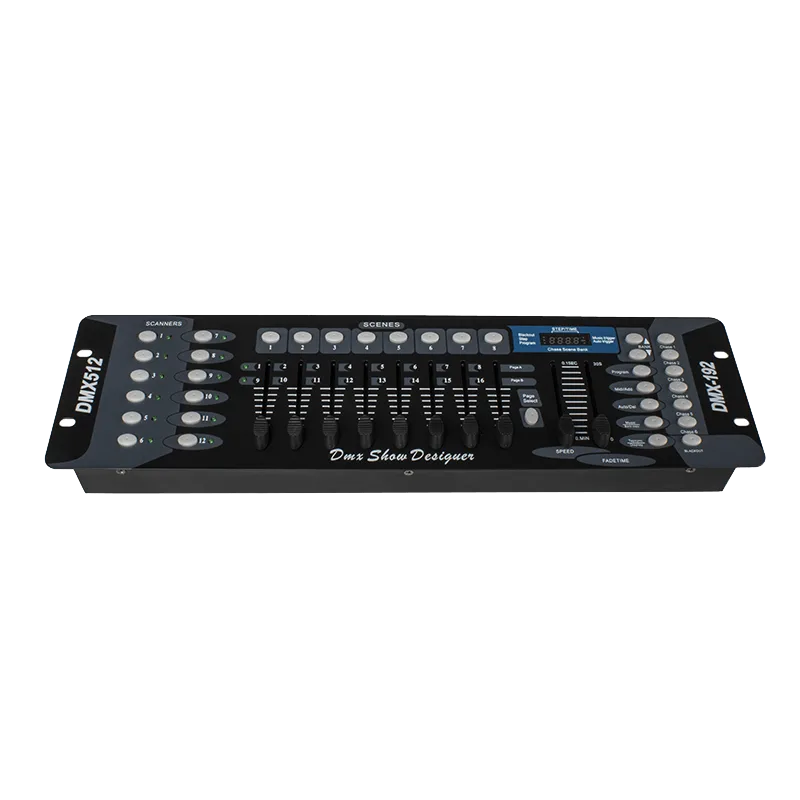
A DMX512 controller is what ties every fixture above into one coordinated show instead of a pile of separately-operated lights. SHEHDS' controller range spans a compact 192-channel console for small setups, mid-range 384-channel and 240-channel consoles, and a professional 1024-channel console for larger installations, plus wireless DMX512 transmitter/receiver units on the 2.4G frequency with up to 300m range for venues that don't want to run control cable across the room. USB-to-DMX adapters let you run fixtures directly from a laptop, which is the simplest entry point for a solo DJ or small church team. The bigger the rig, the more channels each fixture needs — a 3-in-1 moving head alone can use 10-15 channels — so controller size should scale with fixture count, not just budget.
How to choose stage lighting by venue
Different event types lean on different fixture combinations: DJs and clubs favor moving heads and beams for dynamic visual effects; churches and houses of worship lean on LED PARs and wash fixtures for ambient area lighting and speaker highlighting; rock and pop bands combine moving heads for spotlighting performers with LED PARs for stage wash; small venues use compact moving heads and mini LED PARs to manage heat and space; and corporate events favor wireless DMX-controlled fixtures for last-minute repositioning. The table below summarizes the fit.
| Fixture type | Best for | Key trait |
|---|---|---|
| Moving heads | DJ booths, band spotlighting, featured effects | Narrow, motorized, focused beam |
| LED PAR | Churches, stage wash, ambient color | Broad, diffuse, stationary wash |
| Beam | Large rooms, haze-heavy clubs | Ultra-narrow high-intensity shaft |
| Laser | Clubs, small stages, standalone effects | Animated projected patterns |
| DMX controller | Any setup with 2+ fixtures | Coordinates all fixtures on one show |
A practical starting rig for most small venues: two to four LED PARs for base wash, one or two moving heads for featured effects, and a compact DMX controller or USB-to-DMX adapter to run the show. Clubs and touring bands typically add beam fixtures and lasers once the base wash and moving heads are in place; churches often stop at LED PAR wash plus a small controller, since dramatic movement is rarely the goal for worship lighting.
Risks, myths & common setup mistakes
The most common beginner mistake is buying a controller sized for today's rig instead of next year's. A 192-channel console fills up fast once you add a second or third moving head, since each 3-in-1 fixture can use 10-15 channels on its own — undersizing the controller is the single most common reason a new lighting rig feels limited within months.
A second myth is that lasers replace moving heads or LED PARs. They don't — lasers add animated pattern effects but provide no usable wash or spot light, so a laser-only rig leaves the stage itself dark. Lasers work best as an accent layer over an existing moving head and LED PAR foundation, not as a replacement for either.
Cabling is the third common trip-up: running long DMX cable runs across a venue floor is both a trip hazard and a setup headache. Wireless DMX512 transmitter/receiver units on the 2.4G band with up to 300m range solve this for most small-to-mid venues without sacrificing reliable control, and they're worth budgeting for from the start rather than adding later.
Alternatives & related approaches
If your venue is small enough that a full five-category rig is overkill, a simpler approach is to start with LED PARs alone for wash and add a single moving head later — our Budget DJ Lighting Setup Guide walks through building a rig on a tighter budget without skipping the fixtures that matter most. If you've already decided moving heads and LED PARs are your two starting fixtures and want a side-by-side breakdown of when to pick one over the other, our moving head vs LED PAR guide covers that decision in detail.
For readers who want to see how a real SHEHDS setup performs once it's assembled, our SHEHDS Review 2026 covers hands-on impressions of specific fixtures, and our Best DJ Lights of 2026 roundup compares SHEHDS against other budget-friendly stage lighting brands if you're still weighing options beyond one manufacturer.
Getting started with SHEHDS stage lighting
Once you know which fixture families fit your venue, a few buying-stage details are worth checking before you commit. SHEHDS fixtures carry a 2-year warranty with after-sales support, and are certified under CE, RoHS, FCC, UL, UKCA, CSA, EAC, and PSE — a certification spread wide enough to cover legal sale and operation across North America, Europe, and Asia, which matters if you're touring internationally or importing gear for a venue outside the US.
SHEHDS also ships from 20+ regional warehouses, which typically cuts delivery to 3-7 days versus the 2-3 week standard for international freight, and avoids the 10-20% shipping surcharge that has historically added to venue lighting system costs — with US warehouses in Texas, California, and New York, and European facilities across France, Spain, Germany, Czech Republic, the UK, and Russia. The lineup spans entry-level LED PARs through professional-grade beam and laser fixtures, which keeps stage lighting accessible for small venues and DJs while still offering headroom for touring-grade setups — so it's worth comparing a few tiers rather than assuming you need the top-end model on your first purchase.
If you want to start browsing what's available directly from the manufacturer, SHEHDS' own shop is the source for current fixture lineups and specs.
Where to go next
Most readers land on a mix of LED PARs for wash plus one or two moving heads for featured effects, then add beam, laser, or wireless DMX control as the room and budget grow. If you're ready to compare specific SHEHDS models rather than categories, our SHEHDS Review 2026 and Best DJ Lights of 2026 guides are the natural next stop.
Browse SHEHDS stage lightingThis guide is for general educational purposes and reflects manufacturer specifications and category research as of the last reviewed date above. Fixture specs, certifications, and availability can change — confirm current details on the vendor's site before purchasing. Local laws on laser use in public venues vary; check regulations for your region before operating a laser fixture.
Recommended for you
 RAWM Gaming Review 2026: Best 8K Wireless Mice Guide
 Nordkapp Diesel Heater Buying Guide 2026: Best kW & Control
 Genki Gaming Accessories: 7 Must-Know Picks (2026 Guide)
 Moving Head vs LED PAR: Best SHEHDS Stage Light Guide 2026
 Aurzen Projector Guide 2026: Best Model for Every Space
 iBOLT Mounts Guide 2026: Reliable Modular System Explained