Moving Head vs LED PAR: Which SHEHDS Light Do You Actually Need?
Moving head vs LED PAR: which SHEHDS fixture do you actually need? We break down beam shape, movement, color mixing, and coverage so you can match the right light to your venue.
How moving heads and LED PARs actually differ
If you are comparing moving head vs LED PAR fixtures for your next stage build, the short answer is: they solve different problems. Moving heads deliver a narrow, motorized beam for dynamic effects and feature lighting, while LED PARs throw a broad, static wash for ambient color across the whole stage.1 Most working rigs use both — the question is which one to buy first, and how many of each. This guide breaks down the real differences in beam shape, movement, color mixing, and coverage so you can match a SHEHDS fixture to your actual venue instead of guessing.
Need movement and a punchy beam? Go moving head. Need broad, even color wash across the stage? Go LED PAR. Most venues eventually need both.
If you are starting from zero, LED PARs are the cheaper, cooler-running way to get a stage looking finished. Add a moving head once you need dynamic movement on a performer, logo, or focal point.
Browse SHEHDS lightingKey takeaways
- Moving heads project a narrow, focused beam with motorized pan/tilt and gobo/prism effects; LED PARs project a broad, diffuse wash.
- SHEHDS LED PARs use 6-in-1 RGBWA+UV color mixing and run silent, fan-cooled operation.
- SHEHDS moving heads span entry-level 19x15W units to professional 275W 10R beam fixtures, in beam-only, wash-only, and 3-in-1 beam/wash/gobo configurations.
- Both fixture types run on standard DMX512, so they mix on one console without protocol issues.
- A typical stage rig pairs LED PARs for base color wash with moving heads for featured performers or objects.
How moving heads and LED PARs actually differ
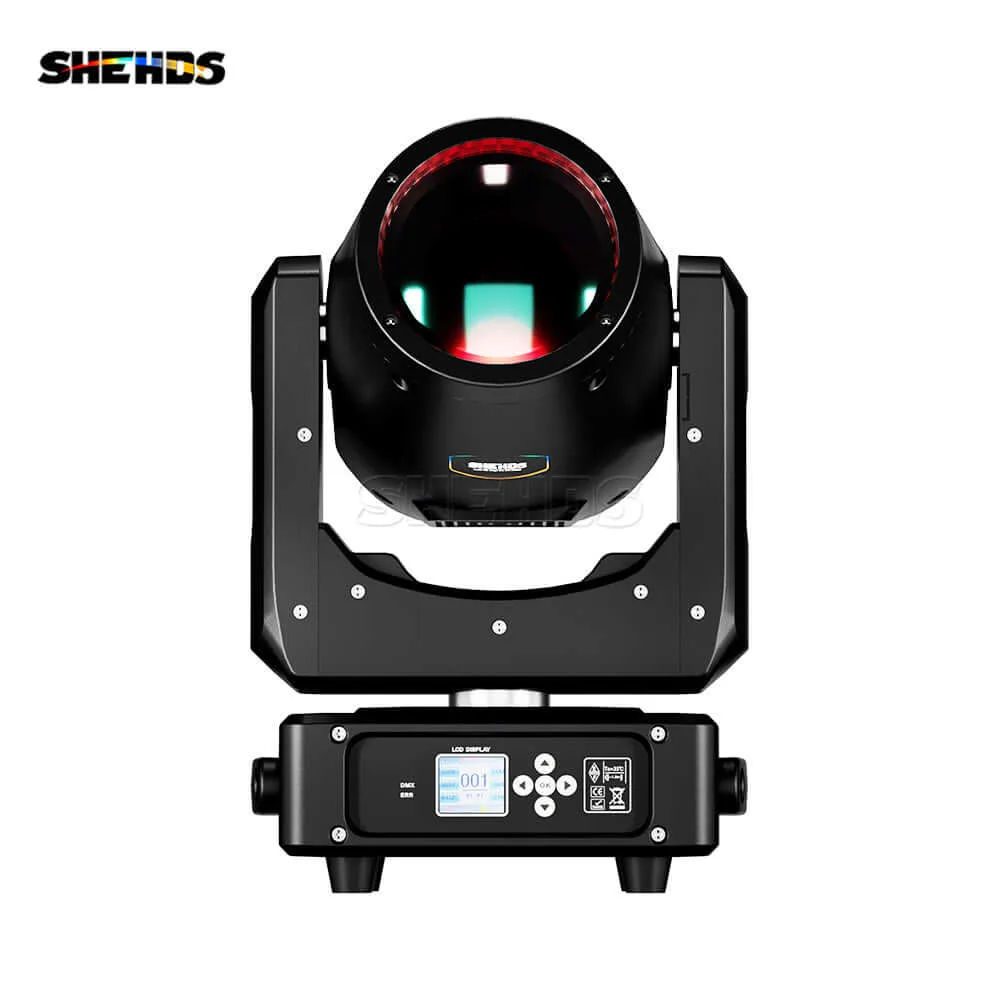
The core moving head vs LED PAR distinction comes down to beam shape and movement. A moving head projects a narrow, focused beam — SHEHDS models range from 180W up to 275W+ — with motorized pan and tilt, adjustable focus, and gobo or prism effects layered on top.Source An LED PAR does the opposite job: it throws a broad, diffuse field of light that is built for color mixing and general wash rather than precision effects.Source Neither is a better fixture in the abstract — they are built for different jobs on the same stage.
Cost and heat follow the same split. LED PARs are stationary, more affordable, compact, and run cooler than moving heads, which carry motors, more electronics, and higher wattage draw.Source That is why most budget-conscious venues buy LED PARs first and add moving heads once the base wash is covered.
LED PAR: what it is and where it wins
An LED PAR is a stationary flood fixture built around fixed LEDs behind a lens, and the SHEHDS line uses 6-in-1 color mixing — red, green, blue, white, amber, and ultraviolet LEDs in every fixture — for a very wide color range from one unit.Source Every SHEHDS LED PAR is DMX512-compatible and uses silent, fan-cooled operation, which matters in quiet rooms like churches or intimate theaters where a noisy fan would be audible during a performance.Source
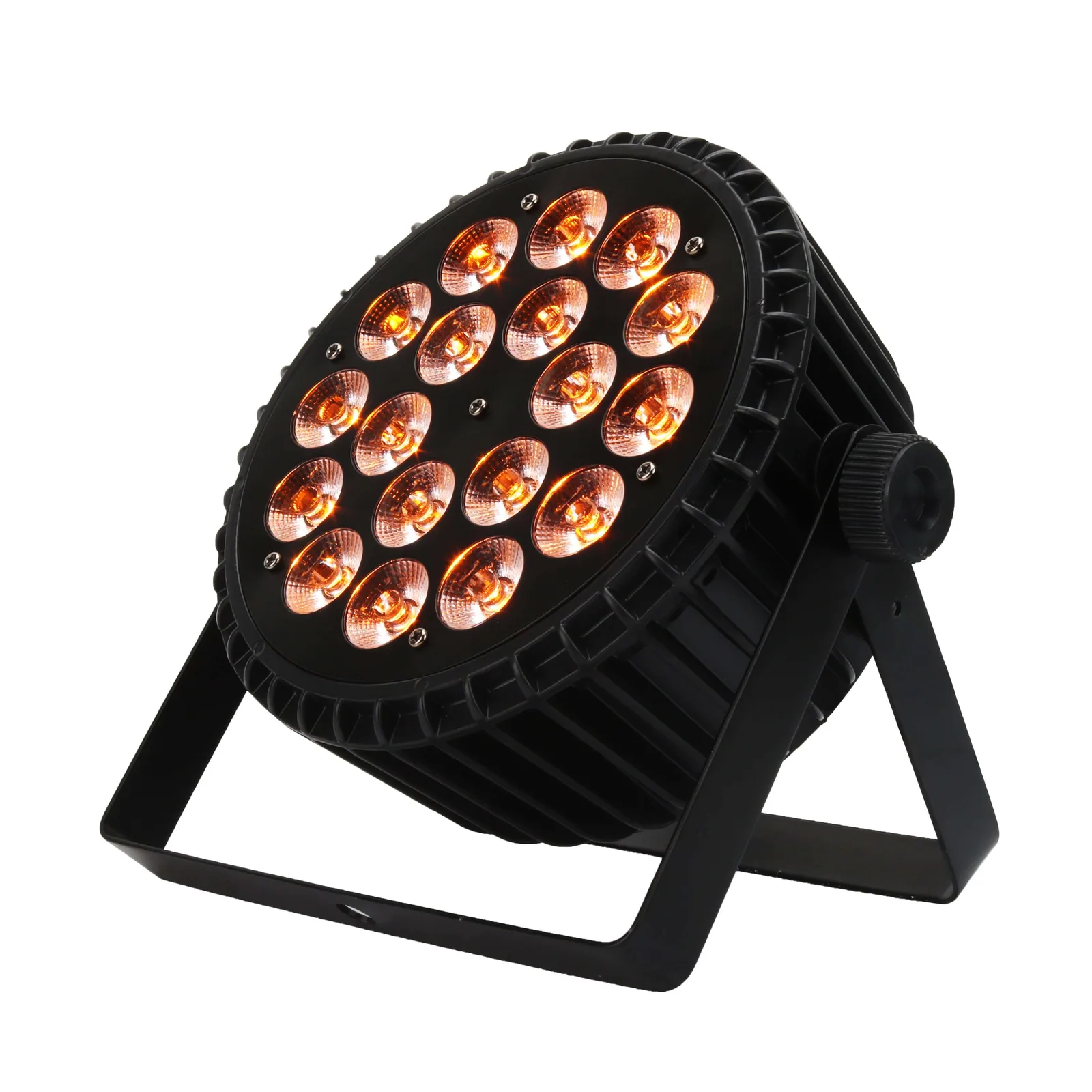
SHEHDS also sells format variants worth knowing about before you compare moving head vs LED PAR pricing: the CORALPAR waterproof line adds an IP65 rating for outdoor use, and mini 7x18W versions exist for small venues and tight spaces where a full-size PAR can't fit.Source If your venue is a coffee shop stage, a small church chancel, or an outdoor patio, these variants solve space and weather problems a standard PAR or a moving head can't.
Moving head: what it is and where it wins
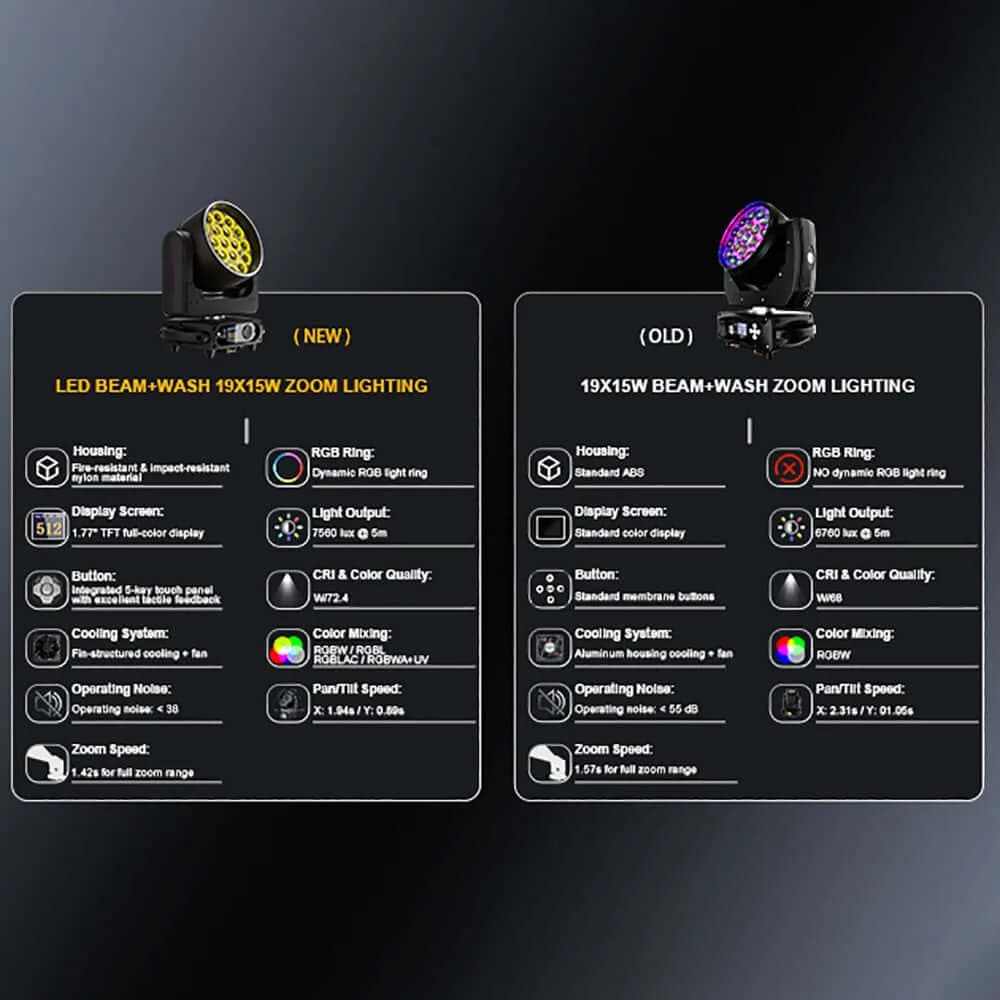
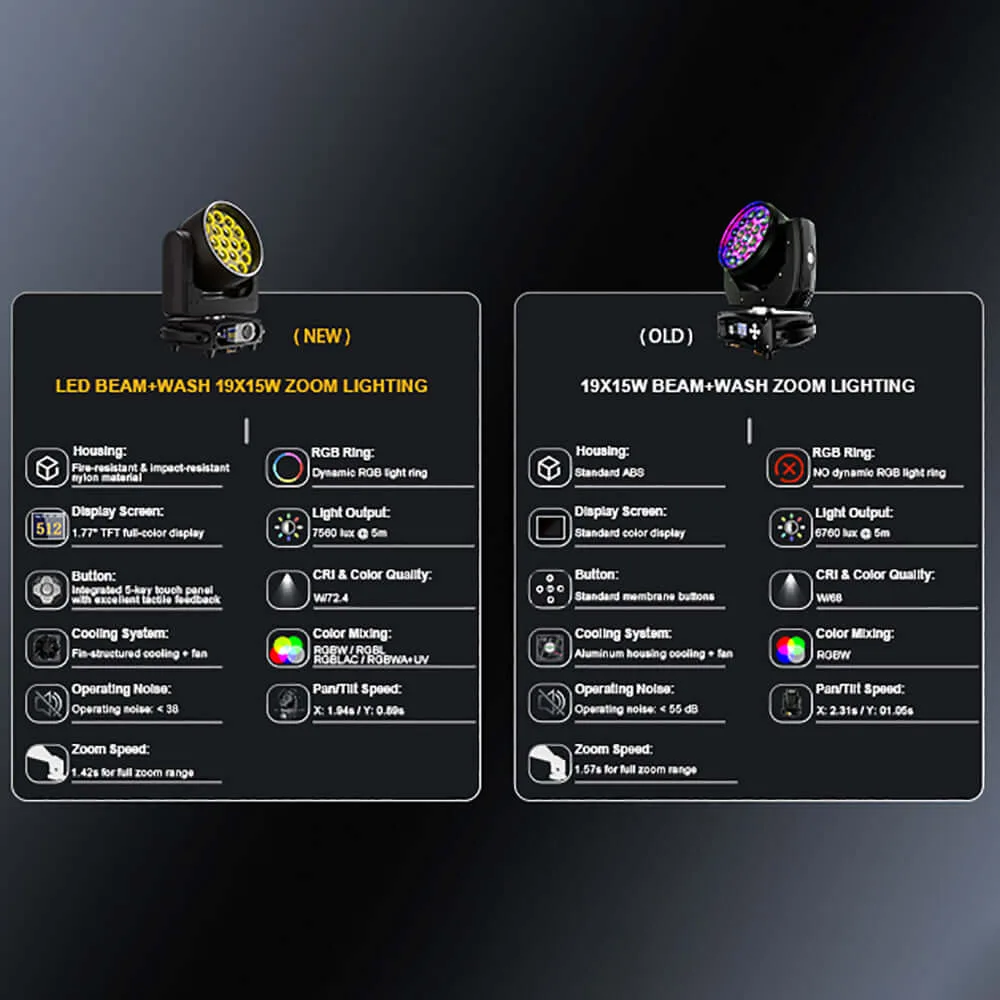
A moving head is a motorized fixture housed in a yoke that pans and tilts, and SHEHDS sells the format across a wide power range — from an entry-level 19x15W LED moving head up to a professional 275W 10R beam fixture.Source Configurations split into three families: beam-only (a tight, punchy shaft of light for aerial effects), wash-only (a softer, wider spread for body lighting), and 3-in-1 beam/wash/gobo units that combine all three functions in one head.Source
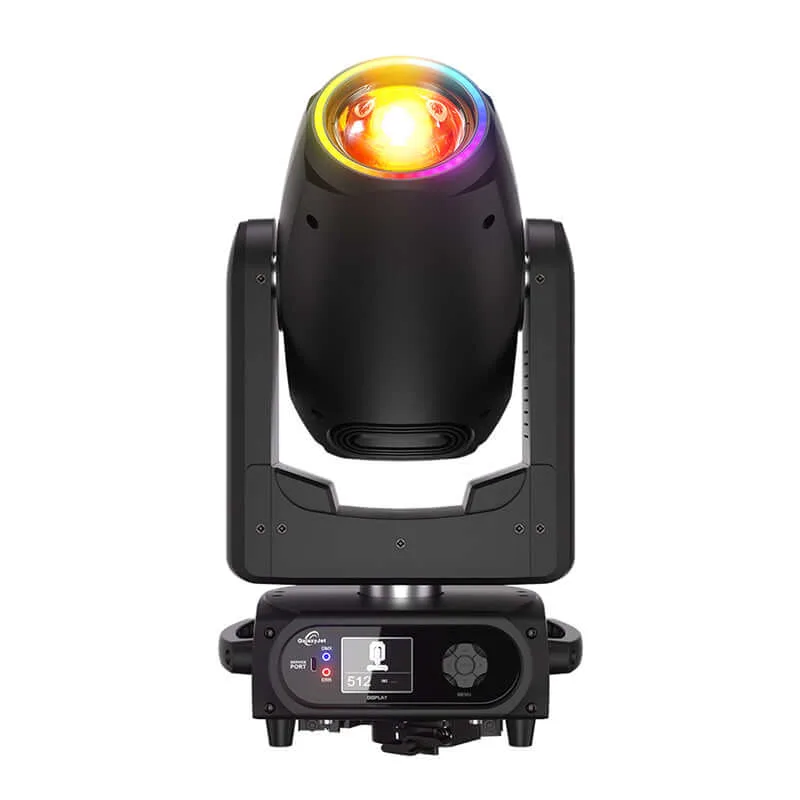
SHEHDS 3-in-1 Beam/Wash/Gobo Moving Head
Covers spotlighting, body wash, and gobo projection in one fixture — a practical starting point if you only want to buy one moving head for now.
Check current priceAll SHEHDS moving heads run silent and use standard DMX512 control, so pairing one with an existing LED PAR rig on the same console is straightforward — no separate control protocol to learn.Source
How to choose for your venue
The moving head vs LED PAR decision changes by venue type, and SHEHDS' product range is built across all of the categories below.Source
- DJs and clubs — moving heads and strobes for dynamic visual effects that track the music; add LED PARs for base color once the room needs ambient fill.
- Churches and houses of worship — LED PARs and profile fixtures for ambient area lighting and speaker highlighting, where silent operation and steady wash matter more than movement.
- Rock/pop bands — moving heads to spotlight performers, combined with LED PARs for overall stage wash behind them.
- Small venues (coffee shops, small theaters, auditoriums) — compact moving heads and mini LED PARs to manage heat and space constraints in a tighter room.
- Corporate events and trade shows — wireless DMX-controlled fixtures of either type, so a stage can be repositioned last-minute without rewiring.
If you only recognize your venue in one row above, start there. Most rigs grow into the other fixture type within a season or two as the show gets more ambitious.
Moving head vs LED PAR: comparison table
| Factor | Moving Head | LED PAR |
|---|---|---|
| Beam type | Narrow, focused beam with gobo/prism effects | Broad, diffuse wash for color fill |
| Movement | Motorized pan, tilt, and focus | Stationary, fixed position |
| Color mixing | Varies by model; beam/wash/3-in-1 configs | 6-in-1 RGBWA+UV mixing on every SHEHDS unit |
| Power range | 19x15W entry up to 275W 10R beam | Mini 7x18W up to 18x18W standard |
| Noise / heat | Runs hotter; silent-rated but more moving parts | Cooler-running, silent fan-cooled |
| Weatherproofing | Indoor-focused standard line | CORALPAR IP65 variant for outdoor use |
| Control protocol | DMX512 | DMX512 |
| Best use | Feature spotlighting, dynamic effects | Ambient wash, general color fill |
How most rigs use both together
A typical stage setup does not pick one winner in the moving head vs LED PAR debate — it combines both: LED PARs handle ambient color across the whole stage, while moving heads pick out featured performers or objects with a brighter, more precise beam.Source This layered approach is why the use-case list above almost always names both fixture types for bands, clubs, and larger churches — the LED PARs do the steady work while the moving heads earn the audience's attention at the right moment.
If budget forces a sequencing decision, start with LED PARs to cover the whole stage in color, then add one or two moving heads once you know which spots on stage need the extra movement and punch. For a comprehensive look at the full range of stage lighting families, our SHEHDS stage lighting guide covers moving heads, LED PARs, beam lights, lasers, and DMX controllers by venue type.
DMX control basics for either fixture
Both moving heads and LED PARs run on standard DMX512, and SHEHDS sells control hardware across the range needed to run either — or both together on one rig. Options span a compact 192-channel controller, mid-range 384-channel and 240-channel consoles, and a professional 1024-channel console for larger installations.Source For venues that need to move fixtures without running cable, wireless DMX512 transmitter/receiver units support 2.4G frequency with up to 300m of range and rechargeable battery options — useful for corporate events and trade shows where the stage layout changes at the last minute.Source
Because both fixture types share one protocol, a single console can run a mixed rig of LED PARs and moving heads without any adapter or bridge — you assign each fixture its own DMX address and build the show from there.
Common mistakes when picking a fixture
- Buying only moving heads for a small room. A tight venue rarely needs the throw distance a moving head is built for; mini LED PARs cover a small stage with less heat and lower cost.
- Buying only LED PARs for a touring act. Wash alone can't create the dynamic, attention-grabbing effects a moving performer needs — that's a moving head's job.
- Ignoring weatherproofing outdoors. A standard indoor PAR or moving head is the wrong call for an exposed stage; the CORALPAR IP65 line exists specifically for that case.
- Underbuying DMX control channels. A rig that mixes several moving heads and LED PARs needs enough channels on the console; check the fixture's channel count against your console's total before you commit to a console size.
SHEHDS backs its stage lighting line with a 2-year warranty and international safety certifications — CE, RoHS, FCC, UL, UKCA, CSA, EAC, and PSE — covering North America, Europe, and Asia, so a fixture bought for one region's compliance rules typically clears others too.Source The brand also ships from over 20 local warehouses across the USA and Europe, including Texas, California, New York, France, Spain, Germany, and the UK, which shortens delivery times versus single-warehouse competitors.
Verdict: which SHEHDS light should you buy first?
If you are outfitting a stage from scratch, start with LED PARs for wash — they're the cheaper, cooler-running way to make a room look finished. Add a moving head once you need motorized movement, gobo effects, or a spotlight on a featured performer or object. Most working rigs, from house-of-worship stages to touring bands, end up running both on the same DMX console. Read our affiliate disclosure for how we select and link products.
Shop SHEHDS moving heads & LED PARsRelated reading: our in-depth SHEHDS review.
- SHEHDS Official Shop — fixture category comparison, shehds.com/shop
- SHEHDS Official Website — warehouse, shipping, and certification information, shehds.com
- SHEHDS DMX Controller Collection, shehds.com/collections/dmx-controller
This guide is for informational and buying-decision purposes only. Fixture specifications, availability, and configurations are subject to change by the manufacturer; confirm current specs and compatibility with your venue's power and rigging before purchase.
Recommended for you
 RAWM Gaming Review 2026: Best 8K Wireless Mice Guide
 Nordkapp Diesel Heater Buying Guide 2026: Best kW & Control
 Genki Gaming Accessories: 7 Must-Know Picks (2026 Guide)
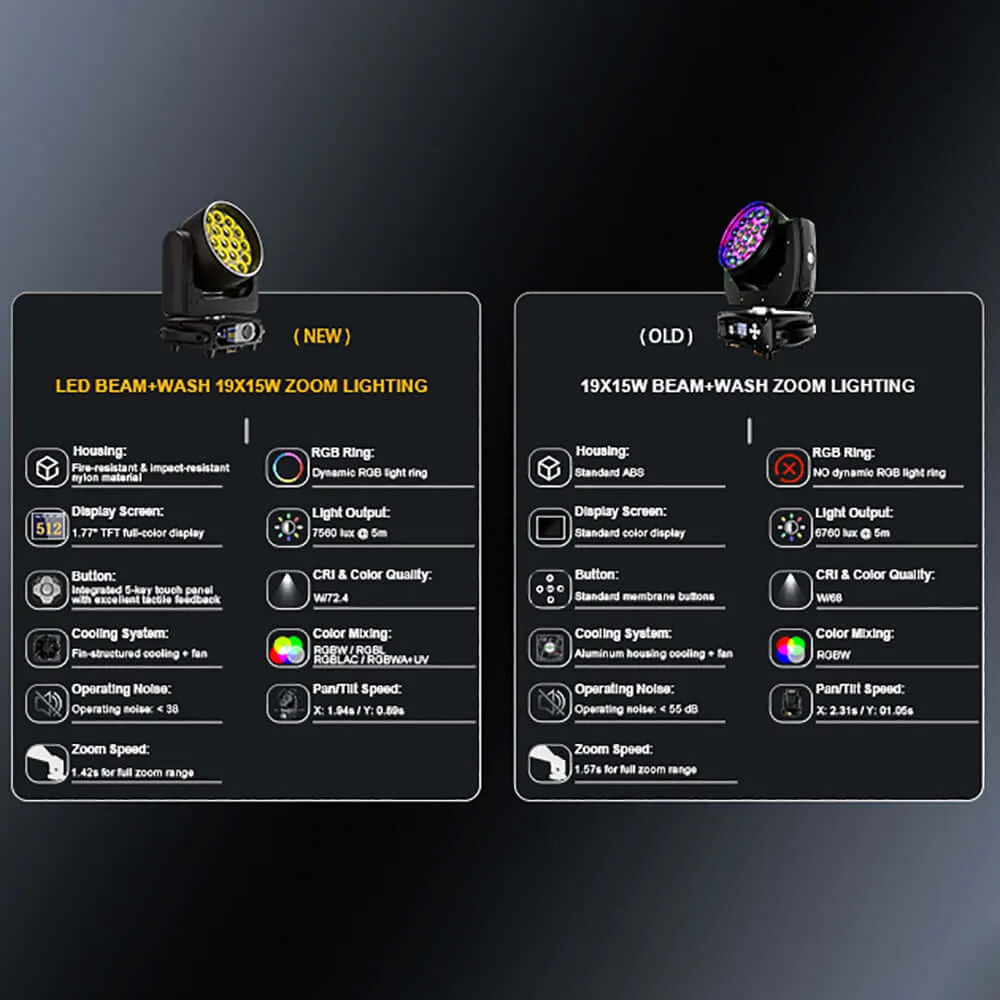 SHEHDS Stage Lighting Guide: Best Fixture Types Explained (2026)
 Aurzen Projector Guide 2026: Best Model for Every Space
 iBOLT Mounts Guide 2026: Reliable Modular System Explained