Aurzen Projector Lineup 2026: Which Model Fits Your Space (BOOM, ZIP, D1 MAX)
Comparing the Aurzen projector lineup — D1 MAX, BOOM mini, BOOM air, D1R air, and ZIP Tri-Fold — matched to backyard movie nights, travel, apartments, kids' rooms, and gaming setups.
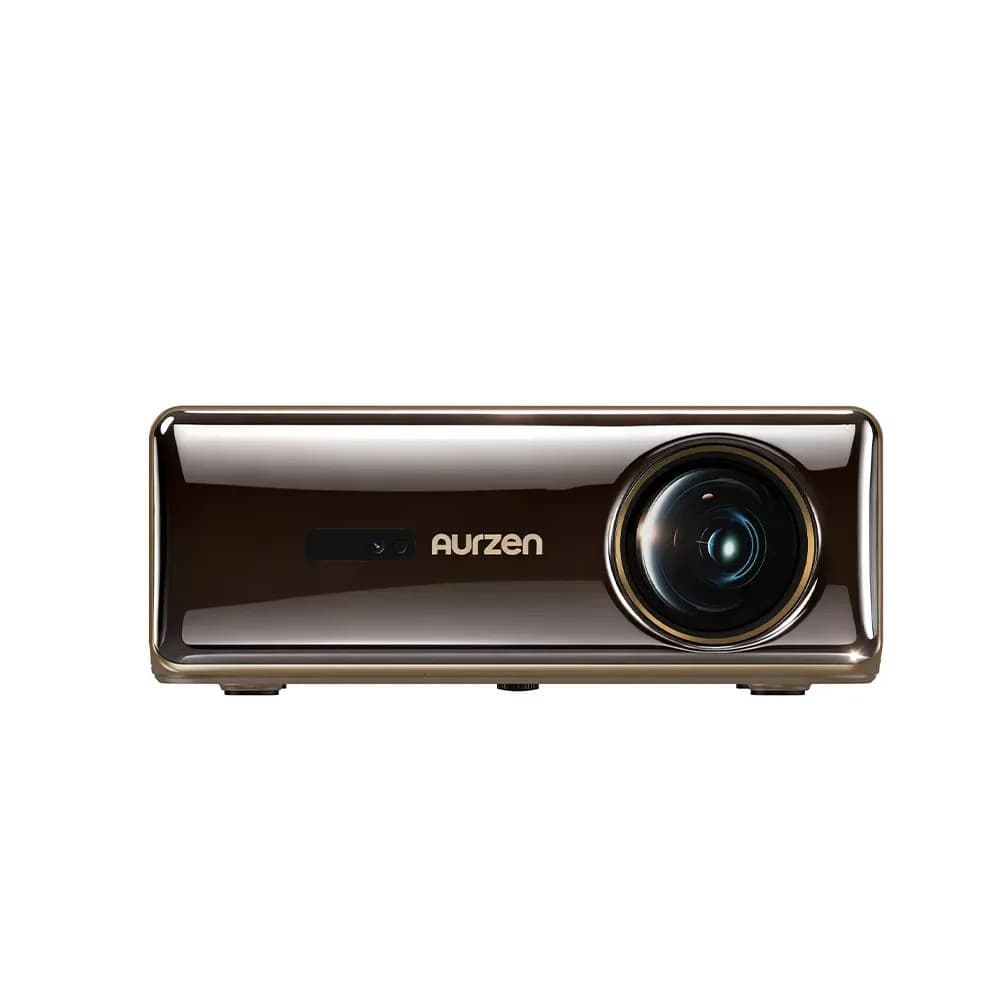
Meet the Aurzen projector lineup
Aurzen projector buyers really face one decision: which of the five models — D1 MAX, D1R air, BOOM mini, BOOM air, or ZIP Tri-Fold — fits their room, trip, or budget. This guide skips the generic feature tour and matches each Aurzen projector to the scenario it actually wins.
Most households land closest to the BOOM mini — bright enough for evening indoor viewing, compact enough for an apartment shelf.
If your space is bright outdoors or you need battery-only portability, keep reading — the D1 MAX and ZIP Tri-Fold below cover those cases better than the BOOM mini does.
See the full Aurzen lineup- Five Aurzen projector models span 100 to 1000 ANSI lumens — brightness is the single biggest factor in which one fits your room.
- Two models (D1 MAX, BOOM mini) need an AC outlet; two (BOOM air, D1R air) run on USB-C power banks; ZIP Tri-Fold has its own built-in 5000mAh battery.
- All five ship with Time-of-Flight auto-focus and (except D1R air, which still has auto-keystone) auto-keystone, so setup is largely plug-and-play.
- Streaming differs by model: Google TV, Roku TV, or phone/laptop screen mirroring only.
Meet the Aurzen projector lineup
Aurzen has sold over 1,000,000 projector units worldwide, with 800,000+ active users, and built its lineup around one idea: portable cinema shouldn't require a home-theater room. The brand's three product series — EAZZE (everyday streaming), BOOM (bright and portable), and ZIP (ultra-compact) — cover very different rooms and trips rather than offering five versions of the same box. For a closer look at the tech behind these models, see our deep-dive into Aurzen's smart projector features.
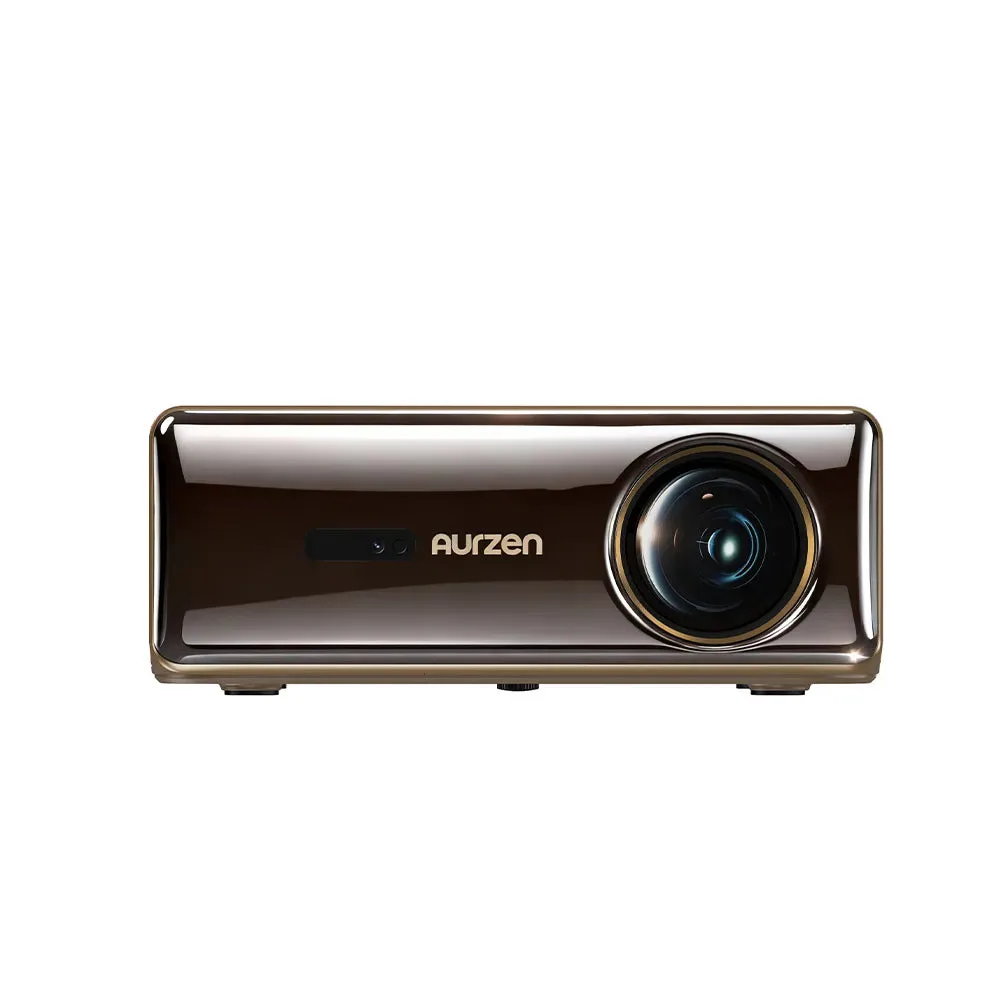
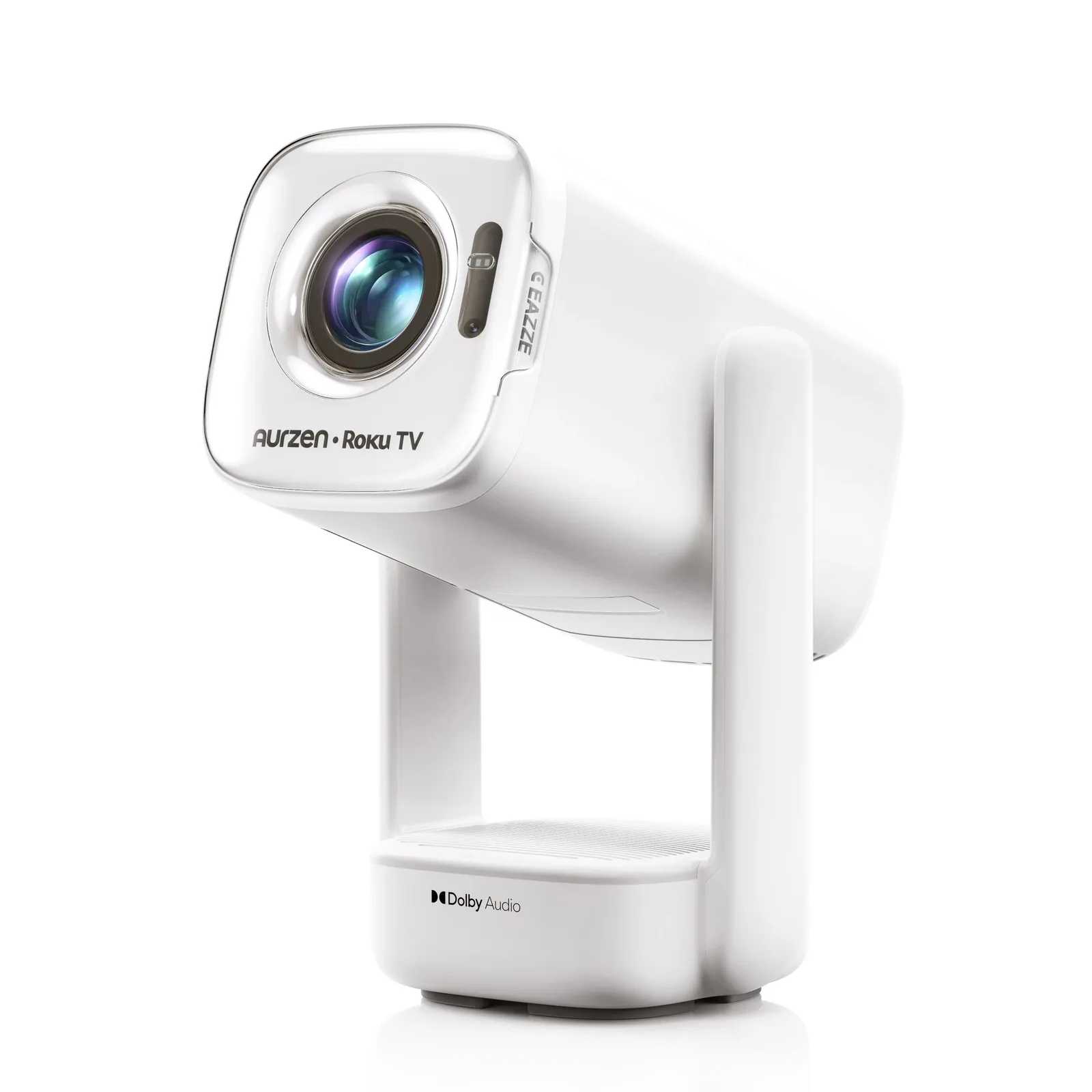
The five models break down like this: the EAZZE D1 MAX is the flagship brightness pick at 1000 ANSI lumens on AC power, running Google TV with a 20W Dolby Audio setup. The EAZZE D1R air trades brightness for portability, at 300 ANSI lumens with built-in Roku TV and USB-C Power Delivery charging. The BOOM mini sits in the middle, at 500 ANSI lumens, AC-powered, with a compact cube body and Google TV. The BOOM air is the lightest USB-C option, at 300 ANSI lumens and 1.23kg, quiet enough at ≤26.5dB to be the quietest fan in the lineup. And the ZIP Tri-Fold is the pocket option, 100 ANSI lumens with a built-in 5000mAh battery, folding down to 84×78×26mm and 280g.
Every model here uses real-time auto-focus and (with the partial exception noted above) auto-keystone correction, using Time-of-Flight sensors that adjust image sharpness automatically as you move the projector or change screen distance — so setup speed differences between models come down to power source, not focusing.
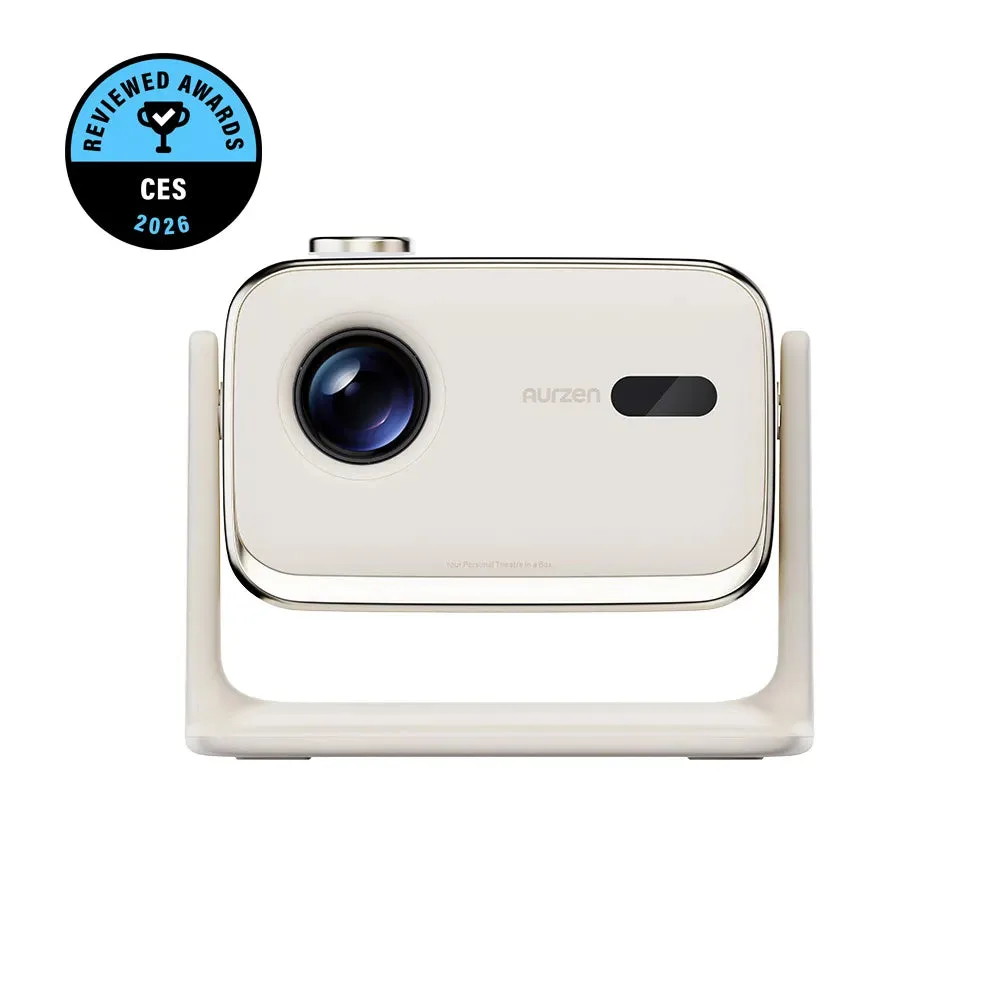
Aurzen BOOM mini
500 ANSI lumens, Google TV, and a compact cube body make this the model most apartment and den setups land on.
Check current priceHow to choose the right Aurzen projector for your space
The fastest way to pick an Aurzen projector is to start from your room or trip, not the spec sheet. Brightness and power source are the two variables that actually change which model works — everything else (Wi-Fi, focus, audio) is broadly similar across the lineup. As a rule of thumb: the brightest models need AC power, and the most portable models trade brightness for battery or USB-C flexibility.
Backyard movie nights
Outdoor and semi-lit spaces are the hardest environment for any projector because ambient light washes out a dim image. This is where the D1 MAX's 1000 ANSI lumens earns its spot, projecting up to 200 inches at a 1.28:1 throw ratio, with a 20W Dolby Audio pair built in so you're not also running a separate speaker. The trade-off is that it's AC-powered only, so you'll need an extension cord or an outdoor-rated outlet near the screen. For a covered patio or a backyard with power access, it's the model built for the job; for a park or campsite with no outlet, look at the battery-powered options below instead.
Travel and camping
Camping and backpacking rule out AC power entirely, and even a USB-C power bank adds bulk to a pack. The ZIP Tri-Fold is built specifically for this: a world-first Z-shaped tri-fold design that closes down to 84×78×26mm and 280g, with a 5000mAh battery built in for up to 1.5 hours of runtime and 24W USB-C charging that reaches 80% in about 50 minutes. It skips a smart TV OS entirely in favor of wireless screen mirroring from a phone or laptop, which works without a Wi-Fi network — useful at a campsite with no signal. If you want more brightness for a slightly bigger screen and don't mind a power bank, the BOOM air is the next step up at 300 lumens and 1.23kg.
Small apartments and dens
Indoor rooms that stay reasonably dark at night don't need D1 MAX-level brightness, and a permanent AC-powered unit is fine if the projector lives on a shelf rather than travels. The BOOM mini fits this brief, at 500 ANSI lumens with Google TV's 10,000+ app catalog built in, a 20W Dolby Audio + VibeBass speaker pair, and a compact cube body (232×178×192mm, 2.14kg) with a 110° rotating stand. It's the model most reviewers and buyers land on for everyday indoor movie and TV nights because it doesn't force a trade-off between brightness and footprint.
Kids' rooms
A kids' room usually means a smaller screen size, shorter viewing sessions, and a premium on something that won't get knocked off a shelf or tangled in cords. The ZIP Tri-Fold's small footprint and built-in battery, available in Titanium Gold, Dark Gray, and Cyber Edition finishes make it easy to hand to a kid for an afternoon movie without worrying about a hot AC adapter nearby. Screen mirroring also means content comes straight from a parent's tablet or phone rather than a separate account login on a smart TV OS.
Gaming
Casual couch gaming favors a bigger, brighter picture over ultra-portability, which points back toward the AC-powered models. The BOOM mini or D1 MAX both project up to 200 inches, with the D1 MAX's 2000:1 contrast ratio and 1000-lumen brightness giving it an edge for daytime gaming sessions where the room isn't fully dark. Neither model markets a dedicated low-latency gaming mode in the source specs, so treat these as movie-and-casual-game projectors rather than a competitive gaming display replacement.
Aurzen projector comparison table
Here's how the five Aurzen projector models stack up on the specs that actually change the buying decision. Brightness (ANSI lumens) and power source are the two columns worth reading first.
| Model | Brightness | Power | Smart platform | Weight | Best for |
|---|---|---|---|---|---|
| EAZZE D1 MAX | 1000 ANSI lumens | AC (100–240V) | Google TV | 2.71kg | Backyard, semi-lit rooms |
| BOOM mini | 500 ANSI lumens | AC (100–240V) | Google TV | 2.14kg | Apartments, dens |
| EAZZE D1R air | 300 ANSI lumens | USB-C PD 65W+ | Roku TV | N/A (portable base) | Streaming variety, Roku fans |
| BOOM air | 300 ANSI lumens | USB-C PD 65W+ | Google TV | 1.23kg | Ultra-light travel |
| ZIP Tri-Fold | 100 ANSI lumens | Built-in 5000mAh battery | Screen mirroring only | 280g | Camping, kids' rooms, pockets |
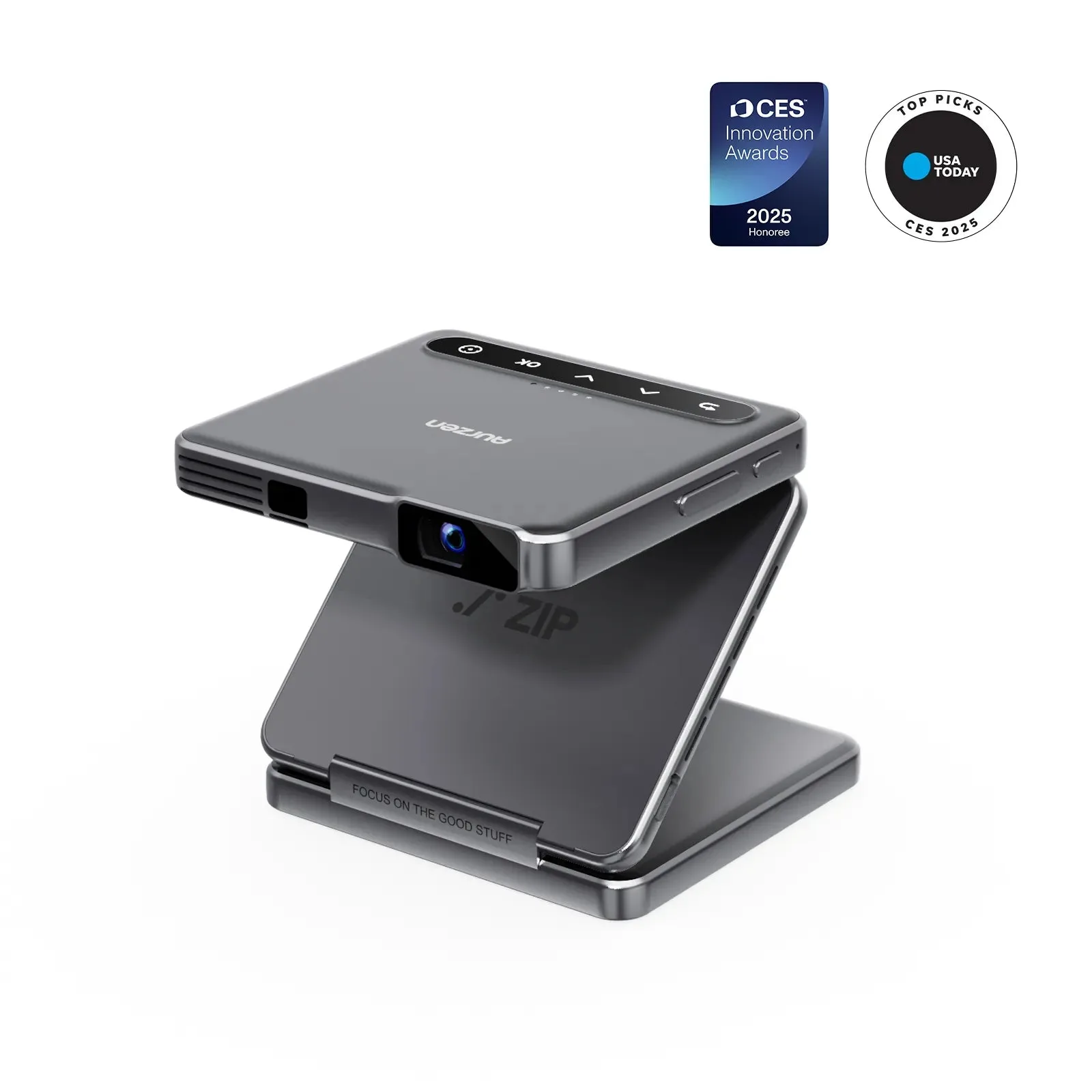
Aurzen ZIP Tri-Fold
What We Like
- Truly pocketable — folds to 84×78×26mm
- No external power source needed
- Fast 24W USB-C charging (80% in ~50 minutes)
What to Consider
- 100 lumens needs a dark room or small screen
- No built-in smart TV apps — mirroring only
Aurzen markets the ZIP Tri-Fold as the world's first tri-fold projector, and the fold mechanism is genuinely what makes it pocketable in a way none of the other four models are — the trade-off is 100 ANSI lumens, which only holds up in a dark room or on a small screen.
Setting up your Aurzen projector for the best picture
Because every current Aurzen projector uses Time-of-Flight auto-focus and auto-keystone correction, most of the manual setup steps older projectors require are handled automatically the moment the unit powers on and detects the screen distance. A few things still matter:
- Match brightness to ambient light. A 1000-lumen D1 MAX can handle a dim outdoor evening; a 100-lumen ZIP Tri-Fold needs the room genuinely dark.
- Give the auto-focus sensor a clean line of sight. ToF focus reads distance to the screen, so keep the lens unobstructed during setup.
- Check power draw before you travel. USB-C models specify 65W+ Power Delivery — a lower-wattage power bank will undercharge or fail to run the projector at full brightness.
- Connect to dual-band Wi-Fi where available. Google TV and Roku TV models both support 2.4GHz/5GHz — 5GHz reduces streaming buffering if your router supports it.
Common mistakes to avoid
The most common misstep is buying on brightness alone without checking the power source — a 1000-lumen D1 MAX is the brightest option, but it's the least portable, since it only runs on AC power. The inverse mistake is buying the most portable model (ZIP Tri-Fold) for a bright living room, where 100 lumens simply won't compete with daylight or lamps. Another frequent mistake is skipping the smart-platform check: if you already have a Roku ecosystem with saved logins and channels, the D1R air's built-in Roku TV will feel more familiar than switching to Google TV on the other AC/USB-C models. And with USB-C models, using a sub-65W charger or power bank is a common cause of dim or underpowered performance — check the wattage rating before you travel.
Google TV vs Roku TV vs screen mirroring: which fits you
Three of the five Aurzen projector models run Google TV, giving access to 10,000+ apps including Netflix, YouTube, Disney+, Prime Video, Hulu, HBO, Peacock, and Paramount+, over dual-band Wi-Fi. The D1R air instead runs Roku TV, with 500+ free live TV channels plus the same major streaming apps, controlled via a Roku remote or the Roku mobile app. The ZIP Tri-Fold skips a smart OS altogether in favor of wireless screen mirroring from Android, Windows, iOS, or macOS devices, which needs no Wi-Fi network at all — a real advantage at a campsite or venue with no internet. If you already stream heavily on one ecosystem, matching that platform will save more setup friction than any spec on this page.
The verdict
There's no single "best" Aurzen projector — there's a best-for-you model. Backyard and semi-lit rooms call for the D1 MAX's brightness; apartments and dens are well served by the BOOM mini's balance of light output and footprint; travel, camping, and kids' rooms favor the ZIP Tri-Fold's built-in battery and pocket size; and Roku households should look at the D1R air over the Google TV models. Check the current lineup and pricing directly before you decide.
Shop the Aurzen projector lineupThis article is an independent buying guide based on manufacturer-published specifications from aurzen.com. Velextrics has not conducted in-house brightness or performance testing on these models. Actual picture quality varies with room lighting, screen material, and distance. Purchase decisions and current pricing should be verified directly with Aurzen before buying.
Recommended for you
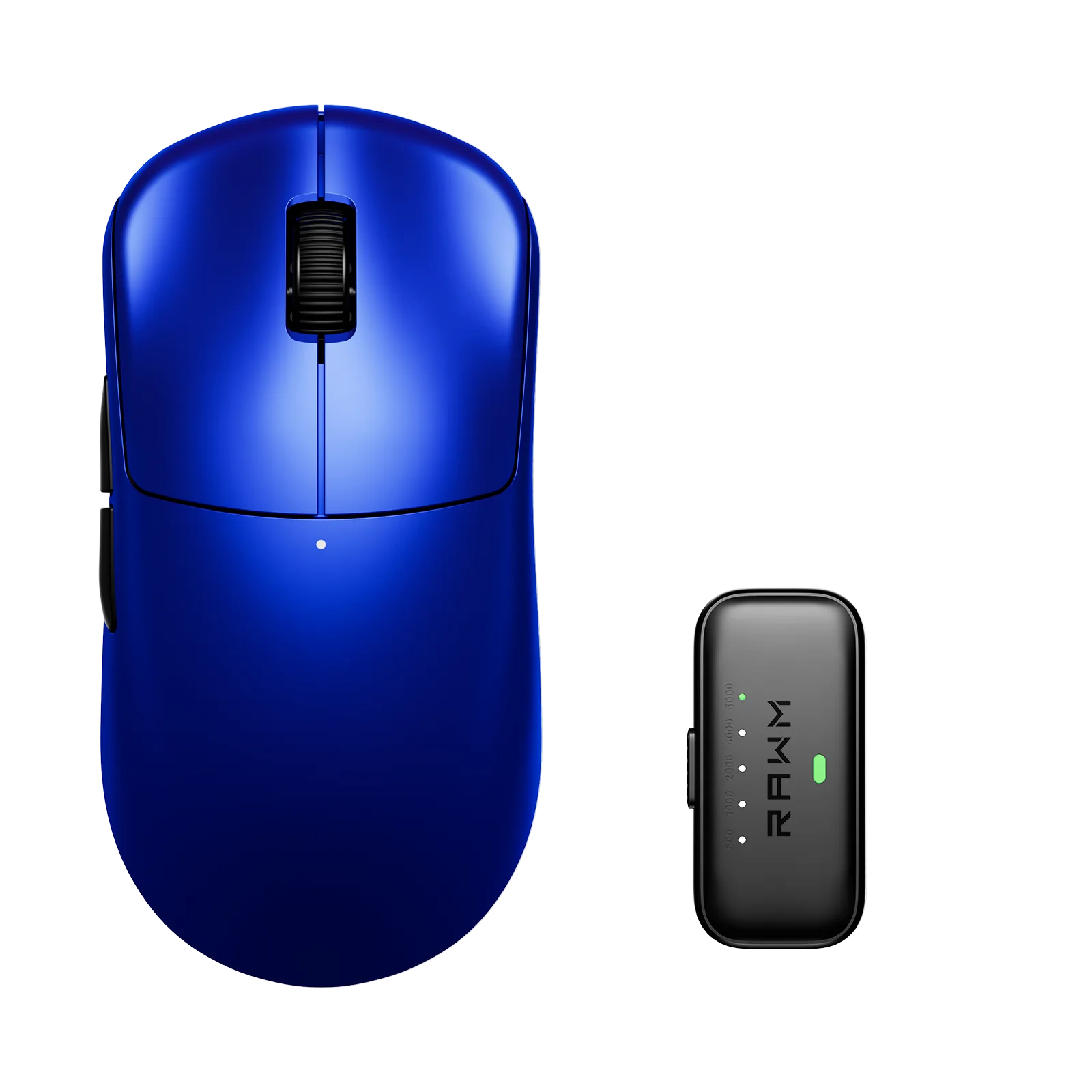 RAWM Gaming Review 2026: Best 8K Wireless Mice Guide
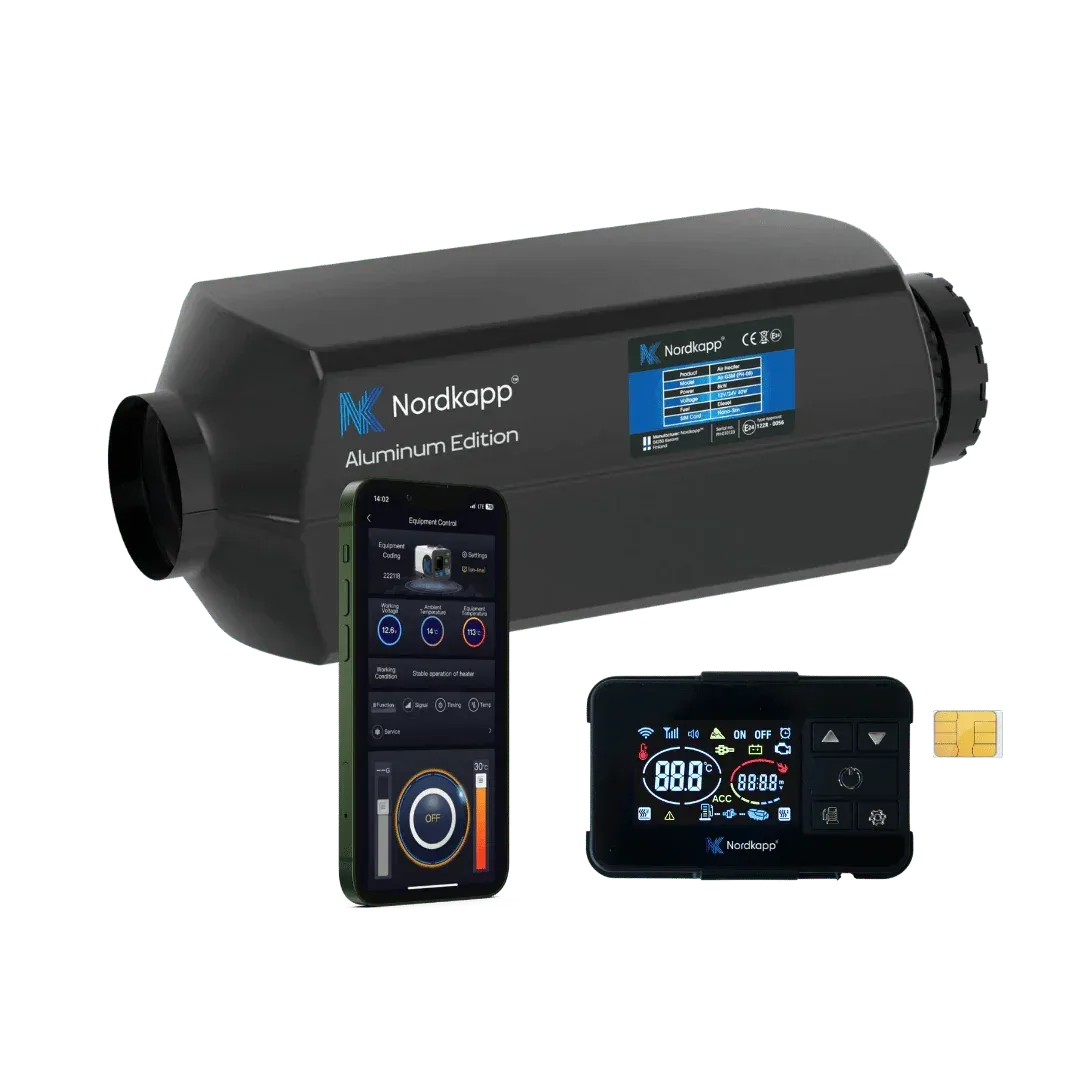 Nordkapp Diesel Heater Buying Guide 2026: Best kW & Control
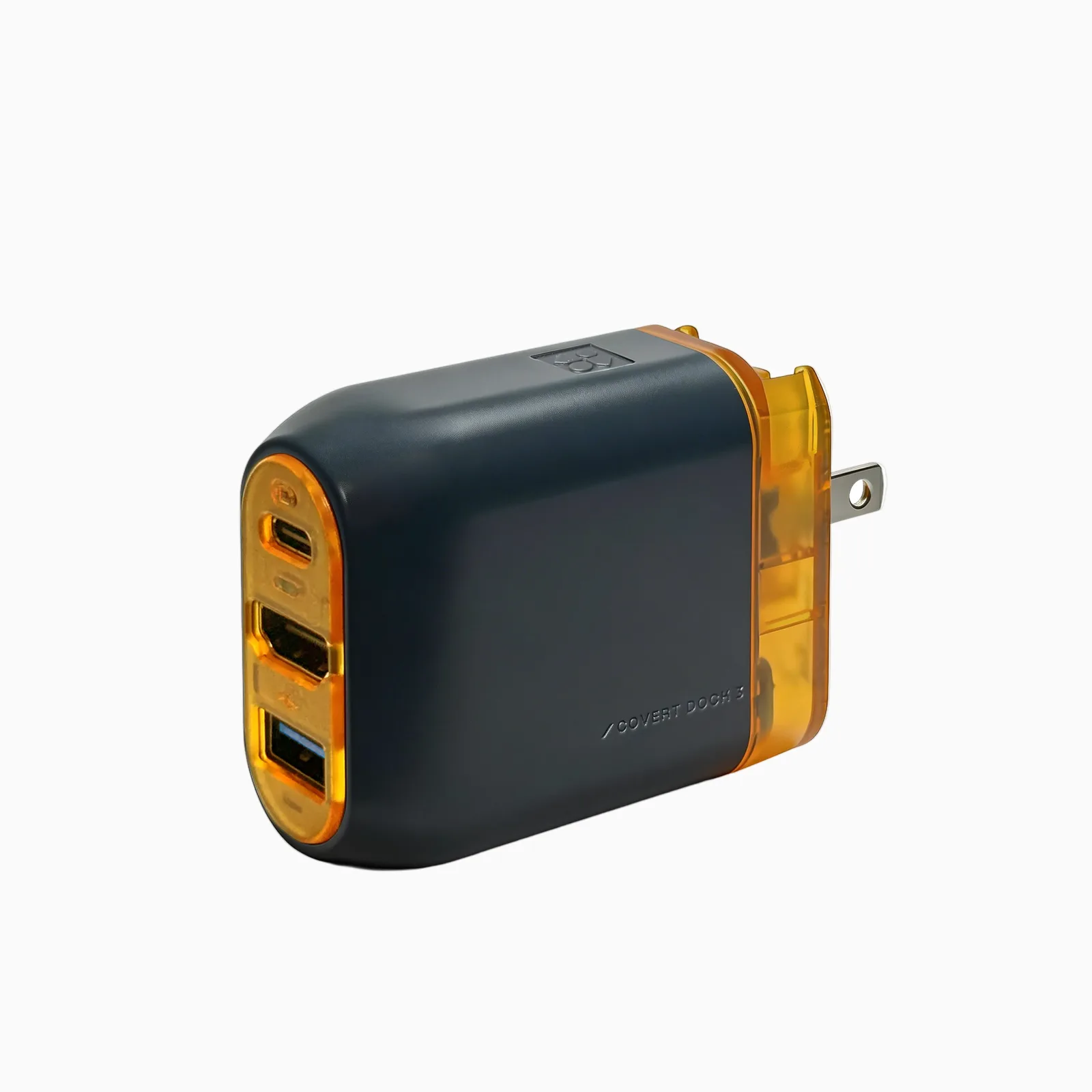 Genki Gaming Accessories: 7 Must-Know Picks (2026 Guide)
 SHEHDS Stage Lighting Guide: Best Fixture Types Explained (2026)
 Moving Head vs LED PAR: Best SHEHDS Stage Light Guide 2026
 iBOLT Mounts Guide 2026: Reliable Modular System Explained