Nordkapp Diesel Heater Buying Guide 2026: Choosing kW Size, Altitude & Smart Control
A decision framework for picking the right Nordkapp diesel heater: kW size by square meterage, Normal vs High-Altitude versions, and Bluetooth vs GSM vs Wi-Fi control compared side by side.
What is a Nordkapp diesel heater?
A Nordkapp diesel heater only performs well if you pick the right configuration for your space, altitude, and how you want to control it — get any one of those three wrong and you end up with a unit that either underheats, drains your battery on standby, or can't run properly once you drive into the mountains. This guide breaks the decision into three simple filters: kW size, altitude version, and control method, so you can match a model to your van, truck cab, cabin, or boat before you buy.
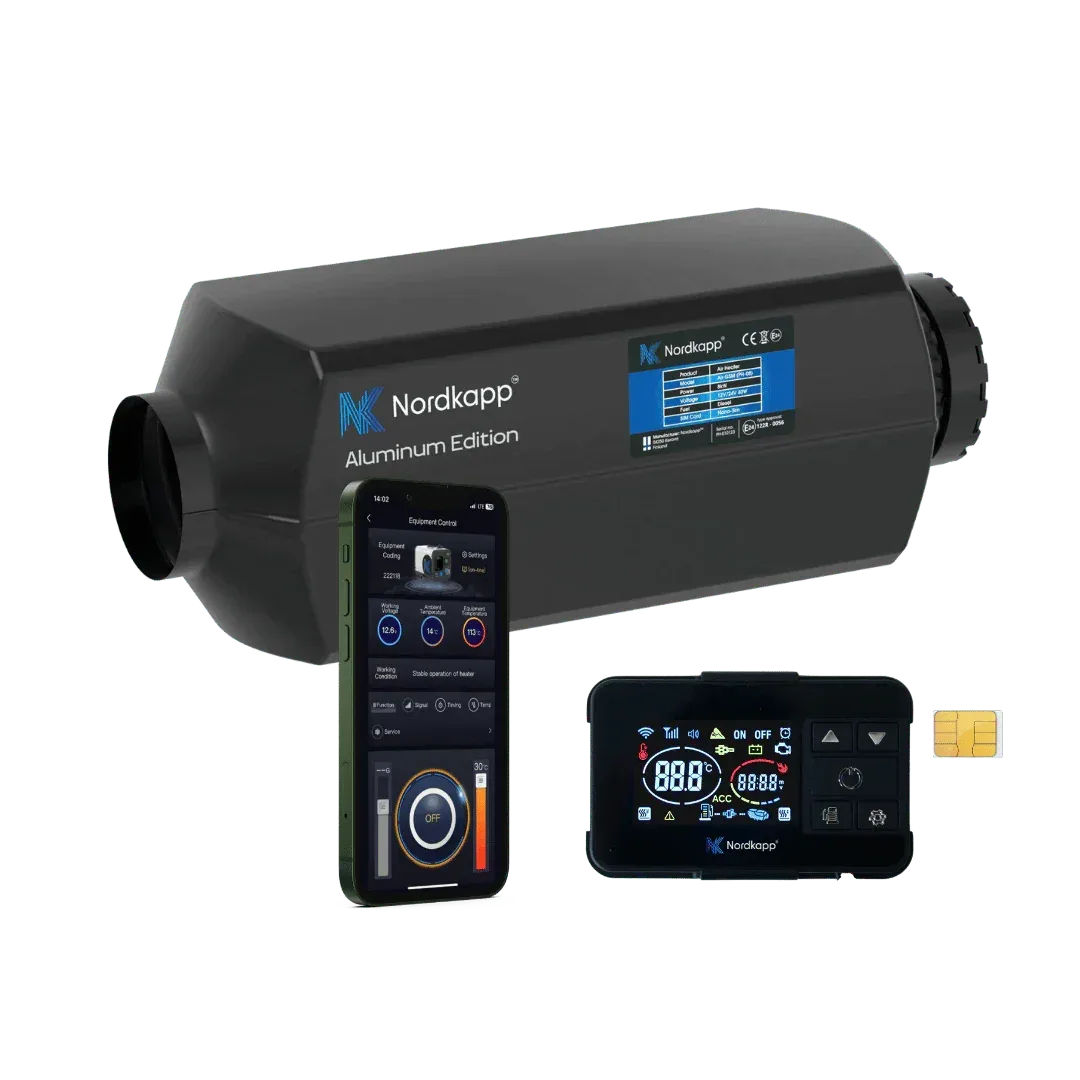
Most buyers should start with a 5kW Air heater, Normal-altitude version, GSM 4G/5G control — then adjust up or down from there.
If you only need local phone control and want zero subscriptions, Bluetooth is the simplest pick. If you want to preheat before you arrive, GSM 4G/5G is worth the SIM. Skip straight to the section that matches your priority below, or compare the full lineup on Nordkapp's site.
Compare Nordkapp HeatersKey takeaways before you buy
- Size by area: 2kW ≈ 20 m², 5kW ≈ 40 m², 8kW ≈ 60 m² — oversizing wastes fuel, undersizing leaves you cold.
- Altitude matters: Normal covers 0–2,500 m; High-Altitude is calibrated for 0–5,500 m.
- Control method is a trade-off between cost and remote reach: Bluetooth (free, local only), GSM (remote, needs a SIM), Wi-Fi (remote, needs a router).
- Air heaters cover most use-cases; Aqua liquid heaters are a specialized 5kW-only option for engine-coolant or underfloor setups.
- Every Nordkapp heater carries ECE R122 & R10 certification and a 24-month warranty.
What is a Nordkapp diesel heater?
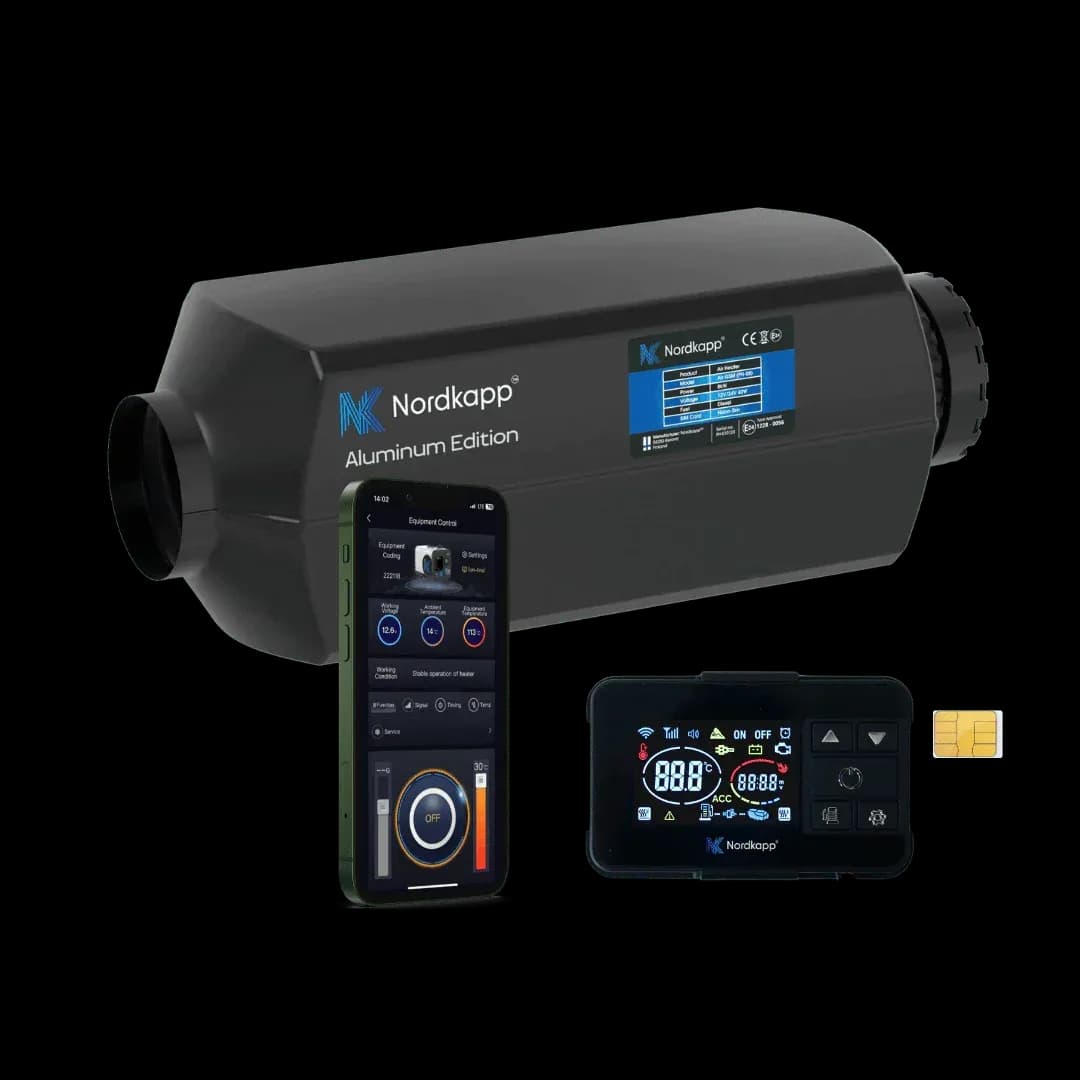
A Nordkapp diesel heater is a combustion parking heater that burns a small amount of diesel (or, in the Aqua line, runs on diesel or gasoline engines) to warm a vehicle, cabin, or boat interior without idling the engine. Nordkapp builds two form factors — standard inline Air heaters and suitcase-style Cube heaters — in aluminum housing with a proprietary "Super Silent" oil pump for low-noise operation. Both run on 12V or 24V vehicle electrical systems, drawing roughly 40 watts during operation, so the load on an auxiliary battery is minimal.
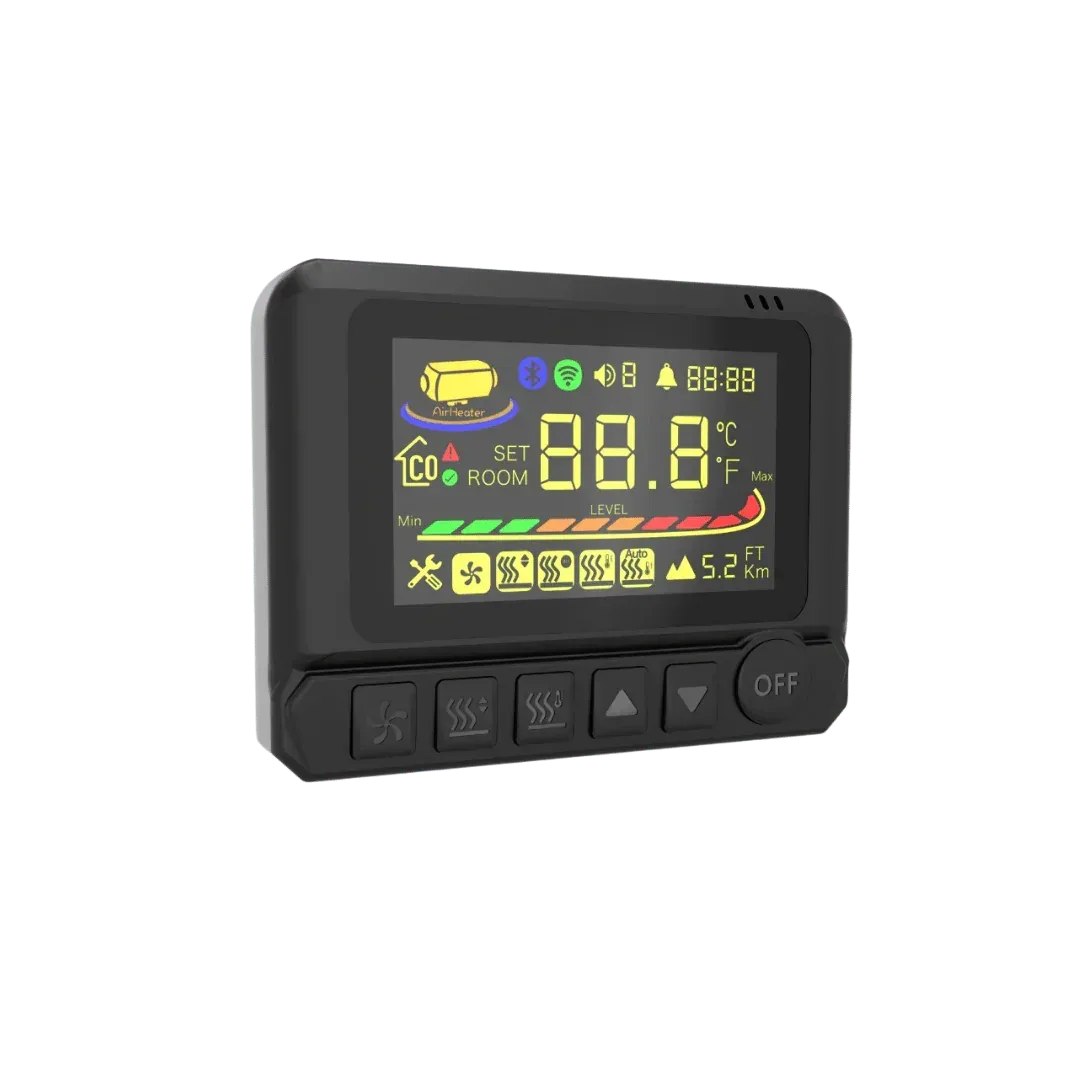
Every model includes three operating modes — Ventilation, Turbo, and Thermostat Start/Stop — controlled through an integrated LCD panel, so you can circulate air, blast maximum heat, or let the heater cycle automatically to hold a set temperature.
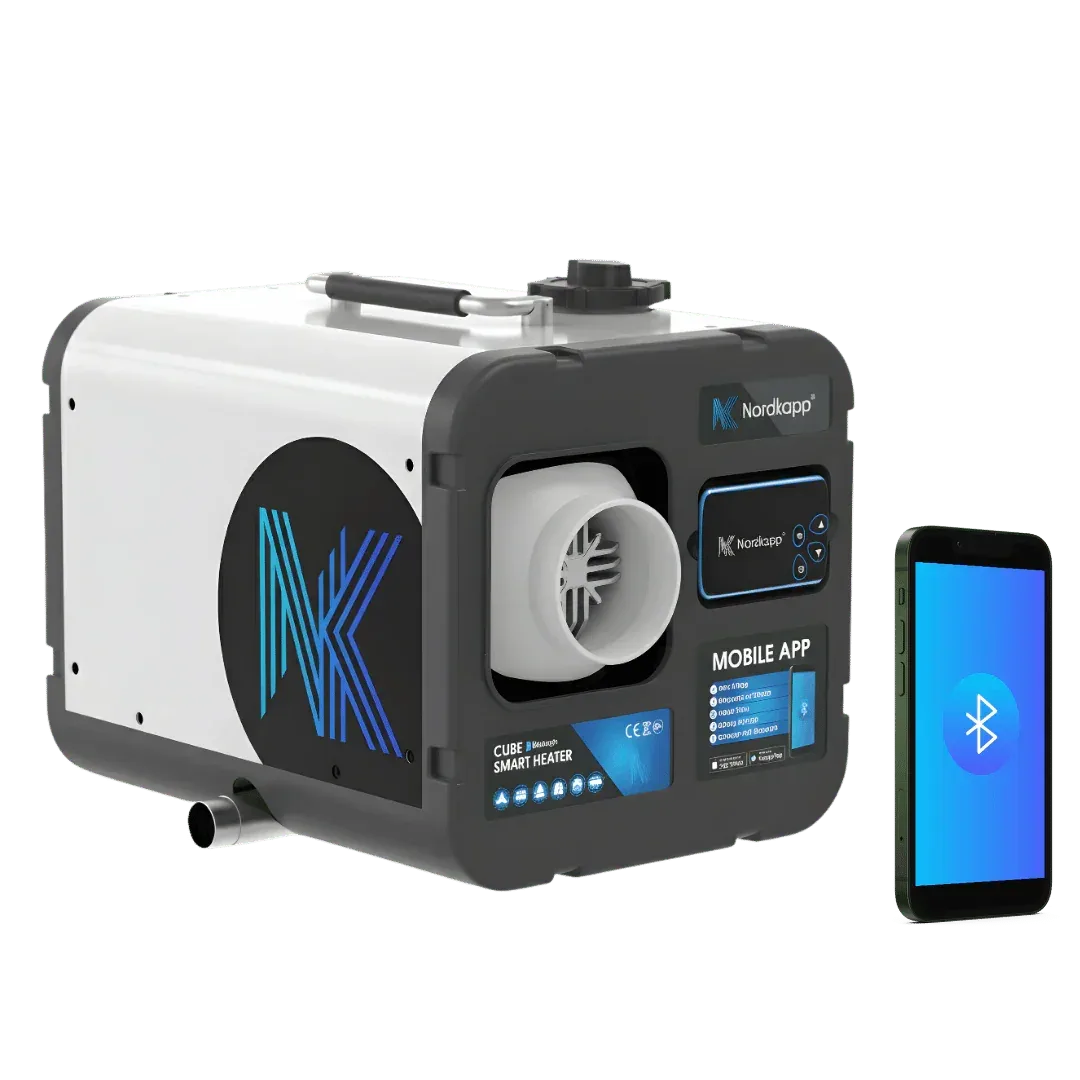
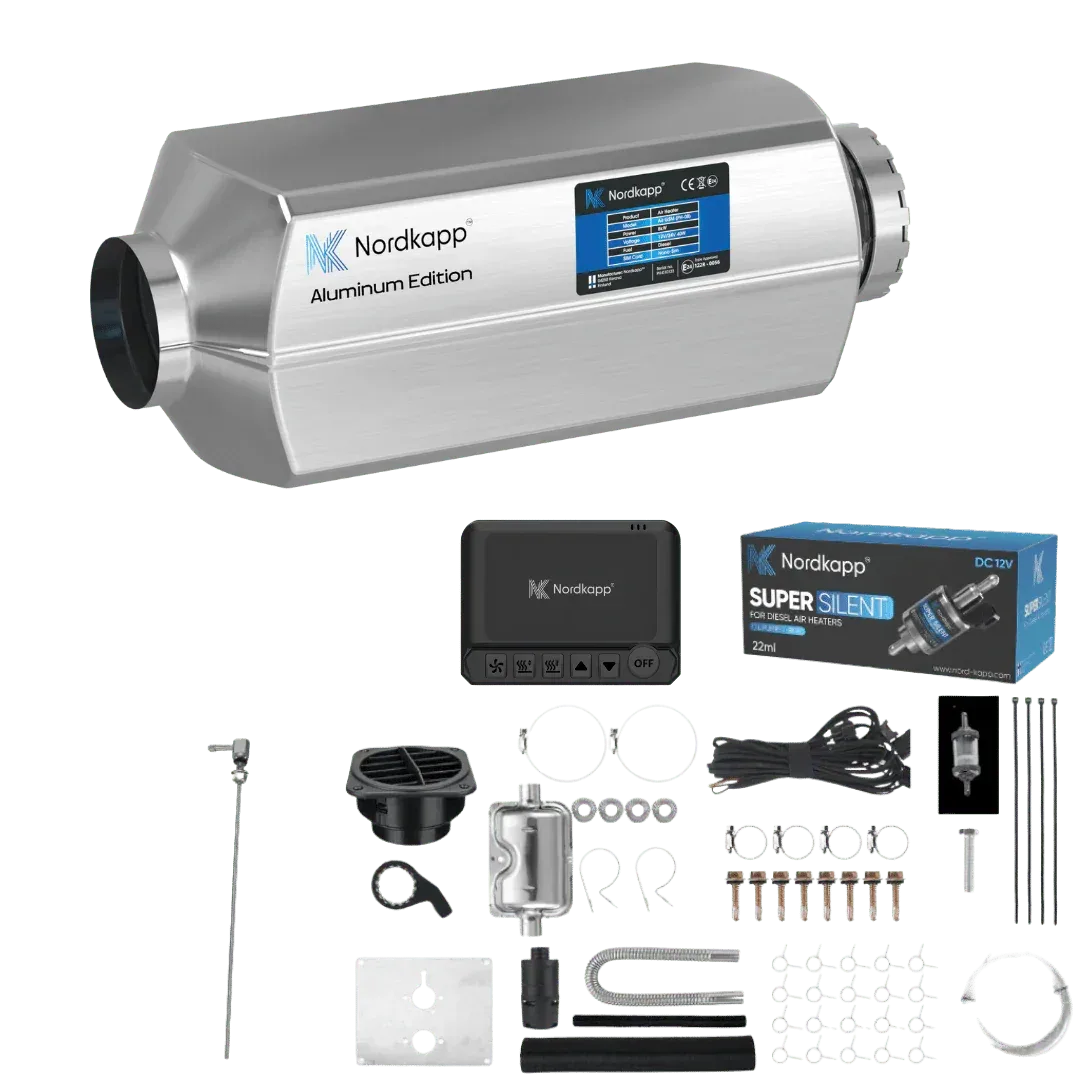
Nordkapp Air & Cube Heater Range
Browse every kW size, altitude version, and control method in one place before deciding on a specific configuration.
View Nordkapp RangeChoosing the right kW size
Nordkapp sizes its heaters by the floor area they're rated to warm: a 2kW model covers roughly 20 square meters, a 5kW model roughly 40 square meters, and an 8kW model up to about 60 square meters. Fuel use scales with power too — approximately 0.1 liters per hour for every kilowatt, so a 2kW unit sips around 0.2 L/hour, a 5kW around 0.5 L/hour, and an 8kW around 0.8 L/hour.
Dimensions and ducting differ by size too: the 2kW Air heater measures about 31×12×12 cm with a 60mm outlet, while 5kW and 8kW units measure about 39×14.5×14.5 cm with a 75mm outlet. If you want the same heating output in a more portable, drop-in package, the Cube version of the 5kW and 8kW models weighs about 7–8 kg and is designed for flexible placement rather than fixed inline mounting. As a rule of thumb: oversizing burns unnecessary fuel, undersizing leaves the space under-heated in cold weather — match the kW to your actual floor area, not your budget.
Normal vs High-Altitude versions
Nordkapp sells every heater in two altitude calibrations. The Normal version is rated for elevations from 0 to 2,500 meters, which covers most valley, coastal, and urban locations across Europe. The High-Altitude version is calibrated for 0 to 5,500 meters and is built for users based in or regularly traveling through the Alps, Spanish mountain valleys, Scandinavian highlands, or other high-elevation routes. Running a Normal-altitude heater above 2,500 meters can cause reduced performance and combustion issues, since the unit isn't calibrated for thinner air — so this decision is about where you'll actually use the heater, not a nice-to-have upgrade.
Practical rule: if your home base or common travel routes stay below 2,500 meters, the Normal version is sufficient. If you regularly cross into Alpine or mountain terrain, pay the difference for the High-Altitude version up front rather than risk poor combustion mid-trip.
Bluetooth vs GSM vs Wi-Fi control
The control method decides how — and from how far away — you can start, stop, or adjust the heater, and it's the choice with the biggest ongoing cost impact. Nordkapp offers three: Bluetooth, GSM 4G/5G, and Wi-Fi.
| Control method | Range | Requires | Best for |
|---|---|---|---|
| Bluetooth | ~10–50 m, local only | Nothing — no SIM, no network | Budget buyers who never need remote preheat |
| GSM 4G/5G | Anywhere with mobile coverage | SIM card + mobile data plan | Van lifers/truck drivers preheating before arrival |
| Wi-Fi | Vehicle's router/hotspot coverage | Onboard Wi-Fi router or phone hotspot | Tech-forward campers with existing connectivity |
Bluetooth is the simplest and cheapest: you get full app control of temperature and modes whenever you're within range, with no subscription at all — but you can't start it remotely. GSM trades a SIM and a modest recurring data cost for true anywhere-in-the-world preheat, which is the whole point if you want to walk into a warm van after a cold hike. Wi-Fi splits the difference — remote control without a SIM, but only while your router or hotspot stays online. GSM models also tend to sit at the more accessible end of Nordkapp's pricing across the lineup.
Air vs Liquid (Aqua) heaters
Nordkapp's main product line is the Air heater, which blows warm air directly into the cabin — simple to install and the right choice for most vehicles, boats, and cabins. The Aqua line is a specialized liquid heater that heats water in a closed loop to warm engine coolant systems or underfloor circuits, typically used to supplement engine heating or add radiant floor warmth rather than heat cabin air directly. Aqua heaters are available only in a 5kW configuration, so if you need 20 m² or 60 m² coverage, an Air heater is your only option.
In practice, the large majority of buyers should default to Air unless they have a specific reason — underfloor heating or engine-block preheating — that requires a liquid loop.
Diesel vs gasoline & voltage fit
Most Nordkapp Air heaters burn diesel fuel regardless of what powers the host vehicle. The Aqua 5kW liquid heater is the exception: it's compatible with both diesel and gasoline engines, which makes it the relevant option for gasoline-powered vans or RVs that still want a liquid-loop heating solution. Separately, confirm your vehicle's electrical system before ordering — Nordkapp Air heaters ship in both 12V and 24V variants to match cars/small motorhomes (12V) versus trucks and larger RVs (24V); a 220V mains adapter is available for stationary cabin installs.
Choosing by use case
Nordkapp markets its lineup across personal vehicles, motorhomes, campervans, caravans, boats, cabins, and garages. Matching a configuration to your specific use case ties the previous three decisions together:
- Van life / campervan: 5kW Air heater, altitude matched to your travel route, GSM if you want to arrive to a warm van.
- Truck cab: 5kW or 8kW depending on cab size, 24V voltage, GSM for preheating before a shift.
- Fixed cabin: 8kW Air or Cube for larger footprints, or Aqua if you're supplementing an existing underfloor loop; Wi-Fi control works well since cabins usually have a fixed router.
- Boat: 2kW or 5kW Air heater for cabin space, Bluetooth if the boat rarely has connectivity, GSM if you dock somewhere with coverage.
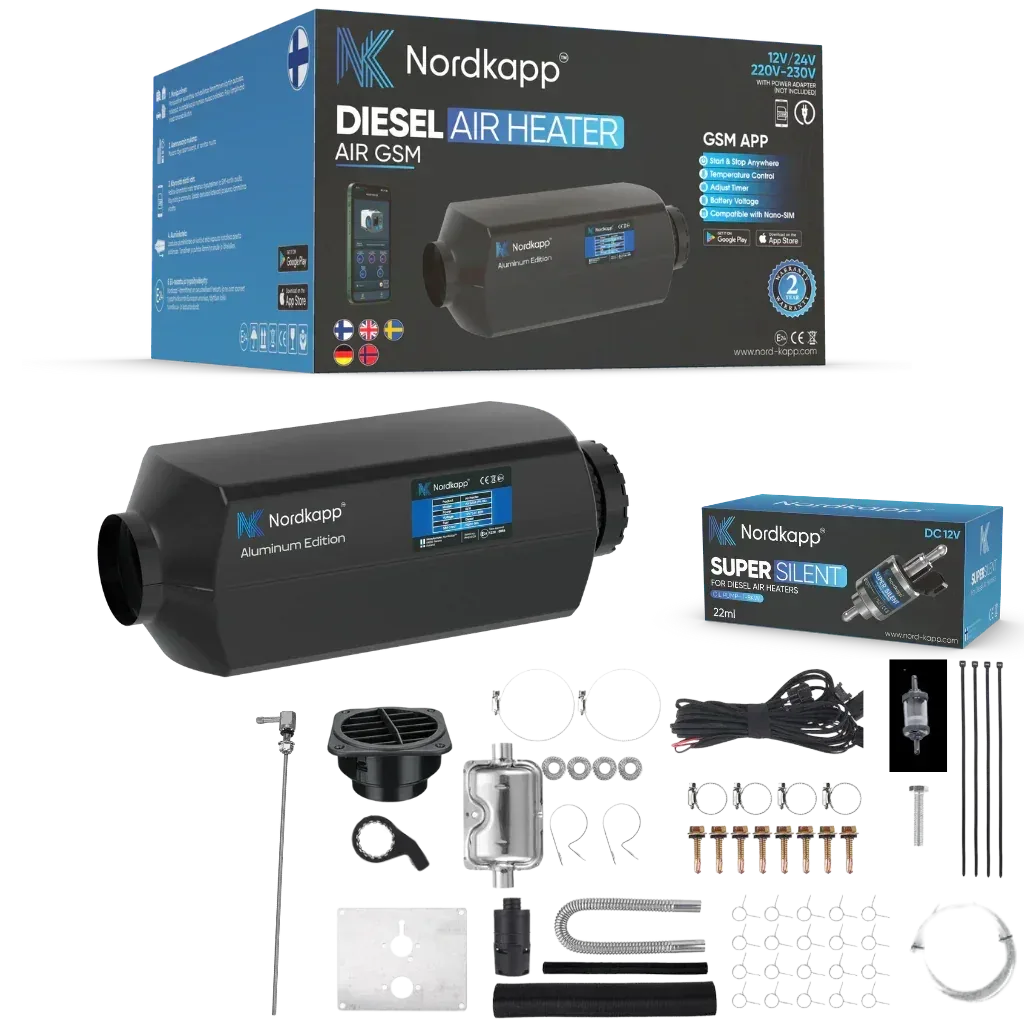
Nordkapp Air Heater (2kW / 5kW / 8kW)
What We Like
- Widest kW range (2–8kW) covers small cars through large cabins
- Three control methods to match connectivity needs
- Compact ~39×14.5×14.5 cm inline body fits under most seats
What to Consider
- GSM control adds a recurring SIM/data cost
- Fixed inline mounting is less flexible than the Cube form factor
Nordkapp Cube Heater (5kW / 8kW)
What We Like
- Freestanding placement — no fixed inline mounting required
- Same 5kW/8kW power options as the standard Air line
- Good fit for off-grid boats, cabins, and flexible camper layouts
What to Consider
- Not available in a 2kW size
- Still needs secure fixing to avoid vibration noise
Installation, certification & warranty
Every Nordkapp heater carries ECE R122 and ECE R10 certification, confirming compliance with EU safety, emission, and performance standards required for road-legal parking heaters. Each unit ships with a complete installation kit — exhaust pipes, mounting hardware, and hose connectors — plus a self-install manual for confident DIYers, or you can use Nordkapp's registered installer network across Europe for professional fitting. Coverage is backed by a 24-month warranty, with regional warehouses in Finland, Poland, Germany, Spain, and the UK supporting parts and service across the continent. EU orders ship free from those regional warehouses, typically arriving within 1–8 business days depending on distance, and Nordkapp backs purchases with a 30-day return window if a configuration doesn't work out.
Popular configurations already carry a meaningful track record: the Air GSM 4G/5G model has accumulated 103 customer ratings and the Air Wi-Fi & Bluetooth model 80, giving prospective buyers real-world feedback to check before committing to a configuration.
Common buying mistakes to avoid
- Sizing by budget instead of floor area. An undersized 2kW unit in a 40 m² van will run constantly and still underheat; match kW to actual square meters, not the cheapest option.
- Ignoring altitude at purchase time. A Normal-version heater bought for a lowland home base will struggle if you later take it into the Alps — check your typical elevation before ordering.
- Choosing GSM without budgeting the SIM plan. Remote preheat is genuinely useful, but factor in the ongoing mobile data cost, not just the unit price.
- Skipping the voltage check. Ordering a 12V unit for a 24V truck (or vice versa) means the heater won't run correctly — confirm your vehicle's electrical system first.
- Assuming Aqua covers every size. The liquid heater line is 5kW only; if you need 20 m² or 60 m² coverage, you need an Air heater instead.
Final verdict
For most van lifers, truck drivers, and cabin owners, the practical starting point is a 5kW Nordkapp Air heater in the altitude version that matches where you actually travel, with GSM 4G/5G control if remote preheating matters to you — or Bluetooth if you'd rather skip the SIM plan entirely. Step up to 8kW or the Cube form factor for larger spaces, and only consider the Aqua liquid line if you specifically need engine-coolant or underfloor heating. For the full hands-on breakdown of a specific configuration, see our Nordkapp Diesel Heaters overview or the Nordkapp Standheizung guide.
Shop Nordkapp Diesel HeatersThis guide is for general buying-decision purposes and is based on Nordkapp's published specifications. Always confirm current specifications, certifications, and configuration availability directly with Nordkapp before purchasing, and use a qualified installer if you are not experienced with vehicle fuel and electrical systems. Velextrics may earn a commission if you purchase through links in this article.
Recommended for you
 RAWM Gaming Review 2026: Best 8K Wireless Mice Guide
 Genki Gaming Accessories: 7 Must-Know Picks (2026 Guide)
 SHEHDS Stage Lighting Guide: Best Fixture Types Explained (2026)
 Moving Head vs LED PAR: Best SHEHDS Stage Light Guide 2026
 Aurzen Projector Guide 2026: Best Model for Every Space
 iBOLT Mounts Guide 2026: Reliable Modular System Explained