How to Choose a Level 2 EV Charger for Your Home (2026 Buyer's Guide)
A practical, no-hype walkthrough of everything that actually matters when picking a Level 2 EV charger for home charging — amperage, plug type, panel capacity, and installation basics.
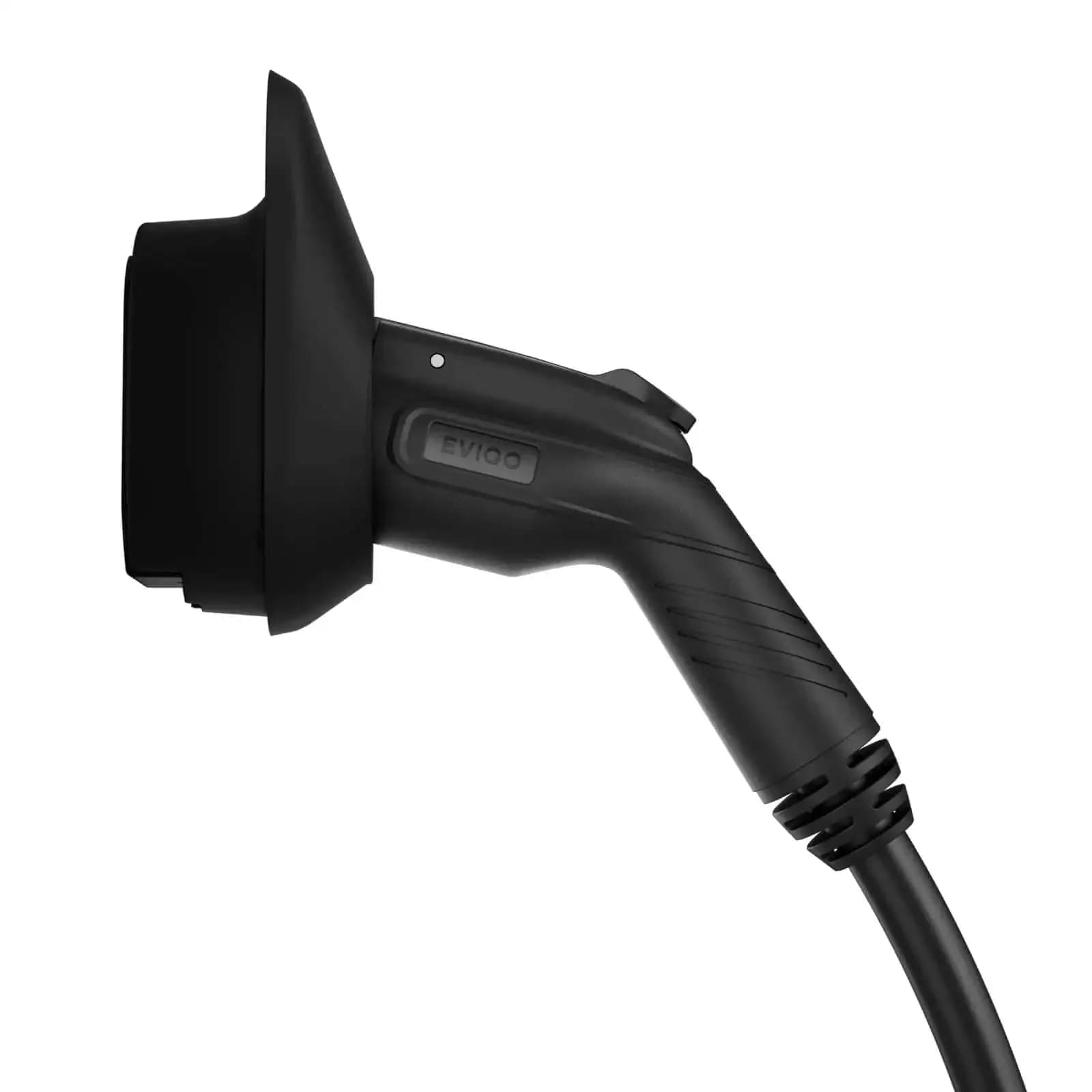
What is a Level 2 EV charger?
- What is a Level 2 EV charger?
- How charging speed works: amperage, kW & your vehicle
- Plug type: J1772 vs NACS
- Plug-in vs hardwired: NEMA 14-50 basics
- Cable length, smart features & weatherproofing
- Panel capacity and breaker sizing
- Certifications that actually matter
- Installation basics: what to expect
- How to choose the right charger for you
A Level 2 EV charger is the single biggest upgrade you can make to your home charging setup — it turns an overnight trickle into a full charge in a few hours. But with amperage ratings, plug types, hardwired vs plug-in models, and panel capacity all in play, picking the right unit is not as simple as grabbing the cheapest box on a shelf. This guide walks through exactly what to check before you buy, in plain language, from velextrics.
- What is a Level 2 EV charger?
- How charging speed works: amperage, kW & your vehicle
- Plug type: J1772 vs NACS
- Plug-in vs hardwired: NEMA 14-50 basics
- Cable length, smart features & weatherproofing
- Panel capacity and breaker sizing
- Certifications that actually matter
- Installation basics: what to expect
- How to choose the right charger for you
- Where to go next
Match amperage to your vehicle, confirm your plug type, and check your panel before buying a Level 2 EV charger
If you want a shortcut through the research, Eviqo's EVIPOWER line covers both plug types, plug-in and hardwired installs, and ships with the certifications and smart features this guide recommends checking for.
See Eviqo charger models- How amperage and kW translate into real miles of range per hour
- Why your vehicle's onboard charger — not just the charger you buy — caps your speed
- The difference between J1772 and NACS connectors
- When a plug-in NEMA 14-50 charger makes sense vs a hardwired install
- How NEC breaker-sizing rules affect your electrical panel
- Which safety certifications to confirm before you buy
What is a Level 2 EV charger?
A Level 2 EV charger runs on 240-volt residential (or 208-volt commercial) power, the same category of circuit that powers an electric dryer or range. Level 2 chargers can take a battery electric vehicle from empty to 80 percent in roughly 4 to 10 hours, depending on the charger's power rating and the vehicle's battery capacity. That is a massive step up from Level 1 (the standard wall outlet that ships with most EVs), which can take 40-plus hours for a full charge, and it is far more practical for daily home use than public DC fast charging.
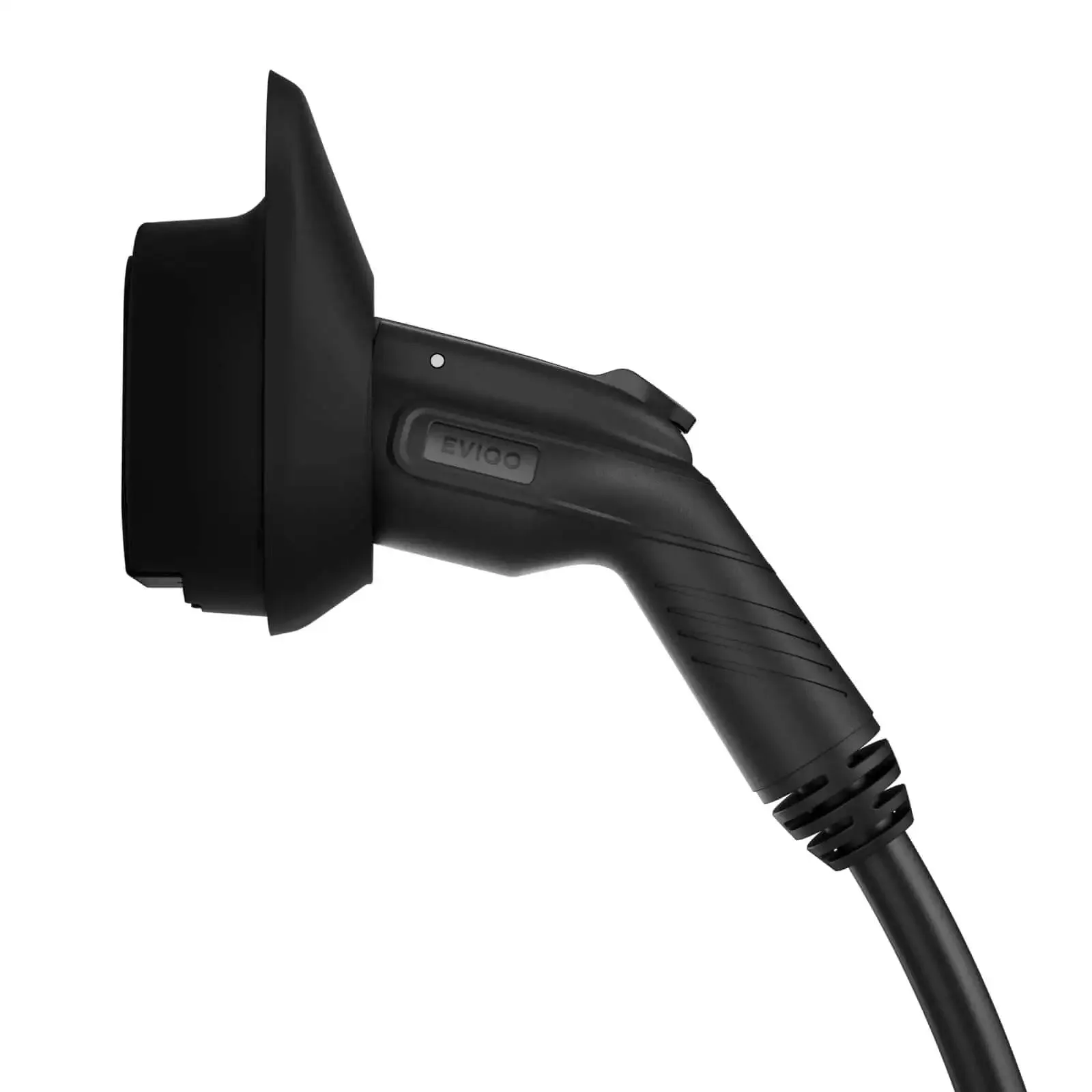
For most households, a Level 2 charger is the point where home charging stops being a hassle and starts being invisible — plug in overnight, wake up to a full battery, and never think about it again.
How charging speed works: amperage, kW & your vehicle
Charger amperage and kW output determine how fast a Level 2 charger can theoretically deliver power, but the number that actually matters is whichever is lower: the charger's output or your car's onboard charger limit.
- A 40-amp charger (9.6 kW) adds roughly 30–37 miles of range per hour
- A 48-amp charger (11.5 kW) can add up to 44 miles per hour on compatible vehicles
- A 32-amp charger adds around 25 miles per hour
In practice, a 40–48 amp charger can typically replenish the average driver's daily 40 miles in under two hours — which is why most owners never need to think about charging speed once it's installed.
Check your vehicle's onboard charger limit first
Before you buy anything, find your EV's maximum AC charging rate — most modern EVs accept 7.7 to 19.2 kW. If your car's onboard charger tops out at 7.7 kW, installing an 11.5 kW (48-amp) home charger will not speed anything up; the car simply will not accept more than it can take. Check your owner's manual or the manufacturer's spec sheet before deciding on a charger's amperage.
As a rule of thumb, a 40-amp charger covers most home EV owners' needs, fully charging most vehicles in 6–8 hours overnight. Only step up to 48 amps if your vehicle supports it and you genuinely need faster daily turnaround; a 32-amp unit is fine if your panel or budget is tight and you drive modest daily miles.
Plug type: J1772 vs NACS
Every Level 2 EV charger connects to your car through one of two connector standards, and picking the wrong one means an adapter you did not plan for.
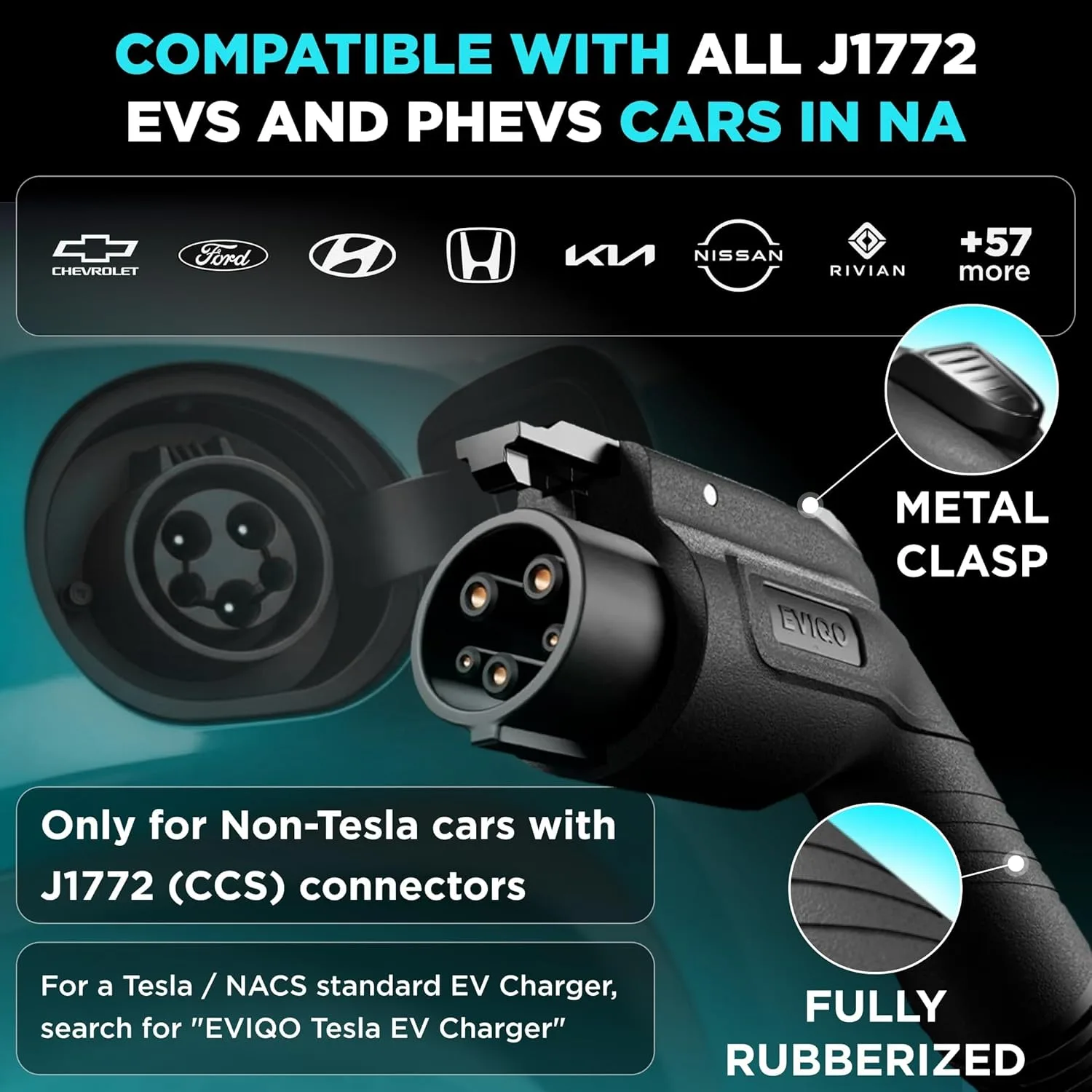
J1772 is the universal Level 2 connector for non-Tesla EVs in the U.S. NACS (North American Charging Standard) is Tesla's connector, now being adopted by most major automakers for 2024-and-newer model years, with wider adoption continuing through 2025–2026. Both standards run on the same underlying 240V AC electrical parameters, and adapters between NACS and J1772 work bidirectionally — so a charger built for one connector can usually still serve the other with an adapter.
If you drive a Tesla or a 2024+ model from a brand that has adopted NACS, look for a charger sold in a NACS version. If you drive most other current EVs, J1772 is still the safer default. Eviqo's EVIPOWER lineup, for example, sells parallel J1772 and NACS versions of the same hardware so you are not stuck guessing.
Plug-in vs hardwired: NEMA 14-50 basics
Level 2 chargers install one of two ways: plugged into an outlet, or wired directly into your panel. Each has real trade-offs worth understanding before you commit.
The NEMA 14-50 outlet is a 50-amp, 250-volt receptacle and the industry-standard connector for plug-in Level 2 chargers. It's the same style outlet many older homes already have wired for an electric range or dryer, and it's compatible with most major charger brands. If you don't already have one, an electrician needs to install it on a dedicated 50–60 amp circuit before a plug-in charger will work.
| Install type | Best for | Trade-off |
|---|---|---|
| Plug-in (NEMA 14-50) | Renters, owners who may move, DIY-friendly setups | Needs an existing or newly installed outlet |
| Hardwired | Permanent installs, higher amperage (up to 50A), garages without an outlet already | Requires a licensed electrician to wire it in; less portable |
A plug-in charger is easier to move if you relocate, while a hardwired unit is generally the cleaner, more permanent option for a garage you own long-term — and it's often the only path if your amperage needs exceed what a 50-amp outlet can safely deliver.
Cable length, smart features & weatherproofing
Two practical details get overlooked until installation day: cable length and whether the unit can survive where you're mounting it.
- Cable length — measure the distance from your planned mounting spot to where your car parks. A short 10-foot cable can leave you stretching or re-parking; a 25-foot cable gives real flexibility for garages or driveways where the charging port and mounting point don't line up.
- Smart / Wi-Fi features — app-based control lets you schedule off-peak charging, monitor sessions remotely, and get notified when a charge finishes. Look for a charger with a dedicated iOS/Android app rather than a bare hardware-only unit.
- Weatherproofing — if the charger will live outdoors or in an unconditioned garage, an IP66-rated enclosure is the benchmark for resisting moisture, dust, and temperature swings.
While you're rethinking power in the garage, it's worth tidying up the smaller charging gear too — a compact GaN charger can replace a drawer full of bulky phone and laptop bricks around the same workspace.
Panel capacity and breaker sizing
Every Level 2 charger install has to satisfy the National Electrical Code's Article 625, which requires the circuit breaker to be sized at 125 percent of the charger's continuous rating. In practice, that means a 40-amp charger needs at least a 50-amp breaker, and a 48-amp charger needs at least a 60-amp breaker. The charging circuit also has to be dedicated — no shared outlets or appliances on that same breaker — and Level 2 receptacles rated 50 amps or less must include Ground Fault Circuit Interrupter (GFCI) protection.
Most U.S. homes run 100- or 200-amp electrical service, and roughly 1 in 5 homes needs a panel upgrade to safely add Level 2 charging on top of existing loads — older homes on 60-amp service almost always will. A qualified electrician can run a load calculation to tell you, before you buy a charger, whether your panel has room or needs an upgrade.
Certifications that actually matter
Home Level 2 chargers should carry safety certification from a Nationally Recognized Testing Laboratory — UL, CSA, or ETL all indicate the unit was tested against the same harmonized safety standard, and any one of the three is generally sufficient for a local electrical inspector to approve a permit. Beyond safety, an Energy Star mark verifies energy efficiency, and FCC certification confirms the unit won't interfere with other electronics in your home.
Skipping certification isn't just a compliance issue — an uncertified charger can fail a permit inspection outright, forcing a costly do-over. Confirm the certifications on the spec sheet before you buy, not after the electrician shows up.
Installation basics: what to expect
A typical Level 2 install follows the same rough sequence regardless of brand:
- An electrician performs a load calculation to confirm your panel has capacity (or identifies the upgrade needed).
- They run a dedicated circuit sized to your target amperage, with a breaker at 125% of the charger's rating.
- For plug-in models, they install a NEMA 14-50 outlet; for hardwired models, they wire the unit directly to the panel.
- The install is inspected and permitted by your local Authority Having Jurisdiction before use.
Budget for the electrician's labor and any panel work separately from the charger itself — the unit is only part of the total project.
How to choose the right charger for you
Pull the decision together with four questions: What's my vehicle's onboard charger limit? Do I need J1772 or NACS? Do I have (or want) a NEMA 14-50 outlet, or should I hardwire? Does my panel have room at the amperage I need?
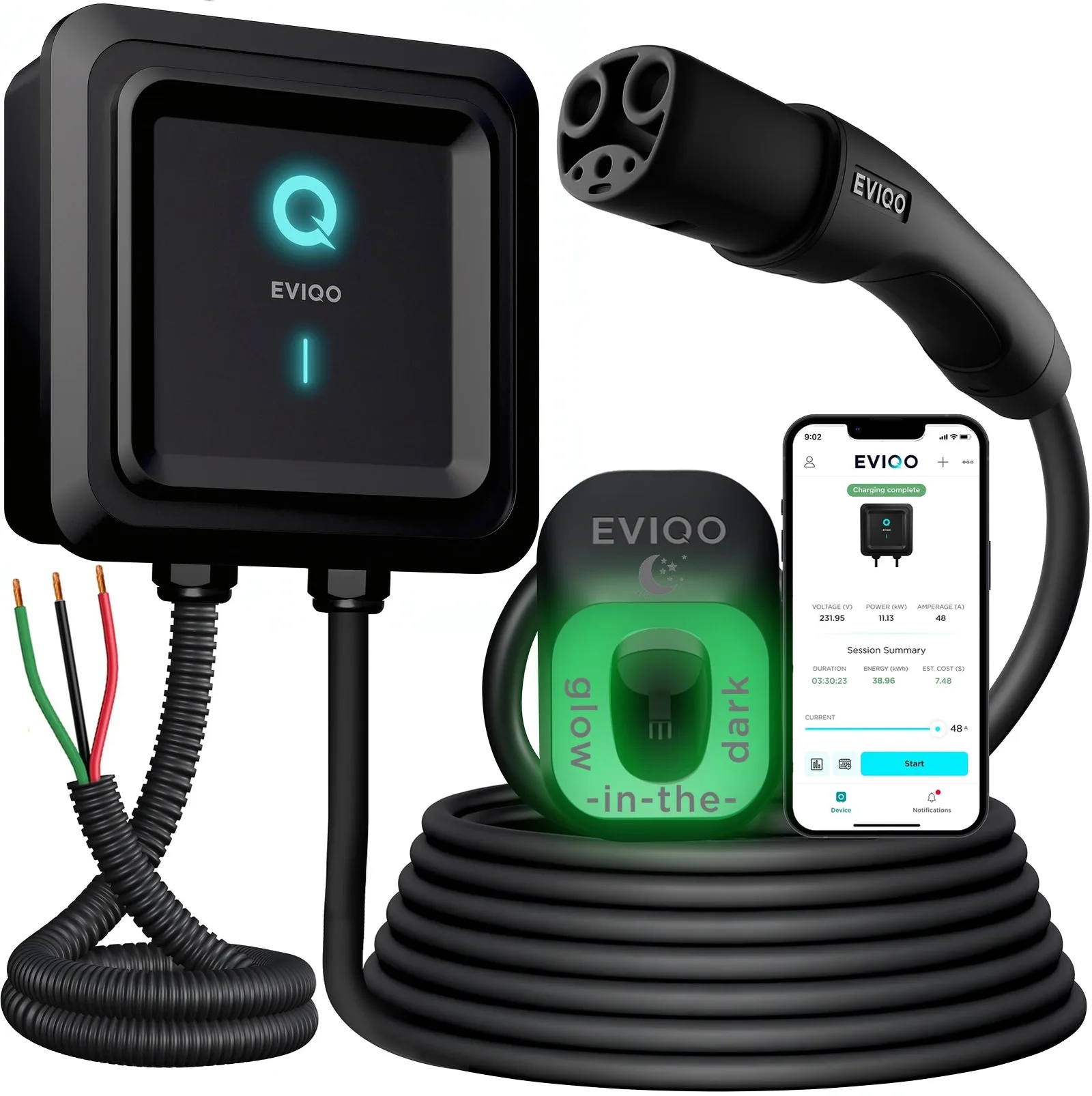
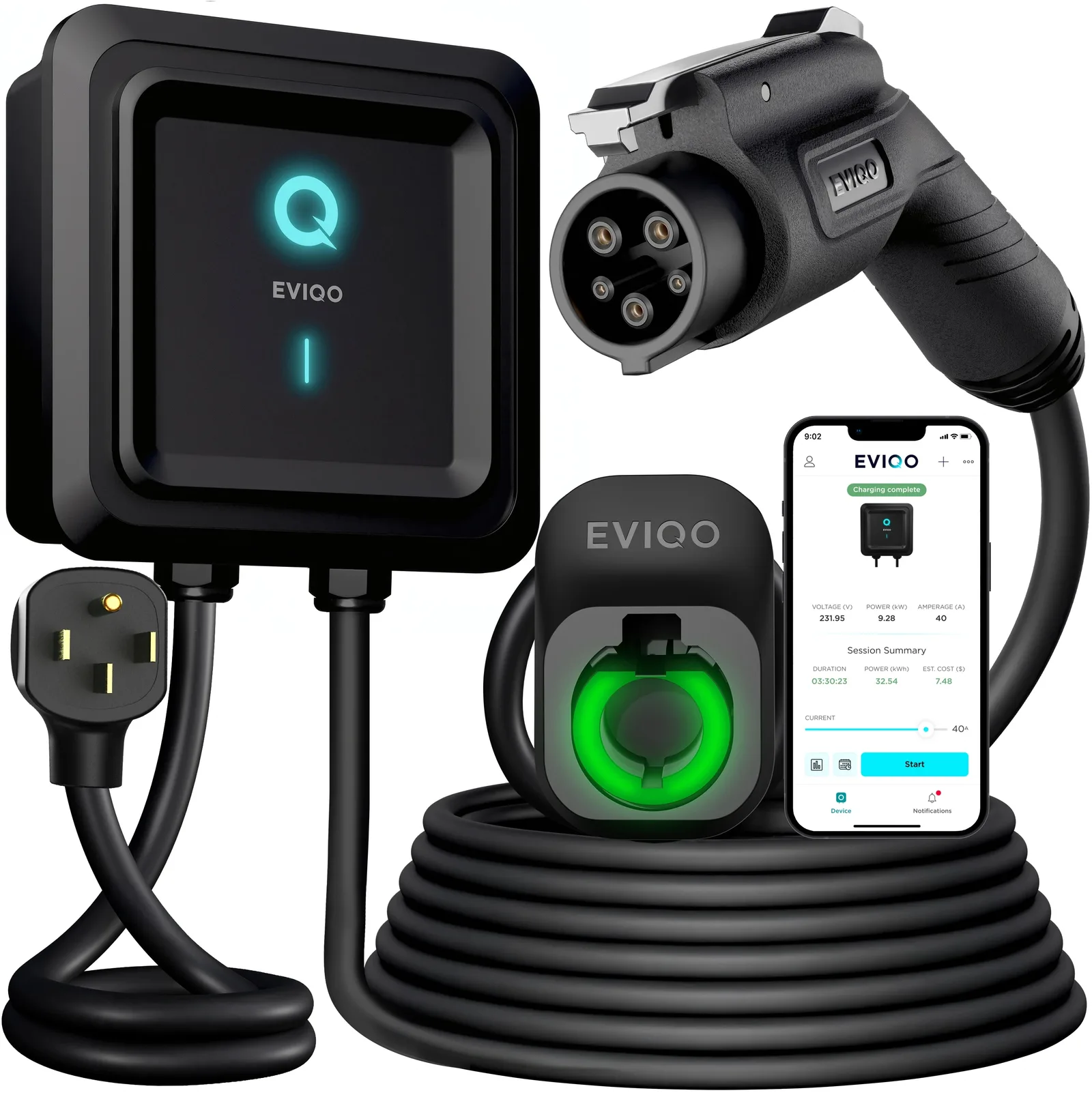
Eviqo EVIPOWER Level 2 Charger
Eviqo's EVIPOWER lineup covers both J1772 and NACS connectors across plug-in and hardwired 40A/48A models, each with a 25-foot cable, Wi-Fi app control, and an IP66 weatherproof enclosure — a straightforward way to match the checklist above without piecing together specs from five different brands.
Compare Eviqo charger modelsWhere to go next
The right Level 2 EV charger comes down to matching amperage to your vehicle, confirming your plug type, and getting an honest read on your panel's capacity before you buy. Once you've narrowed down amperage and connector type, the next step is comparing specific models against each other and deciding between a plug-in or hardwired install for your garage.
Check current Eviqo pricingSources
This guide is educational and general in nature. Electrical work, including panel upgrades and dedicated circuits for EV charging, should always be performed or verified by a licensed electrician in accordance with local code and permitting requirements. Product specifications are drawn from manufacturer sources and are current as of the last reviewed date.
Recommended for you
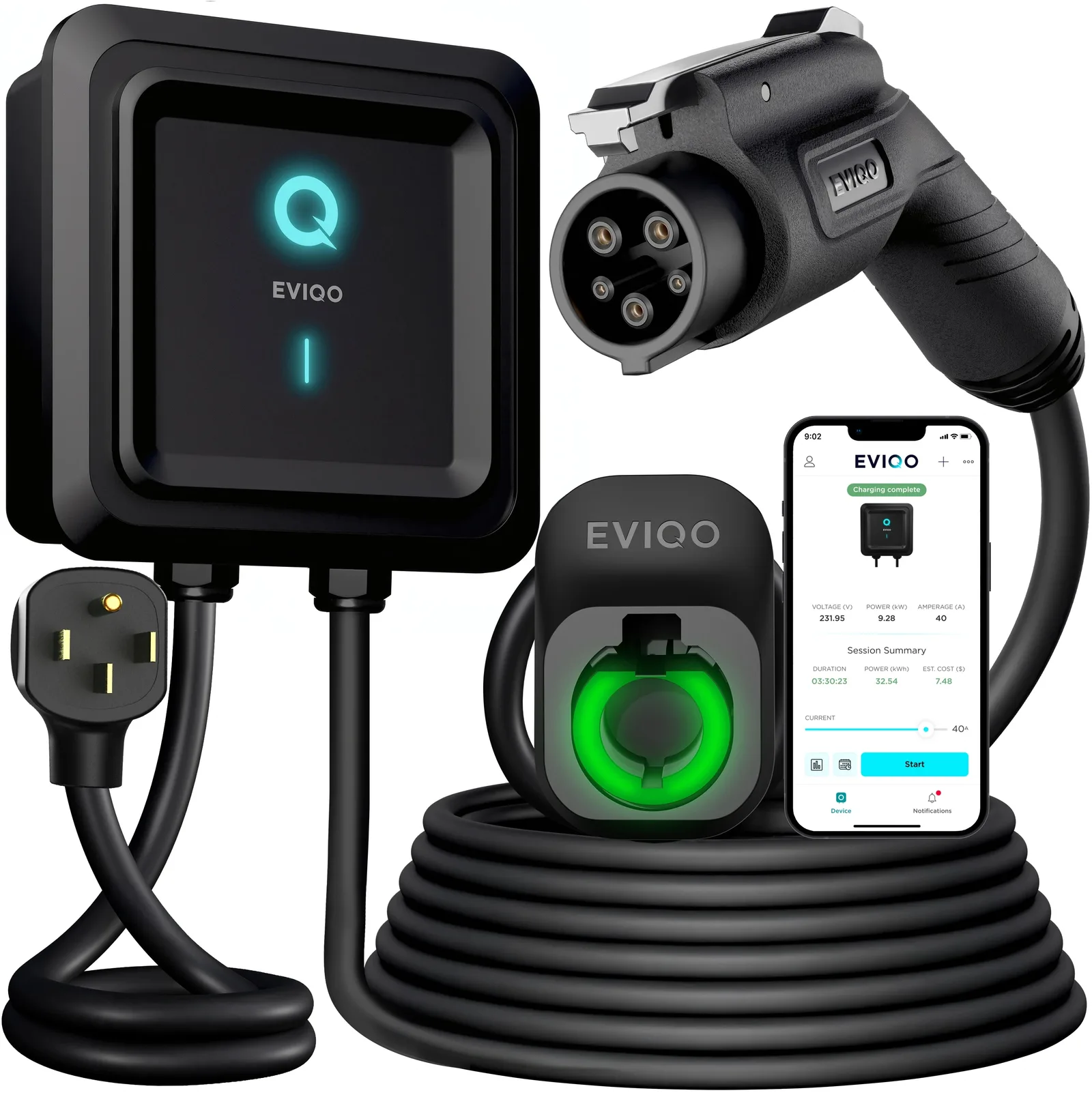 EVIQO EV Charger Review 2026: Worth Buying? Full Guide
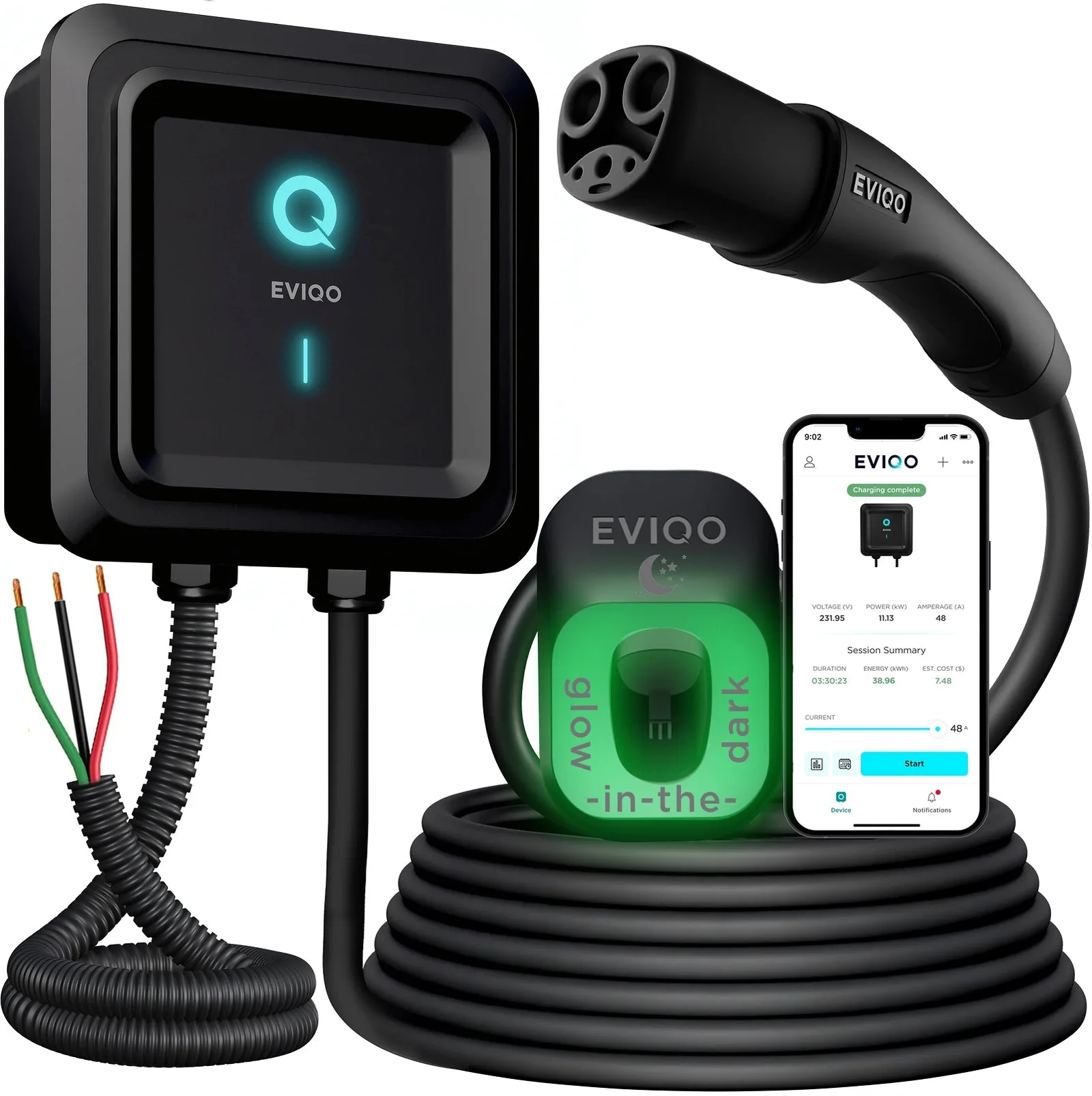 Plug-In vs Hardwired EV Charger: Best Setup for 2026
 ActionGlow Review 2026: Best Waterproof LED Lights? (IP68)
 LED Lights for Wakeboarding: 7 Night-Riding Safety Tips (2026)
 LED Lights for Snowboarding: 2026 Night Skiing Safety Guide
 RAWM Gaming Review 2026: Best 8K Wireless Mice Guide