Svbony Telescope Review 2026: 7 Models Worth Your Budget
An honest Svbony telescope review: where the SV503 ED refractors, MK127 Maksutov-Cassegrain, and SC571CC cooled camera earn their keep — and where the budget FPL-51 glass shows its limits.
Is Svbony a good telescope brand? The ED glass question
- Is Svbony a good telescope brand? The ED glass question
- SV503 ED refractors vs Maksutov-Cassegrain: which Svbony design fits your sky
- Choosing by your goal: planetary, deep-sky, or wide-field
- Cooled astrophotography cameras: the SC571CC changes the math
- Common mistakes when buying an entry-level telescope
- Where Svbony sits against the alternatives
If you are weighing a Svbony telescope review against pricier astronomy brands, the honest answer is: it depends on what you point it at. Svbony builds the value end of the optics market — refractors, Maksutov-Cassegrain (Mak-Cass) scopes, and dedicated astrophotography cameras that trade premium glass for a friendlier entry price. This guide breaks down where that trade-off pays off and where it does not.
A solid pick if you want real ED-glass optics and a cooled astro camera without premium-brand pricing — just know the FPL-51 glass and single-stage cooling are the tier you're buying into.
Across the range — the SV503 ED refractors, the MK105/MK127 Maksutov-Cassegrains, the SV550 APO triplet, and the SC571CC cooled camera — Svbony's pitch is consistent: get you real, usable optics and imaging gear at the affordable end of the hobby, without pretending to match flagship APO glass.
See the Svbony telescope rangeKey highlights
- The SV503 ED line spans 70mm, 80mm, and 102mm apertures, all using S-FPL51 ED glass with optional field flatteners and focal reducers.
- ED glass corrects all three primary color wavelengths onto the same focal plane, virtually eliminating the purple fringing seen on cheaper achromats.
- The SC571CC cooled camera runs a 26MP Sony IMX571 APS-C sensor with over 80% quantum efficiency and 14 stops of dynamic range.
- Maksutov-Cassegrain designs are inherently free of chromatic aberration but run slow (f/12–f/16), making them planetary and lunar specialists rather than wide-field imagers.
Is Svbony a good telescope brand? The ED glass question
The honest answer starts with glass, not marketing. Extra-low Dispersion (ED) glass in a refractor bends all three primary color wavelengths — red, green, and blue — onto the same focal plane, which is what removes the purple-violet fringing you see around bright stars and planets in cheap achromatic scopes.
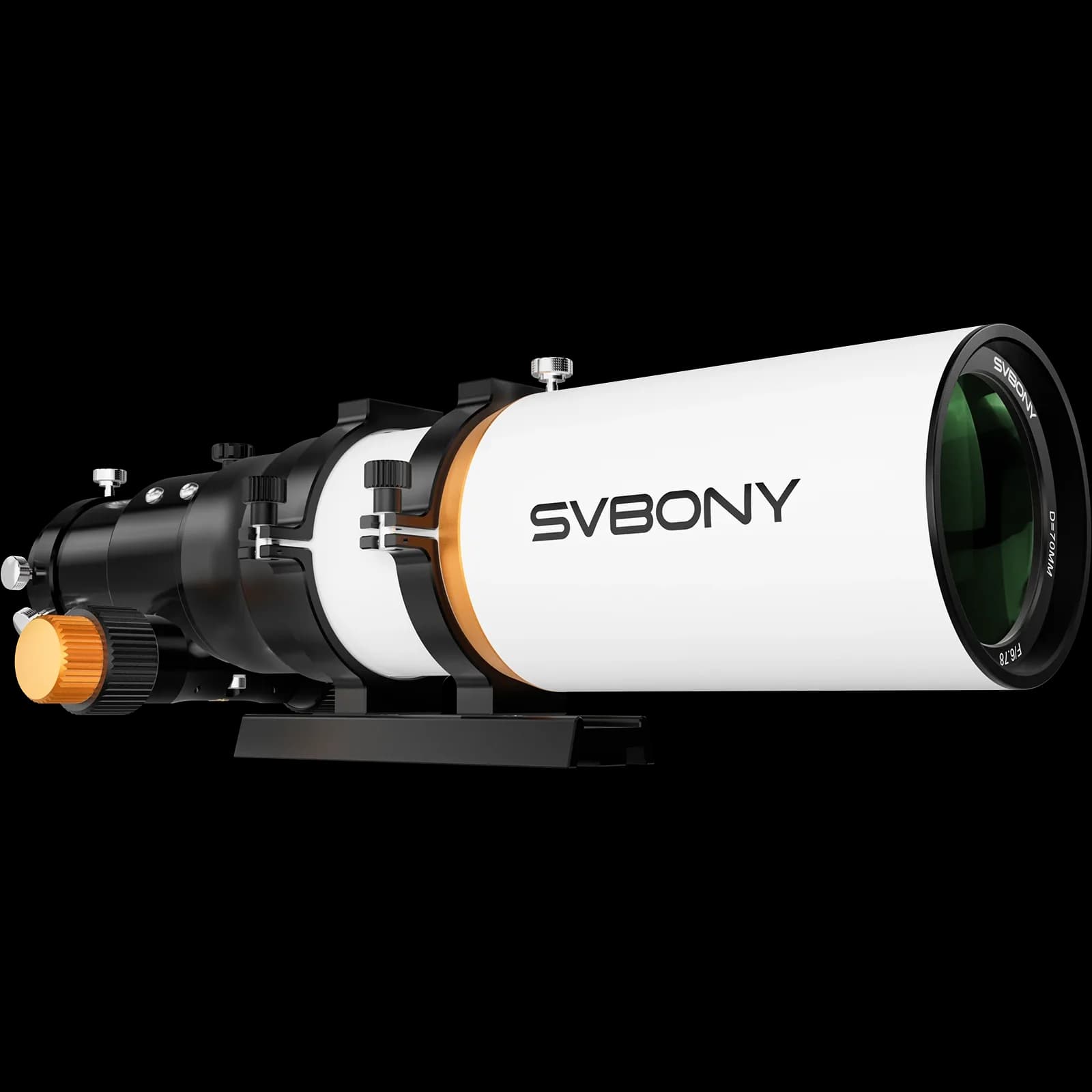
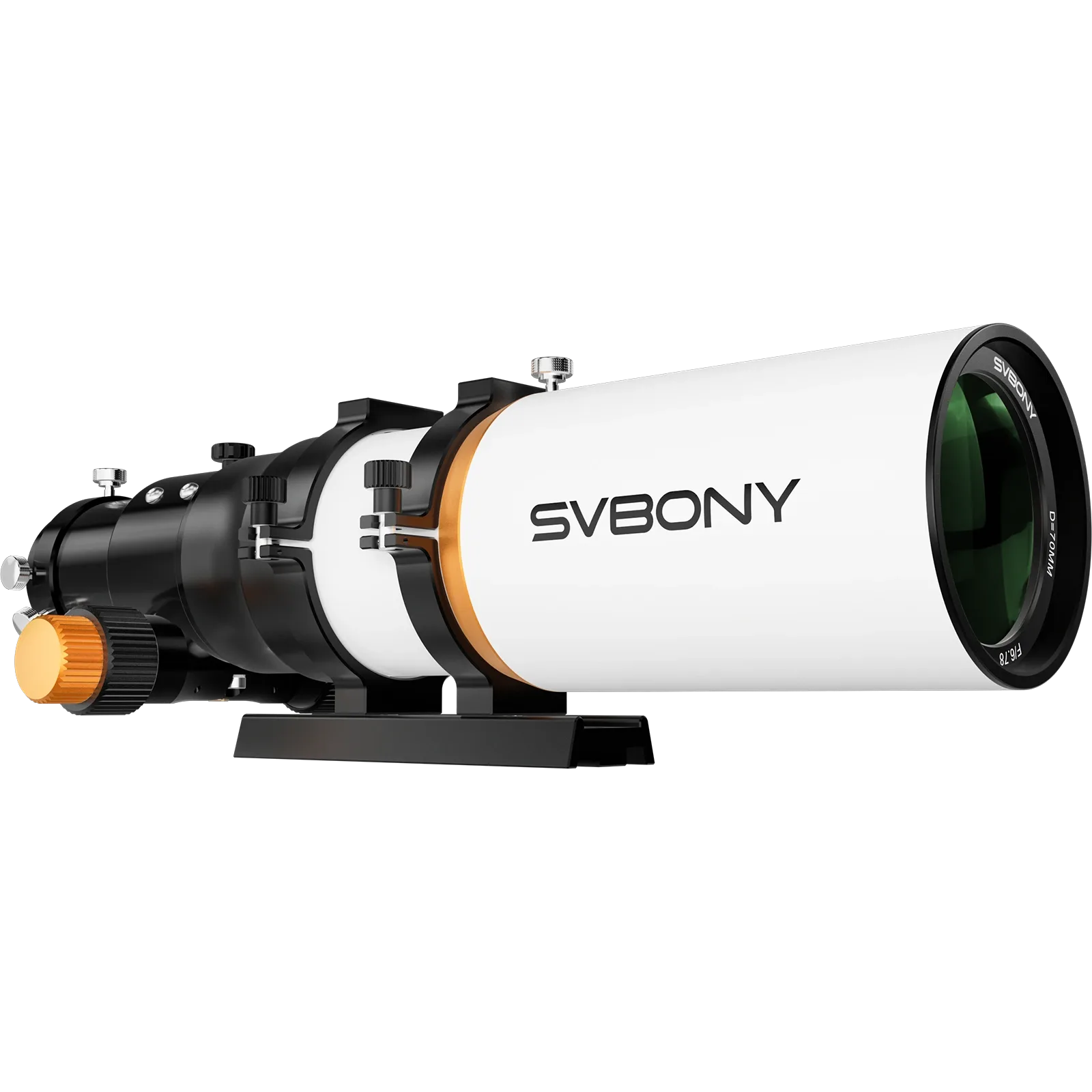
Svbony's SV503 series uses S-FPL51 ED glass across all three apertures — 70mm (f/6.78, 474mm focal length), 80mm (f/7, 560mm), and 102mm (f/7, 714mm) — each shippable with an optional field flattener or focal reducer for astrophotography.
Where the honesty matters: FPL-51 is a genuine ED glass, but it sits a tier below the FPL-53 or fluorite-class glass used in premium APO triplets like Svbony's own SV550. That does not make the SV503 a bad scope — actual user reports on Cloudy Nights describe the SV503 102ED as "a very good telescope, well made, decent lens, and very versatile with the focal reducer," built by Kunming United Optics, the same OEM that manufactures Astro-Tech's premium refractors, with minimal chromatic aberration even at high magnification.
SV550 80 APO Triplet
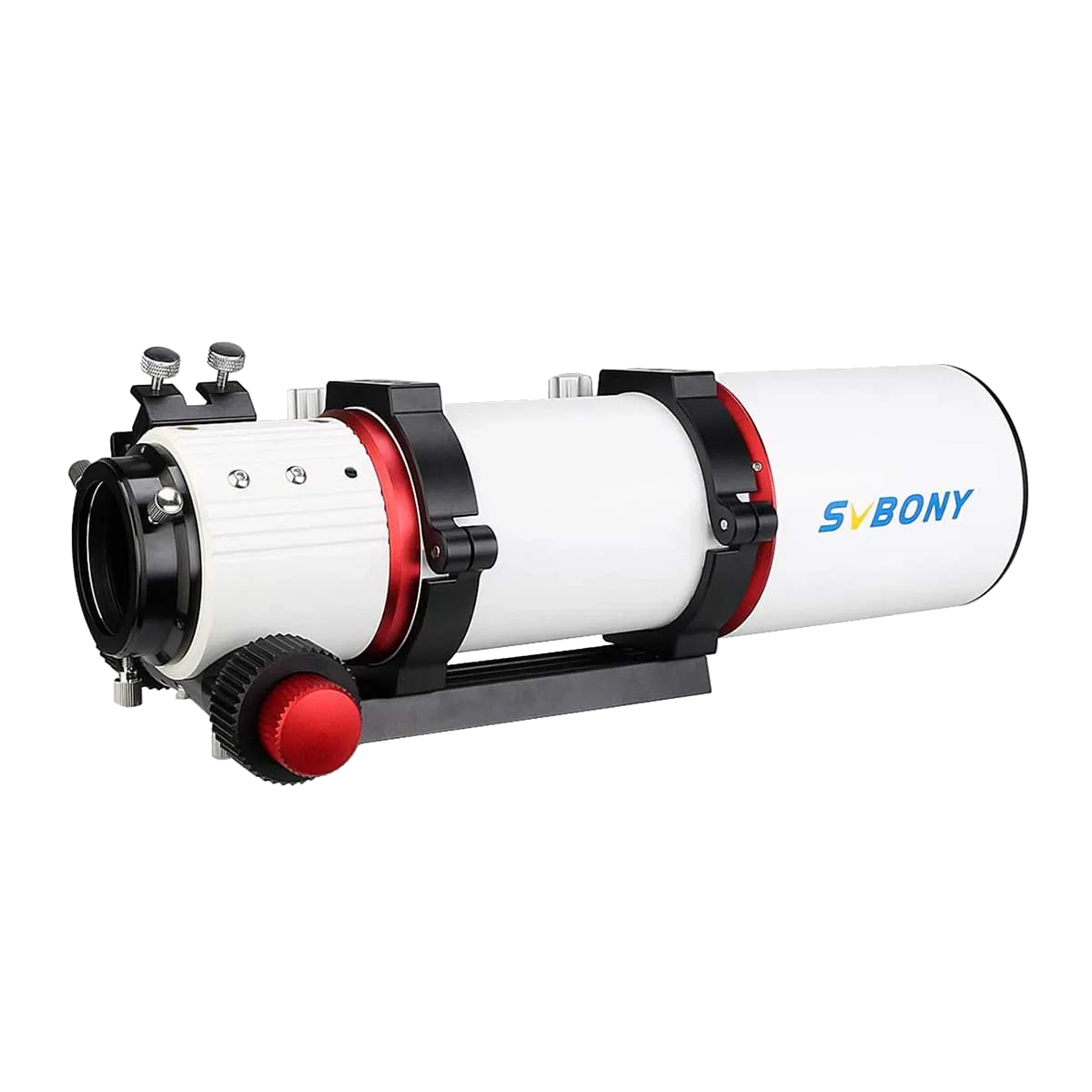
If contrast and color correction matter more to you than budget, the SV550 moves to a triplet APO design — a meaningful step above the SV503's ED doublet for imagers chasing tighter star color at the eyepiece.
Check the SV550 APO tripletSV503 ED refractors vs Maksutov-Cassegrain: which Svbony design fits your sky
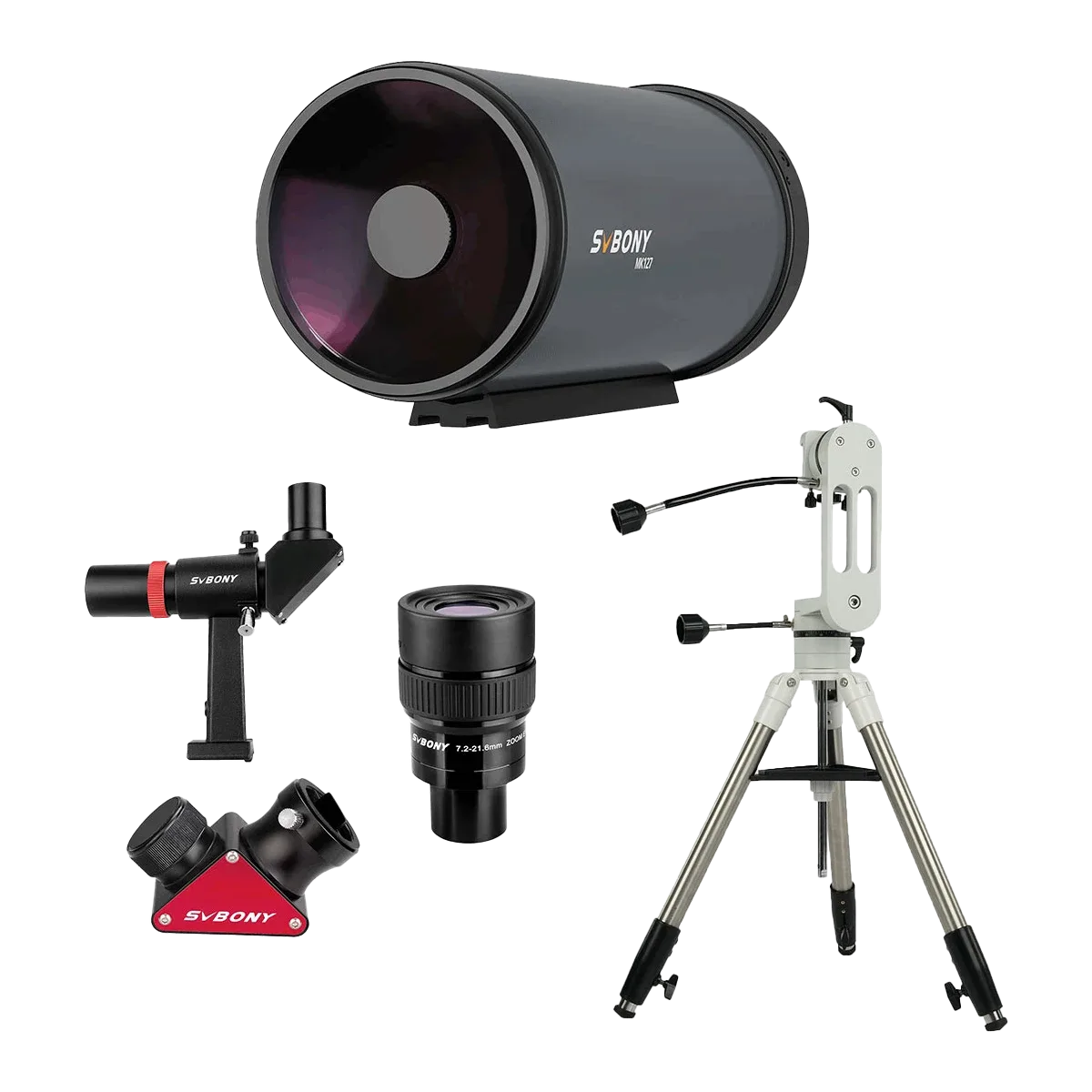
Svbony's catalog splits into two very different optical philosophies, and picking the wrong one for your goal is the single most common regret among first-time buyers. Maksutov-Cassegrain (Mak-Cass) designs like the MK105 and MK127 are catadioptric — a mirror-and-lens hybrid — with no chromatic aberration at all by design, but a slow native focal ratio of f/12 to f/16. APO and ED refractors run faster, typically f/6 to f/10+, and are built for wide fields rather than maximum magnification.
| Design | Chromatic aberration | Typical focal ratio | Best use case |
|---|---|---|---|
| SV503 ED refractor | Virtually eliminated by ED glass | f/6.78–f/7 | Wide-field deep-sky, portable visual use |
| SV550 APO triplet | Corrected to a higher standard than an ED doublet | Fast, imaging-oriented | Deep-sky astrophotography, tightest star color |
| MK105 / MK127 Mak-Cass | None (catadioptric design) | f/12–f/16 | Planets, the Moon, high-magnification visual |
Choosing by your goal: planetary, deep-sky, or wide-field
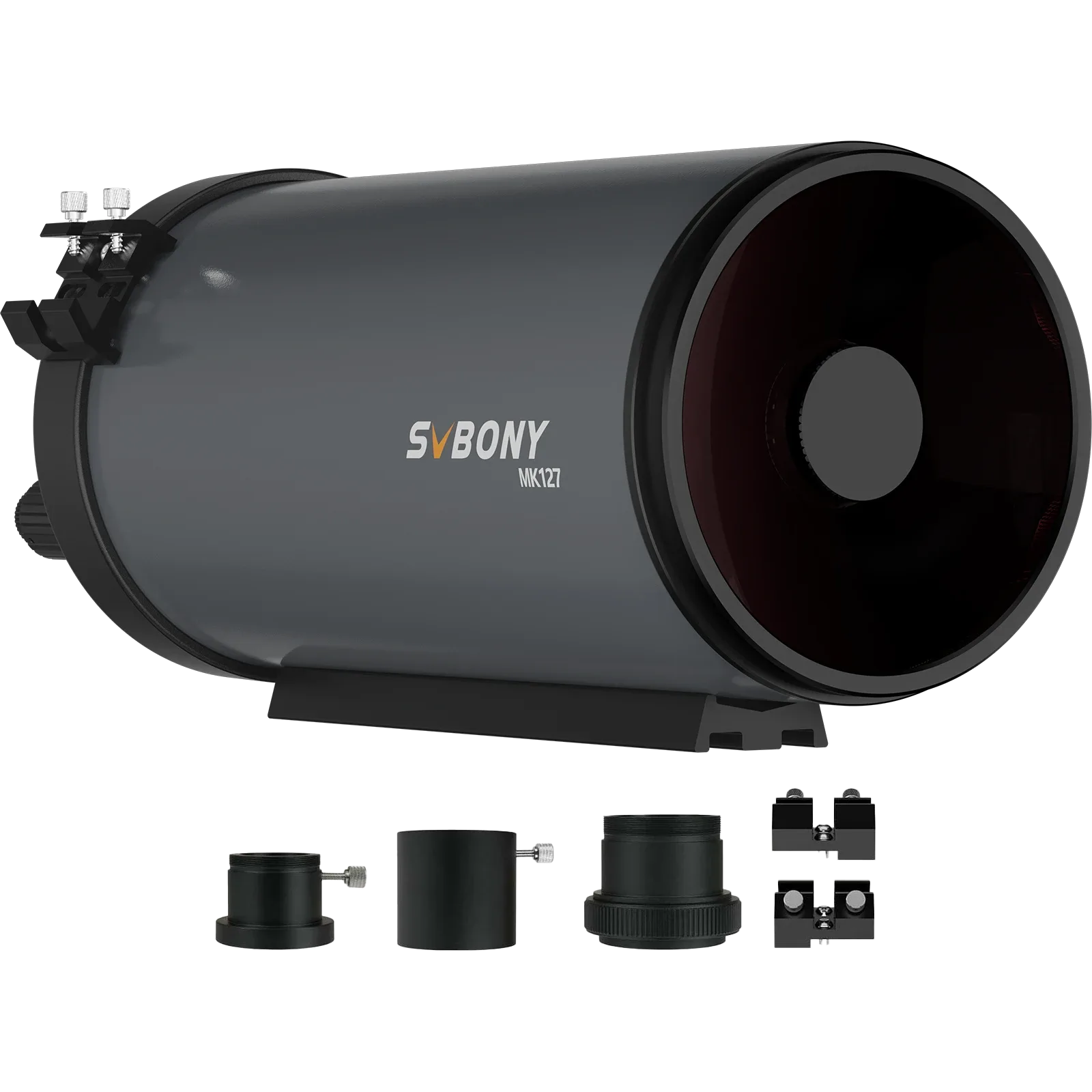
Match the scope to the target, not the other way around. If you mostly want to split double stars, resolve Saturn's rings, or pick out lunar craters at high power, the MK105 or MK127's long focal length and coma-free image win out — you trade a wider field for magnification and contrast on small, bright targets.
If nebulae, galaxies, and star clusters are the goal, an ED or APO refractor is the better fit. The SV503's faster focal ratios pull in more light per unit time, which shortens the exposures you need for deep-sky astrophotography, and the optional field flattener keeps stars round to the edge of a camera sensor rather than just the eyepiece's sweet spot. Buyers who genuinely cannot decide often start with the 80mm SV503 — it is the aperture where portability, focal ratio, and image scale balance out for both a wide-field camera and a mid-power eyepiece.
Cooled astrophotography cameras: the SC571CC changes the math
A telescope is only half the imaging chain — sensor noise decides how clean your final image looks after stacking. The SC571CC pairs a Sony IMX571 APS-C BSI CMOS sensor (26 megapixels, 6244×4168, 3.76µm pixels) with over 80% quantum efficiency, a 16-bit ADC, and roughly 14 stops of dynamic range, plus two-stage TEC cooling that pulls the sensor up to 35°C below ambient and a 512MB DDR3 buffer over USB 3.0 Type-C for stable long-session transfer.
Cooling is not a spec-sheet vanity number — it directly determines how much thermal noise survives into your final stack. Dropping sensor temperature by roughly 5°C approximately halves dark current and cuts dark-current shot noise by about five-sevenths; dedicated cooled cameras reach -15°C to -20°C where an uncooled DSLR typically sits at +18°C to +23°C, which is the difference between a smooth deep-sky image and one full of speckled noise after stretching.
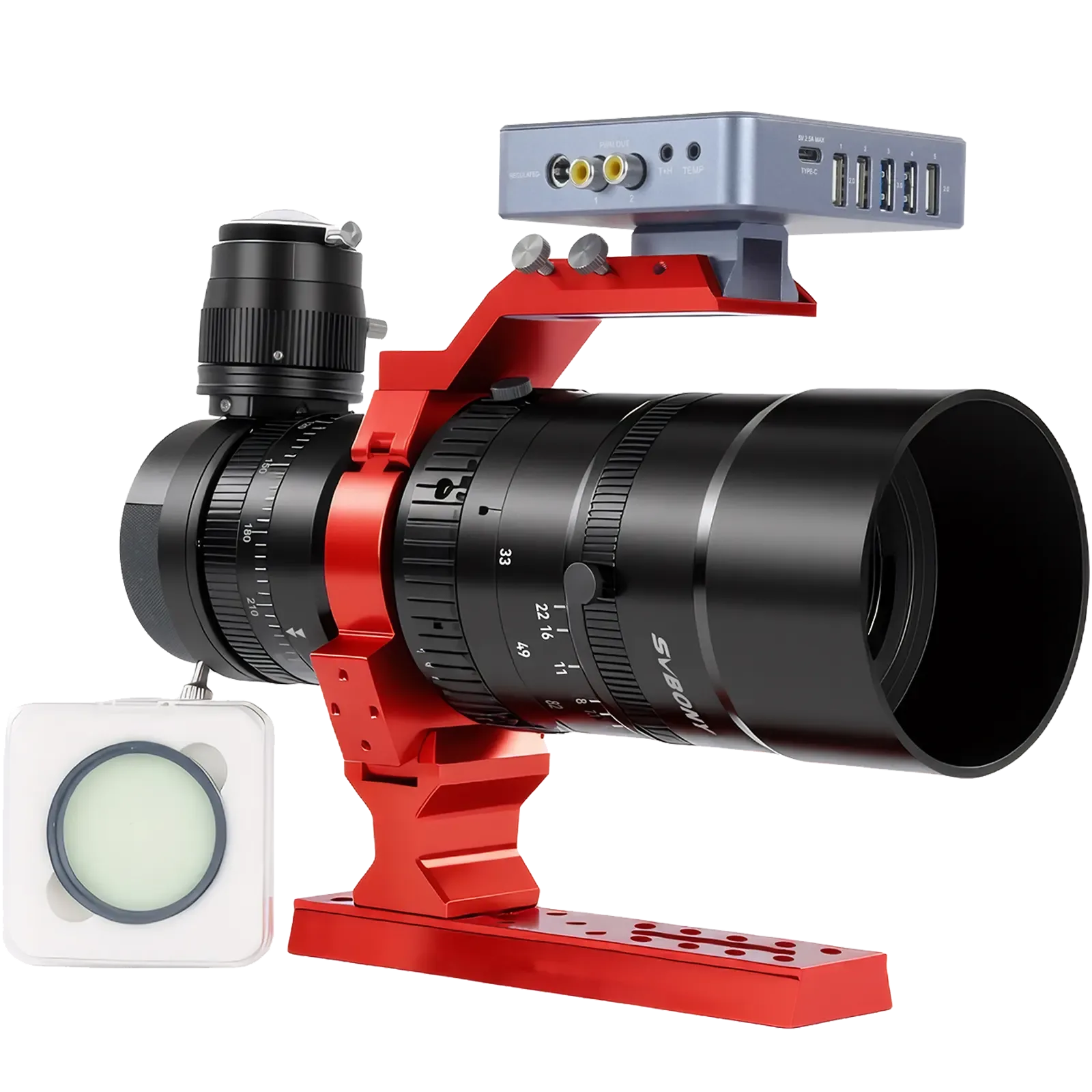
Svbony SC571CC Cooled Camera
What We Like
- Meaningful cooling headroom for a non-premium-tier camera
- APS-C sensor size suits wide-field refractors like the SV503 and SV550
- USB 3.0 with buffered transfer avoids frame drops on long sessions
What to Consider
- Two-stage TEC still trails the deepest cooling on flagship astro cameras
- APS-C image circle needs a matched flattener/reducer to avoid vignetting
For anyone stacking dozens of sub-exposures over a night, the cooling spec is the one number worth reading closely — it is the difference between a clean stack and hours spent fighting noise in post-processing.
Common mistakes when buying an entry-level telescope
Most disappointment with a first telescope traces back to one of a handful of avoidable errors, not the optics themselves.
- Buying for magnification, not aperture. Aperture — not the eyepiece's advertised power — determines how much detail and light a scope can actually gather.
- Skipping the mount budget. A shaky mount ruins even excellent optics like an ED refractor or a Mak-Cass at high power; budget for a stable tripod or tracking mount alongside the optical tube.
- Ignoring focal ratio for your goal. A slow f/12–f/16 Mak-Cass is a poor deep-sky imager, and a fast wide-field refractor is a mediocre planetary scope — match the ratio to the target.
- Underestimating cooldown and collimation. Optical tubes need time to reach ambient temperature before sharp views are possible, especially with larger apertures.
- Forgetting to protect gear in the field. Dew, dust, and knocks are the most common causes of avoidable optical damage on a night out — see our guide on how to protect your optics in the field for habits that carry over from camera lenses to telescope objectives.
Where Svbony sits against the alternatives
Svbony's position in the market is straightforward once you stop comparing it to flagship APO brands and instead compare it to other budget-to-mid-tier options. The SV503's FPL-51 glass, built by the same OEM that supplies Astro-Tech, puts it ahead of no-name achromats and on par with other value ED refractors, while stopping short of FPL-53/fluorite-class APO triplets on ultimate color correction. The MK105/MK127 Mak-Cass line competes well against other compact planetary scopes on portability, thanks to the folded catadioptric optical path. If you are also comparing outdoor optical gear more broadly, our field-gear buying guide covers the accessories that protect any optical investment, telescope or camera lens alike.
Bottom line: if your budget realistically sits below premium APO pricing, Svbony gives you real ED glass, a genuine cooled astro camera, and a Mak-Cass option that covers planetary observation — a rare spread of honest, usable gear at one brand's affordable tier.
Our Verdict
For a first serious refractor, the SV503 70ED or 80ED is the safest starting point in this Svbony telescope review — genuine ED glass without overcommitting your budget. Planetary-focused buyers should look at the MK127, and anyone building a deep-sky imaging rig should pair an SV503/SV550 refractor with the SC571CC cooled camera rather than buying the camera alone.
Explore the full Svbony rangeReferences
This article contains affiliate links. Velextrics may earn a commission if you purchase through them, at no extra cost to you. Product specifications are sourced from the manufacturer and public reviews as of the last reviewed date above; always confirm current specs and compatibility with the retailer before buying.
Recommended for you
 Pergear Review 2026: Best Store for Third-Party Lenses?
 INNOVV Motorcycle Dash Cam Guide 2026: Best K5 vs K6 vs K7
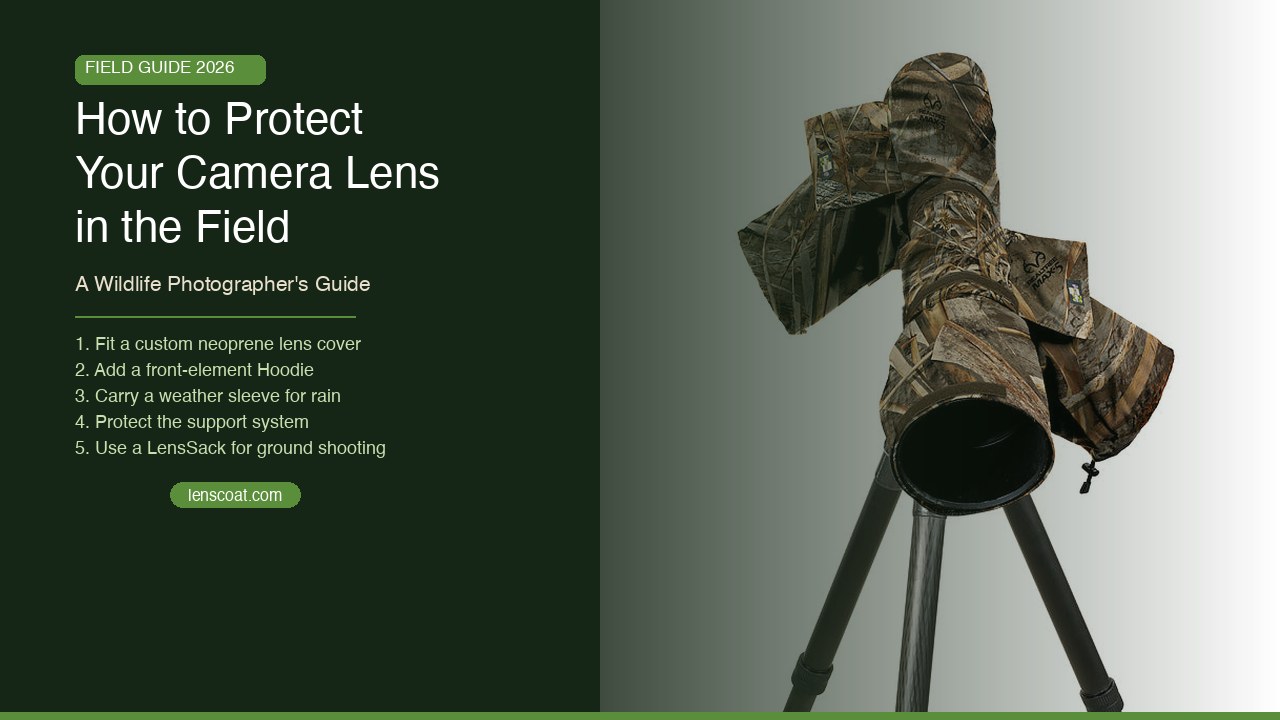 How to Protect Your Camera Lens in the Field: A Wildlife Photographer’s 2026 Guide
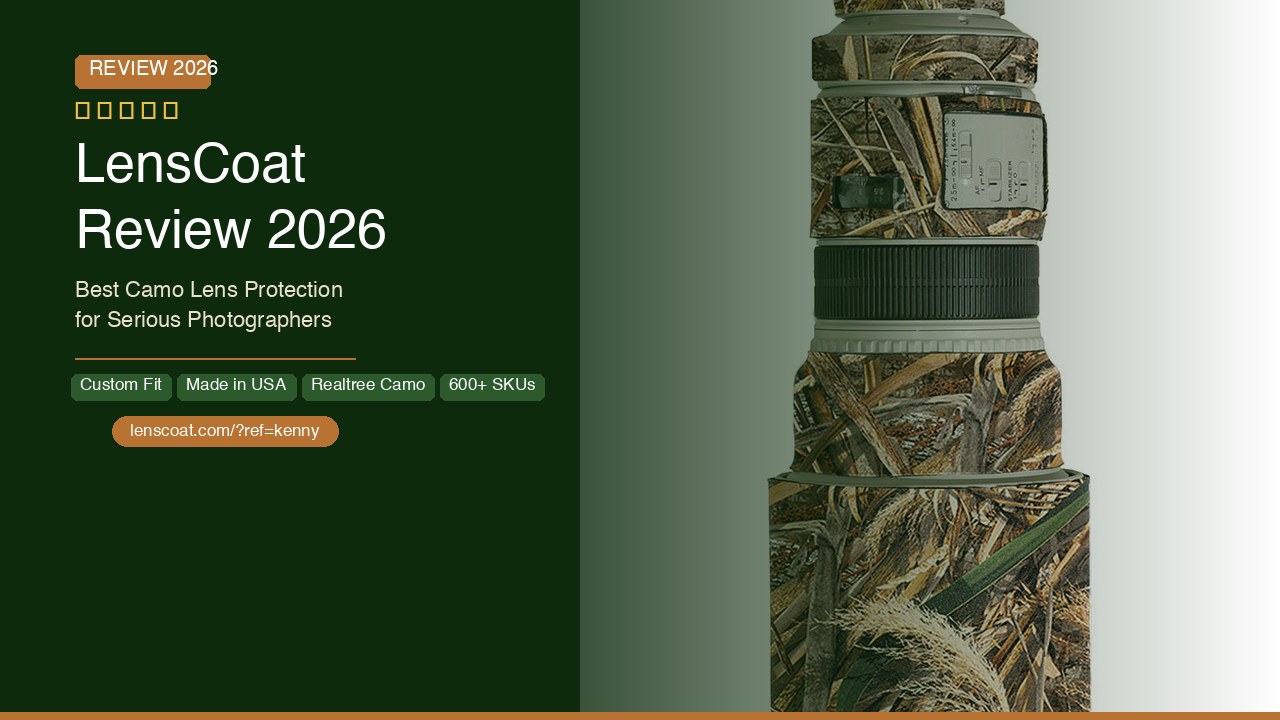 LensCoat Review 2026: The Best Camo Lens Protection for Serious Photographers
 Best Camera Lens Covers for Wildlife Photography in 2026: The Complete Field Guide
- Retropia Review: 5 Best Retro Camera Accessories for Modern Creators