A fall. A sudden health event. A moment when someone living alone needs help and can’t reach a phone. These are the situations that medical alert watches exist to address – and the difference between a device that works and one that almost works is not subtle when that moment comes.
The best GPS medical alert watch for seniors in 2026 does four things well: it detects falls automatically, it connects to emergency contacts or a 24/7 response center immediately, it provides accurate location data to people who need to find you, and it stays on your wrist comfortably enough that you don’t leave it on the nightstand when it matters most.
This guide covers what to look for, how the main options compare, and why the specifications that sound impressive in marketing sometimes matter less than the ones that don’t get mentioned.
Disclosure: this article contains affiliate links. We may earn a commission if you buy through our links, at no extra cost to you.
Why GPS Matters in a Medical Alert Watch
Traditional medical alert systems used base units that only worked within a limited range of the home. If someone fell in the backyard or at a neighbor’s house, the system didn’t reach. GPS-equipped medical alert watches change this – they provide location regardless of where the wearer is, turning a home-only system into one that travels with the user.
For seniors who remain active – walking, shopping, visiting family – GPS coverage is the difference between a device that provides reassurance anywhere and one that’s only useful inside. For family members tracking an elderly parent with dementia or early cognitive decline, GPS positioning enables real-time location checks without calling to interrupt.
The core specs that determine GPS usefulness:
– Network type: 4G is now standard and preferred over 3G (increasingly deprecated) for coverage and response speed
– Positioning accuracy: GPS with cell tower and Wi-Fi assist gives the fastest and most accurate location
– Battery life: GPS is the primary battery drain; how long the watch lasts between charges affects whether it’s actually worn all day
– Refresh rate: How often location updates – relevant for active users or those being actively monitored
What to Look for in a Senior Medical Alert Watch
Fall Detection
Automatic fall detection is the feature that justifies a medical alert watch over simpler options. The technology uses accelerometers and gyroscopes to identify the motion pattern of a fall – a rapid downward movement followed by impact – and triggers an alert automatically, without the wearer needing to press a button.
This matters because the specific scenario that medical alert devices are most needed for – someone incapacitated by a fall – is the same scenario where pressing a button may be impossible. A fall that results in loss of consciousness, extreme pain, or immobility on a hard floor is a situation where automatic detection is the difference between fast help and hours of waiting.
Key variables to evaluate:
– Sensitivity setting: Some devices allow adjustment between more and less sensitive detection; high sensitivity may trigger false alerts during vigorous activity, while low sensitivity may miss slower-impact falls
– Alert process: What happens when a fall is detected – automatic call to response center, call to family contacts, or both
– Override window: Whether the wearer can cancel a false alert before it escalates
SOS Calling and Emergency Contacts
Manual SOS is the backup to fall detection and the primary protection against health events that don’t involve falling – chest pain, stroke symptoms, sudden dizziness, or any situation where the wearer needs to initiate a call themselves.
Two-way calling (where the watch functions as a speakerphone) allows emergency contacts or response center staff to speak directly with the wearer and assess the situation. This is significantly more useful than a one-way SOS that just sends a location ping.
Contact capacity typically runs from 3-5 pre-programmed contacts. Some devices call contacts in sequence; others call all simultaneously. Sequential calling is more reliable if some contacts may not answer immediately.
Waterproof Rating
Bathrooms are the highest-risk environment for elderly falls. A medical alert watch that isn’t waterproof is one that users will take off to shower – eliminating coverage at the exact time when it’s most needed. Look for at least IPX5 (splash-resistant); 3-ATM (30m) or higher is significantly more useful and means the watch can stay on through showers and washing up without concern.
Monitoring Plan
Devices that connect only to pre-programmed family contacts depend on those contacts answering calls promptly. A professional 24/7 monitoring service provides trained emergency response operators who answer immediately, assess the situation, and dispatch emergency services when appropriate – at any time of day or night.
Monitoring plans typically run as annual subscriptions. The key is understanding what’s included: some plans provide operator answering and dispatch capability; others add GPS monitoring and check-in services.
Best GPS Medical Alert Watch for Seniors 2026: Top Picks
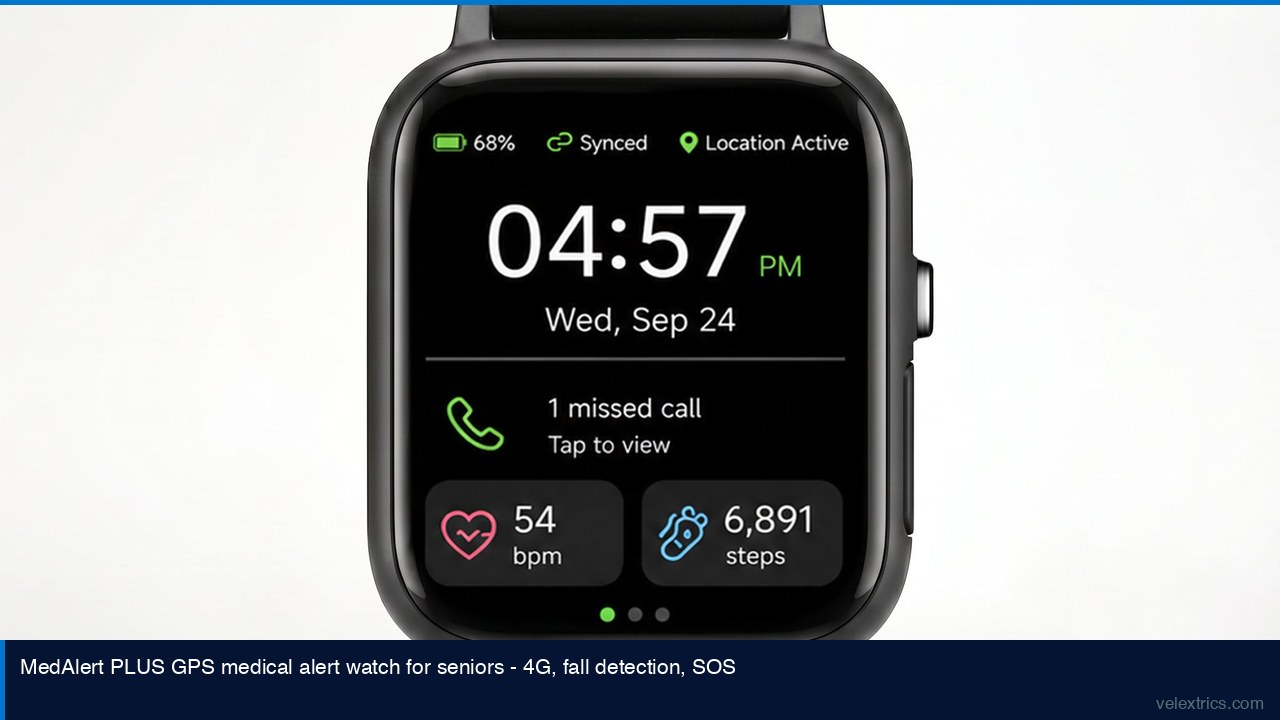
MedAlert PLUS ($599 AUD) – Best Overall with 24/7 Monitoring
MedAlert’s PLUS model is the flagship of their senior safety lineup, combining 4G GPS tracking, automatic fall detection, SOS calling to up to three contacts, and two-way emergency calls in a watch form factor rated to 3-ATM waterproofing.
Available paired with MedAlert’s 24/7 Emergency Response Call Centre Service ($345 AUD annually), the full bundle provides around-the-clock professional monitoring – meaning that regardless of time of day or whether family members answer their phones, someone responds when the device triggers.
The multi-form-factor approach (watch, pendant, and brooch versions in the PLUS lineup) addresses a common practical problem: some wearers prefer not to wear a watch, while others need the device in a more discreet format.
→ Shop MedAlert PLUS – Free Australian Delivery
MedAlert (Standard, $499 AUD) – Entry-Level GPS Protection
The standard MedAlert watch provides 4G GPS positioning, fall detection, and SOS calling at a lower entry price. For users who have reliable family contacts available and don’t require 24/7 professional monitoring, this provides the core GPS and fall detection functionality.
Competitor Context
The Australian medical alert market includes several options, but few combine GPS watch form factor, 4G connectivity, automatic fall detection, and local support in the same package. Many international options lack Australian 4G coverage or require separate international monitoring plans that don’t cover Australian emergency services effectively.
MedAlert vs. Traditional Medical Alert Systems
| Feature | MedAlert PLUS | Home-Based System |
|---|---|---|
| Coverage area | Anywhere with 4G | Within range of home unit |
| Fall detection | Automatic | Button-press only |
| GPS location | Real-time | Home address only |
| Form factor | Watch | Pendant/button device |
| Waterproof | 3-ATM (30m) | Varies |
| Setup | Device + optional monitoring plan | Monthly monitoring contract |
Traditional home-based systems were the standard for decades, but their limitation to home environments makes them inadequate for active seniors. A medical alert watch with GPS covers the same person at home, in the garden, at the shops, and visiting grandchildren – without requiring any action beyond charging the device.
Who Should Consider a GPS Medical Alert Watch
Independent seniors living alone: The primary use case. Falls in the home, particularly at night or in the bathroom, are the most common cause of serious injury in elderly populations. GPS capability means protection extends beyond the home.
Seniors with chronic health conditions: Conditions like heart disease, diabetes, or epilepsy that can cause sudden incapacitation benefit from a device that can call for help automatically.
Family caregivers managing dementia or cognitive decline: GPS positioning allows caregivers to check location and receive alerts if a family member moves outside expected areas.
Active seniors who travel or move frequently: A base-unit home system doesn’t help someone who is out walking, at the gym, or visiting family. GPS coverage removes the restriction.
Key Questions Before Buying
Do they need professional monitoring or family contacts? Professional 24/7 monitoring ($345 AUD/year for MedAlert’s plan) provides trained response operators available at any hour. Family contact-only systems depend on relatives answering calls – less reliable at 3am. For someone living completely alone, professional monitoring is worth the annual cost.
Will they actually wear it? The most effective medical alert watch is the one that stays on the wrist. Watch form factor works for most wearers; pendant options (available in the MedAlert PLUS lineup) are better for those who don’t typically wear watches.
What’s their typical environment? Primarily home-based seniors need less GPS precision than those who are active or travel. Heavy GPS use drains battery faster – assess charge frequency tolerance.
Is 4G coverage available in their area? 4G-based devices work on cellular networks; check that the device supports Australian network bands (MedAlert is Australian-built for Australian networks).
→ Shop MedAlert GPS Medical Alert Watches
Frequently Asked Questions
Does a medical alert watch work outside Australia?
MedAlert devices are designed for Australian 4G networks. Coverage abroad depends on international roaming – check with MedAlert directly for international use.
How long does the battery last?
GPS-enabled devices typically run 1-2 days on a full charge under normal use. MedAlert recommends establishing a daily charging routine as part of the wear pattern.
Can I use the watch without a monitoring plan?
Yes. The device functions independently – fall detection triggers calls to pre-programmed family contacts without a monitoring subscription. The monitoring plan adds professional 24/7 response center backup.
What happens if no one answers during an SOS alert?
Without a monitoring plan, the device calls through the programmed contact list. With MedAlert’s 24/7 monitoring plan, the response center always answers and can dispatch emergency services if contacts are unreachable.
Is the fall detection always active?
Automatic fall detection runs continuously while the watch is worn. Some activities (vigorous exercise, sports) may trigger false alerts – the alert can be cancelled manually if the wearer is not in distress.