I keep seeing Allwei pop up in the same places people shop for “quick power”. Amazon listings, a random TikTok “camping essentials” video, that friend who suddenly has a projector night in the backyard and acts like it was always the plan.
And to be fair, a portable power station is one of those purchases that feels boring until the first time you actually need it. Then it becomes the most smug little box you own.
But. Before you buy Allwei specifically, you want to slow down for a minute. Not because Allwei is automatically bad. More like… this category is full of confusing specs, optimistic marketing, and people buying the wrong size and then being shocked their blender doesn’t run for four hours straight.
So let’s go through the stuff that matters. The real stuff. The stuff that decides whether you’ll be happy with it, or quietly start a return.
What “Allwei” usually is (and what it isn’t)
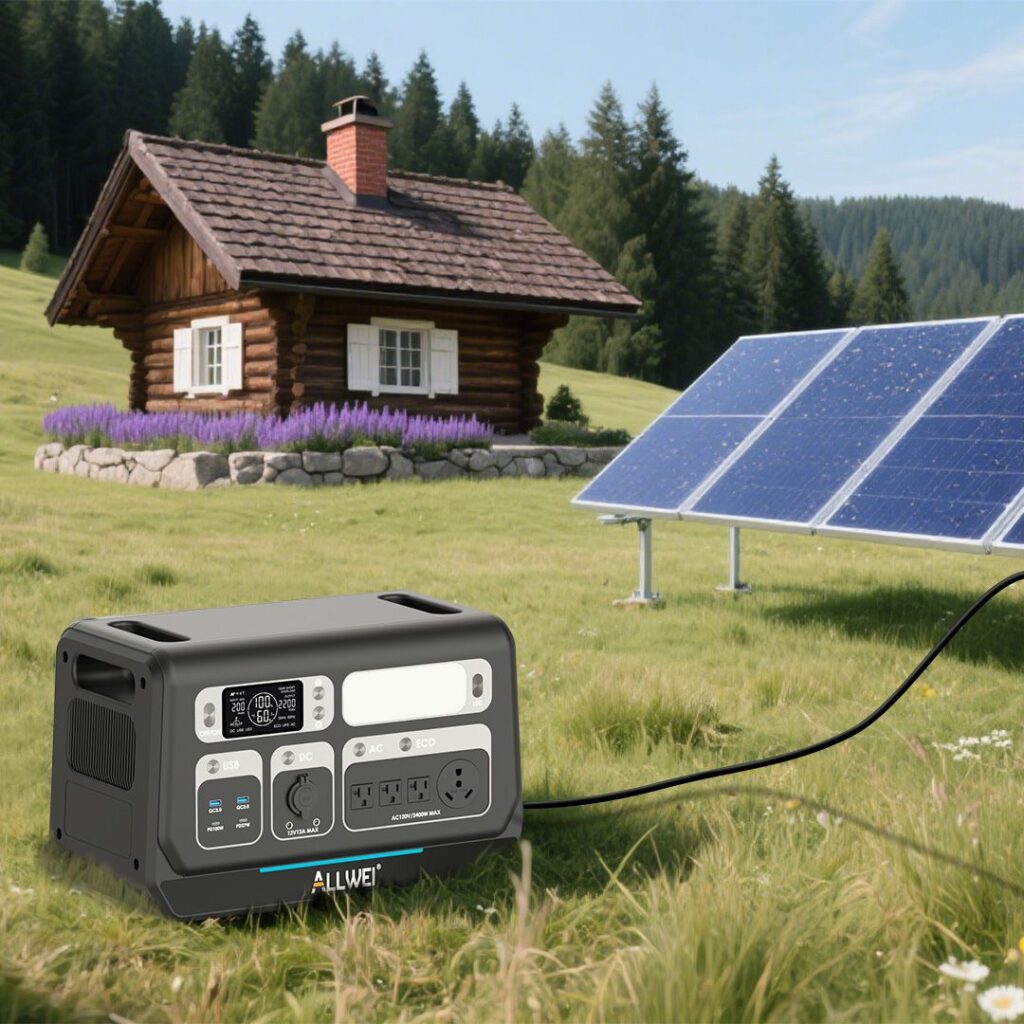
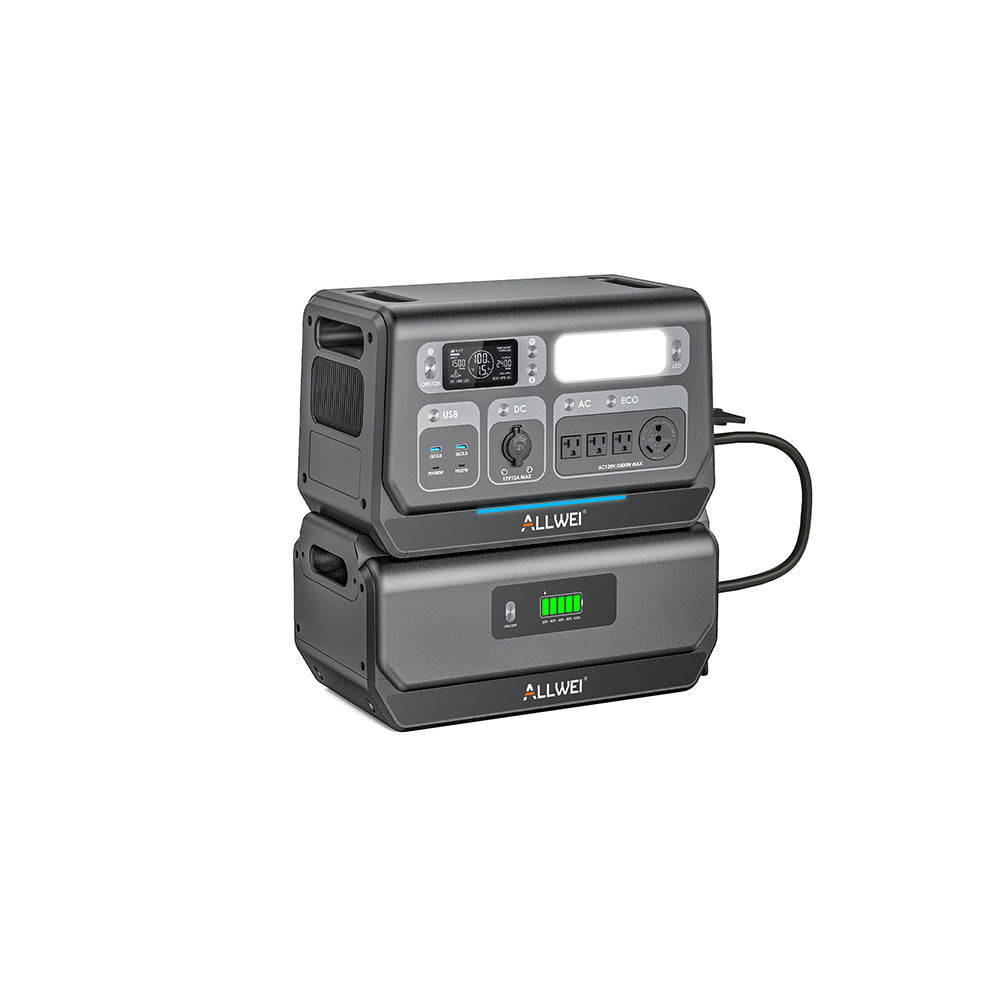
Allwei is generally sold as a portable power station. Think of it as a big rechargeable battery with ports on the front. AC outlets, USB ports, maybe a DC port, sometimes a car socket. You charge it at home, or in a car, or via solar (depending on the model and what it supports), then you use it to run devices when you’re away from a wall outlet.
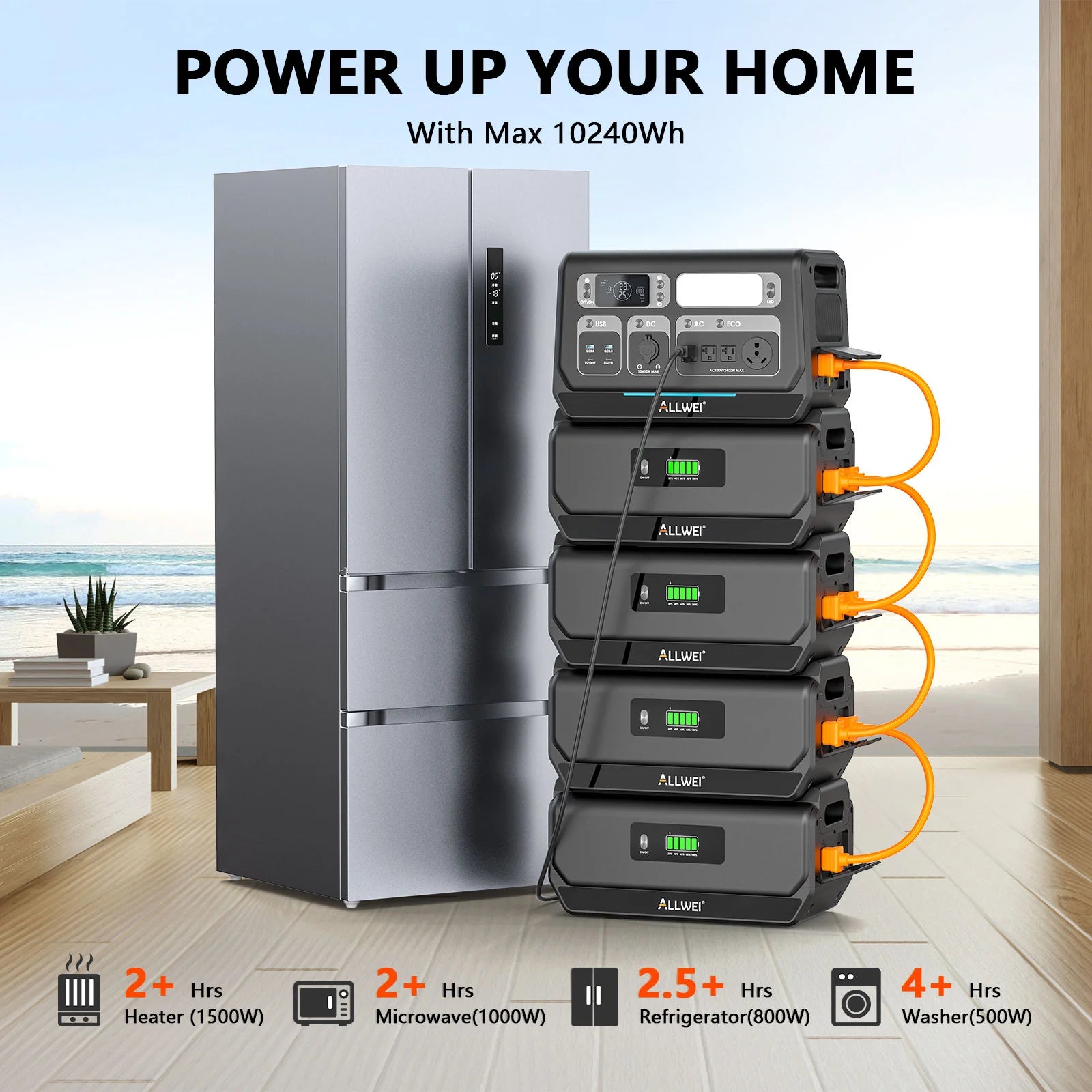
It is not a gas generator. So it will be quiet, no fumes, no engine maintenance. It’s also not a whole house backup system. If your plan is “power my fridge, my microwave, my WiFi, and my space heater all day”, you’re probably in the wrong aisle.
Allwei models vary a lot by capacity and output. And that’s the first trap.
The first thing to check: capacity (Wh), not “watts” in the title
Listings love to scream about watts. “300W!” “600W!” “1200W!” and people think that means “how long it runs”.
Not exactly.
- Watts (W) is how much power it can deliver at once.
- Watt hours (Wh) is how much energy is stored. This is the “how long” part.
If you only remember one thing from this article, make it this: you size a power station by Wh, then you sanity check if the watt output is enough for your devices.
A quick example, simple math, no suffering.
Say you have a power station rated at 300Wh.
- If your device uses 30W, 300Wh / 30W = about 10 hours in a perfect world.
- Except it’s not a perfect world. There are conversion losses, inverter overhead, heat, battery management, all that. So maybe it’s more like 7 to 9 hours.
If your device uses 300W, then 300Wh / 300W = about 1 hour, and realistically less.
So when you look at an Allwei model, hunt for the Wh number first. It might be in the specs table, not the headline. If it’s missing or weirdly hard to find, that’s already… information.
Output power: can it handle the stuff you actually want to plug in?
Once you know the capacity, then you check output.
You want to make a list of what you plan to run. Not an imaginary list. Your real list.
Common loads people try:
- Phone charging: 5 to 20W (easy)
- Laptop: 45 to 100W (still easy)
- WiFi router: 10 to 20W (easy)
- TV: 50 to 150W (usually fine)
- CPAP: varies wildly, can be 30W to 200W depending on humidifier
- Mini fridge: maybe 50 to 100W running, but the startup surge can be higher
- Space heater: 750W to 1500W (usually a no, unless you bought a monster)
- Microwave: often 900W to 1500W (also usually a no for smaller units)
- Coffee maker, air fryer, hair dryer: these are power hogs
Here’s where people get burned: surge power.
Motors and compressors need a higher burst of power at startup. Some power stations handle this with a higher surge rating. Some don’t do it well. Some listings mention it, some hide it, some vaguely imply it.
If you want to run anything with a compressor or motor, you want to confirm:
- continuous output (W)
- surge output (W), if stated
- and user reviews from people running similar devices
Battery type matters more than it sounds like it should
In portable power stations, you’ll usually see either:
- Lithium ion (NMC): higher energy density, often lighter, but typically fewer life cycles.
- LiFePO4 (LFP): heavier for the same capacity, but usually way more cycles and better thermal stability.
If an Allwei model is LiFePO4, that’s often a plus for longevity. If it’s not clearly stated, you might have to check the manual, Q and A, or the fine print. And honestly, if a brand makes you dig for battery chemistry, that’s annoying. But it’s common.
Why you should care: if you’re buying for occasional camping, cycles matter less. If you’re buying for frequent use, power outages, van life, daily work, then cycles matter. A lot.
Charging speed and charging options, the thing nobody thinks about until day two
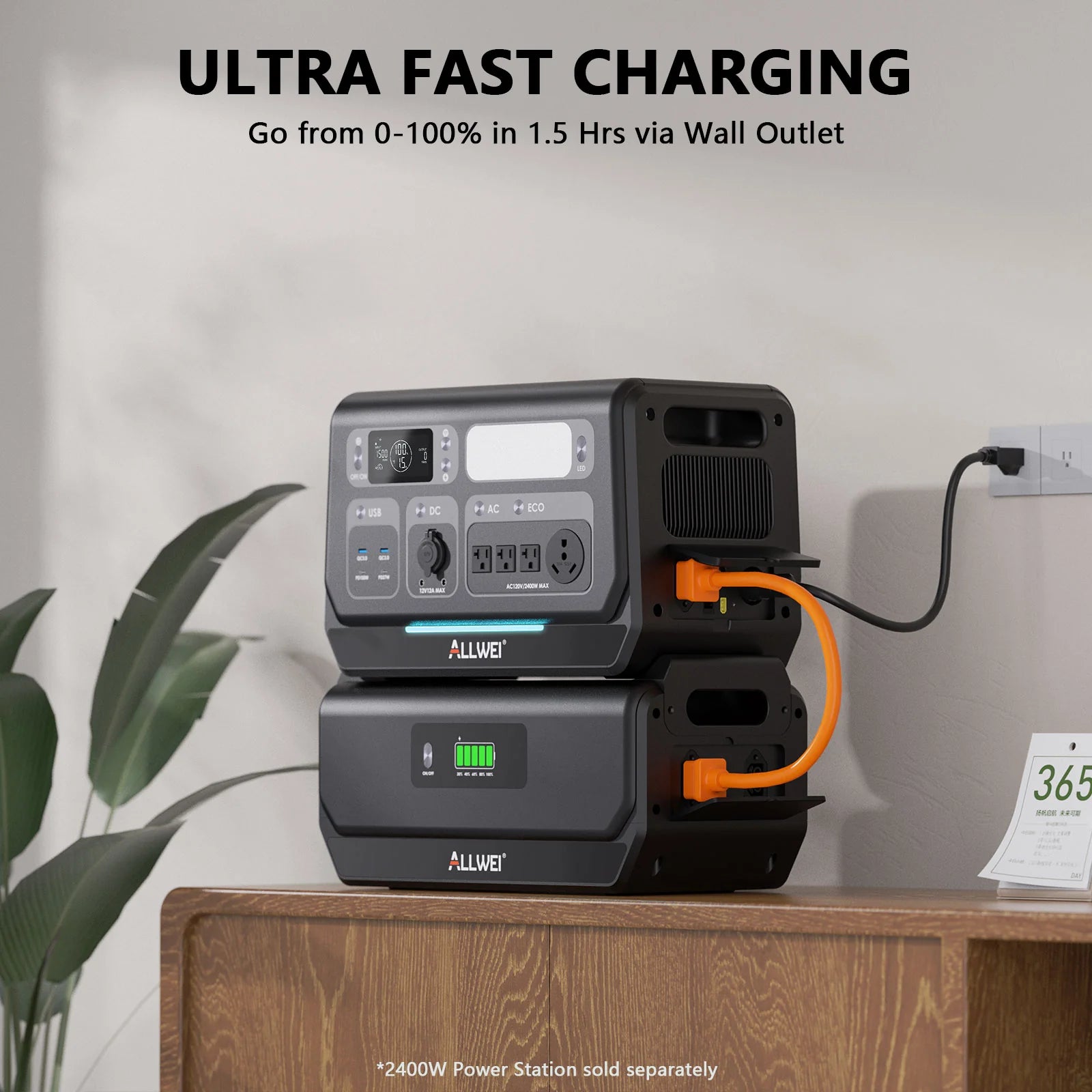
You don’t just want a power station. You want a power station you can actually recharge in the way your life works.
Questions to ask:
Can you charge it from AC at a reasonable speed?
Some units take forever. Like 6 to 10 hours. If you’re fine charging overnight, ok. If you want something that tops up quickly between uses, check the input wattage and real user reports.
Can you charge it in the car?
Most can, but it might be slow. Car charging is often limited. So if your dream is “road trip, charge while driving, run a fridge all day”, you need to be realistic about the math.
Does it support solar, and is it picky?
Solar support is a whole mini world.
You want to know:
- What input connector does it use?
- What’s the supported input voltage range?
- What’s the max solar input wattage?
Some units only accept a narrow voltage band. Some require adapters. Some say “solar compatible” but only at low wattage, which can mean painfully slow charging.
Also, a reminder because people get upset about this: a “100W solar panel” does not mean you get 100W all day. Clouds, angle, heat, the sun moving, all of it reduces output. Solar is great. It’s just not magical.
Ports and layout: boring, but it affects your actual day
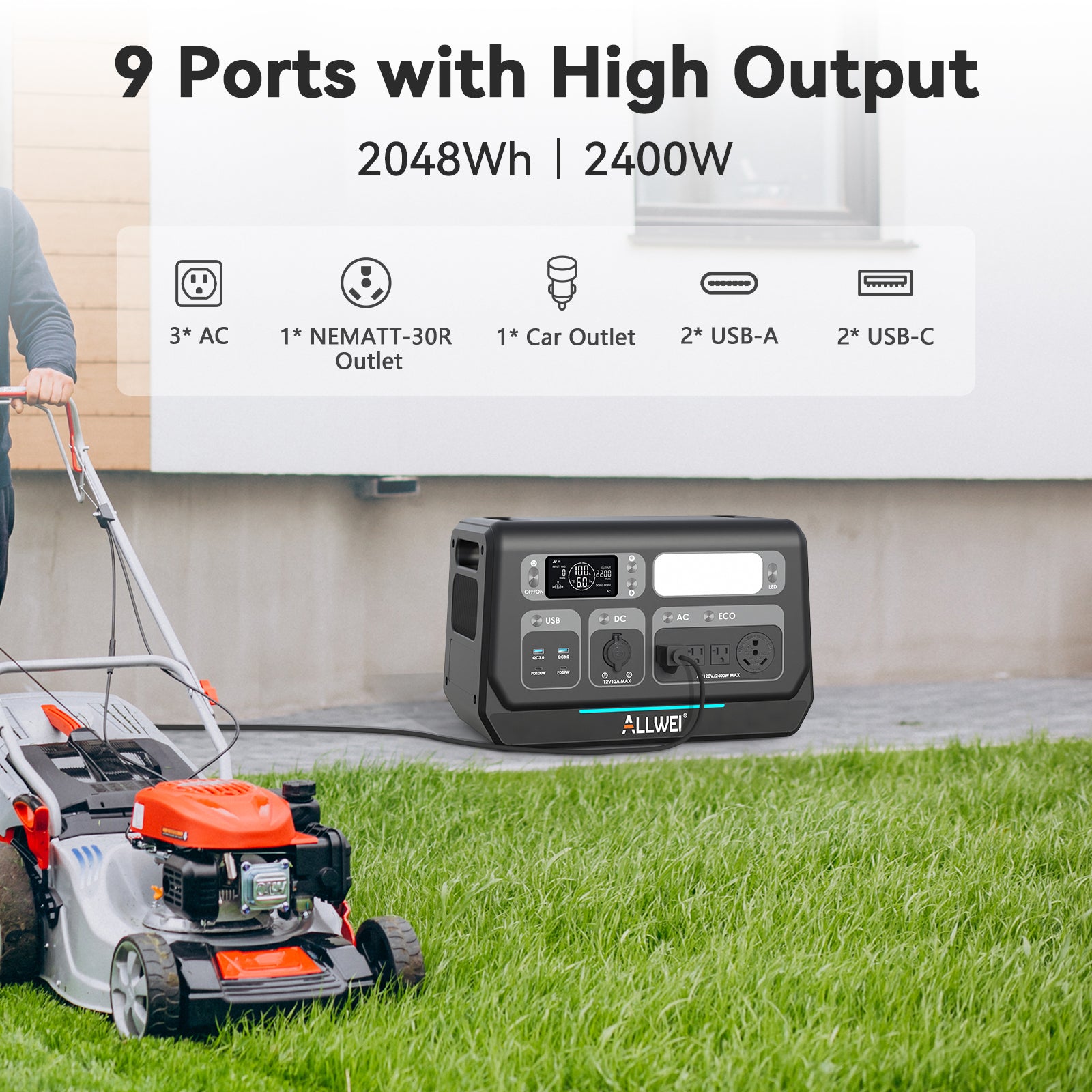
This is where you look at the front panel and imagine your cables.
- How many AC outlets do you realistically need?
- Are the USB C ports actually PD, and at what wattage?
- Are the USB A ports the slow 5V kind, or do they support fast charging?
- Is there a 12V car socket, and does it stay stable?
Also, check if the AC outlets are pure sine wave. Many modern power stations are, but you want to confirm because some sensitive electronics behave better with pure sine wave output.
And yes, little things matter. Like where the handle is, whether the unit tips when cables are plugged in, whether the display is readable outside. You can learn a lot from review photos, not just the brand’s perfect studio picture.
Weight and portability: do you want to carry it, or “carry it”
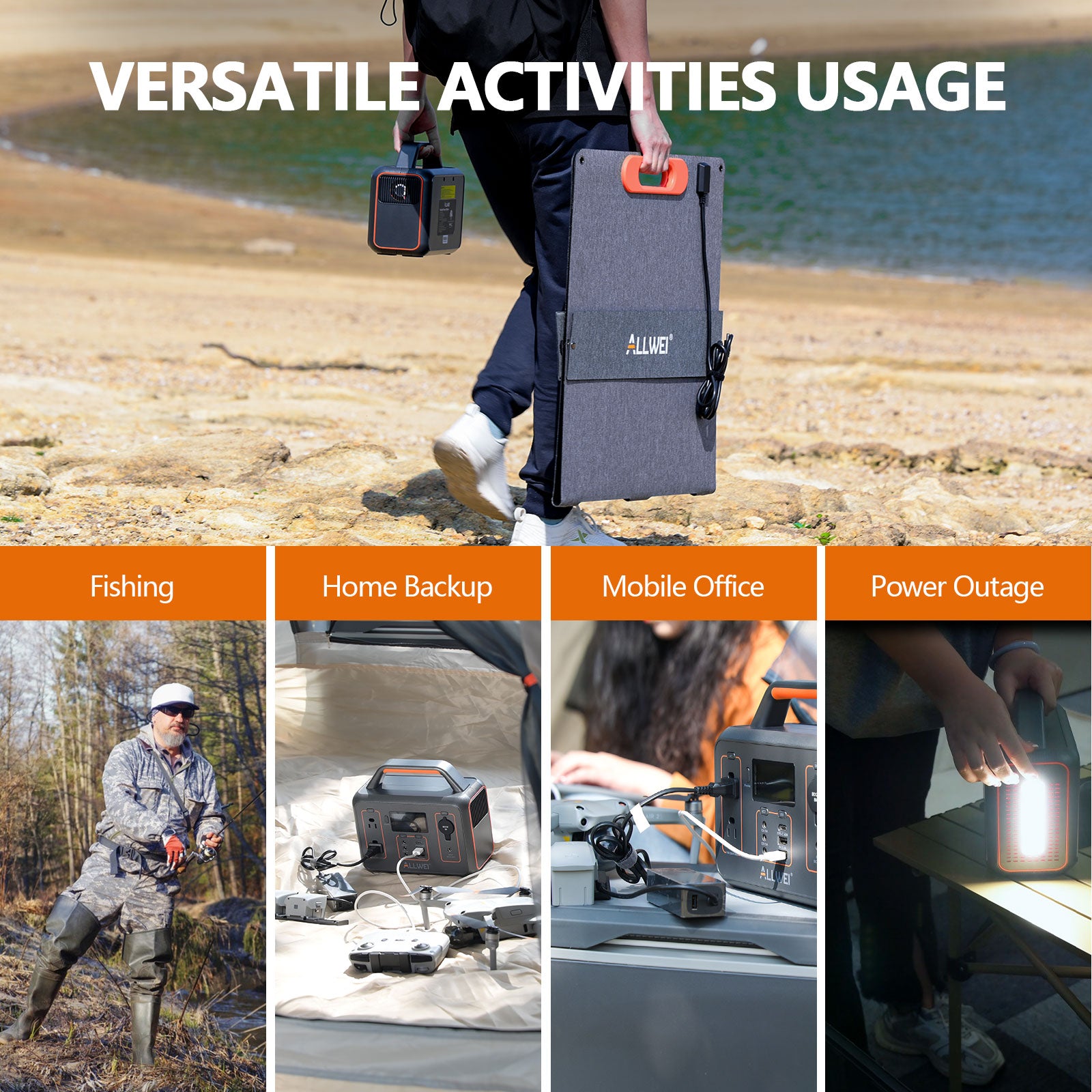
A power station can be portable in the sense that it has a handle. That does not mean you will enjoy carrying it.
If you’re buying Allwei for:
- camping: you might move it from car to table, fine
- emergency backup: it might sit in a closet, weight matters less
- apartment life: you might move it room to room, weight matters
- flights: most power stations are not airline friendly, due to battery limits
Check the weight in the specs. Then imagine carrying it with one hand while holding a bag in the other. If that image already annoys you, go smaller or plan a cart.
Real runtime expectations (this is where people either love it or hate it)
Let’s do a more realistic way to estimate runtime so you don’t get disappointed.
- Start with capacity in Wh.
- Multiply by 0.8 to account for losses. (Not perfect, but decent.)
- Divide by your device wattage.
Example:
- 500Wh unit
- usable maybe 500 x 0.8 = 400Wh
- running a 60W device: 400/60 = about 6.6 hours
If you run multiple devices at once, add the watts together. If you run AC devices, inverter losses may be higher. If you run small loads, some units still waste power just staying on.
And here’s a sneaky one. Some power stations auto shutoff if the load is too low, which can be annoying for things like small routers or tiny lights. Not all do this the same way, but it’s worth checking reviews if your use case is low power overnight.
Noise and fan behavior
These units are “silent” in the sense that they aren’t engines. But they can still have fans that turn on under load or while charging.
If you plan to use an Allwei unit:
- in a bedroom for CPAP
- in a quiet office
- inside a tent
- next to your sleeping setup in a car
Then fan noise matters. Reviewers will mention it if it’s annoying. Product descriptions usually won’t.
Safety basics: certifications, protections, and what to look for in listings
This is the part where you don’t want to be casual.
Portable power stations should have protections like:
- over current
- over voltage
- short circuit
- temperature protection
Also, third party testing and certifications can matter. You might see things like UL, ETL, FCC, CE, RoHS depending on region and device. Not every mark means the same thing, and some listings can be sloppy with claims, so I’m not going to pretend a logo alone guarantees anything.
What you can do, practically:
- buy from a seller with a clear return policy
- check warranty length and who actually handles it
- read 1 star reviews specifically for overheating, failure to charge, dead units, warranty issues
The warranty and support question, because this is where cheaper brands can sting
Allwei pricing can look attractive compared to the big names. That’s often the point.
But power stations are not like a flashlight. If it fails after a few months, you want support that actually responds. So before buying:
- How long is the warranty, really?
- Is it handled by Allwei directly, or the marketplace seller?
- Are replacement parts available (charging bricks, cables)?
- Are there consistent complaints about support going quiet?
If you see a pattern in reviews like “they asked me to ship it back to a random address and then stopped replying”, take that seriously.
Who Allwei tends to be good for (and who should probably skip it)
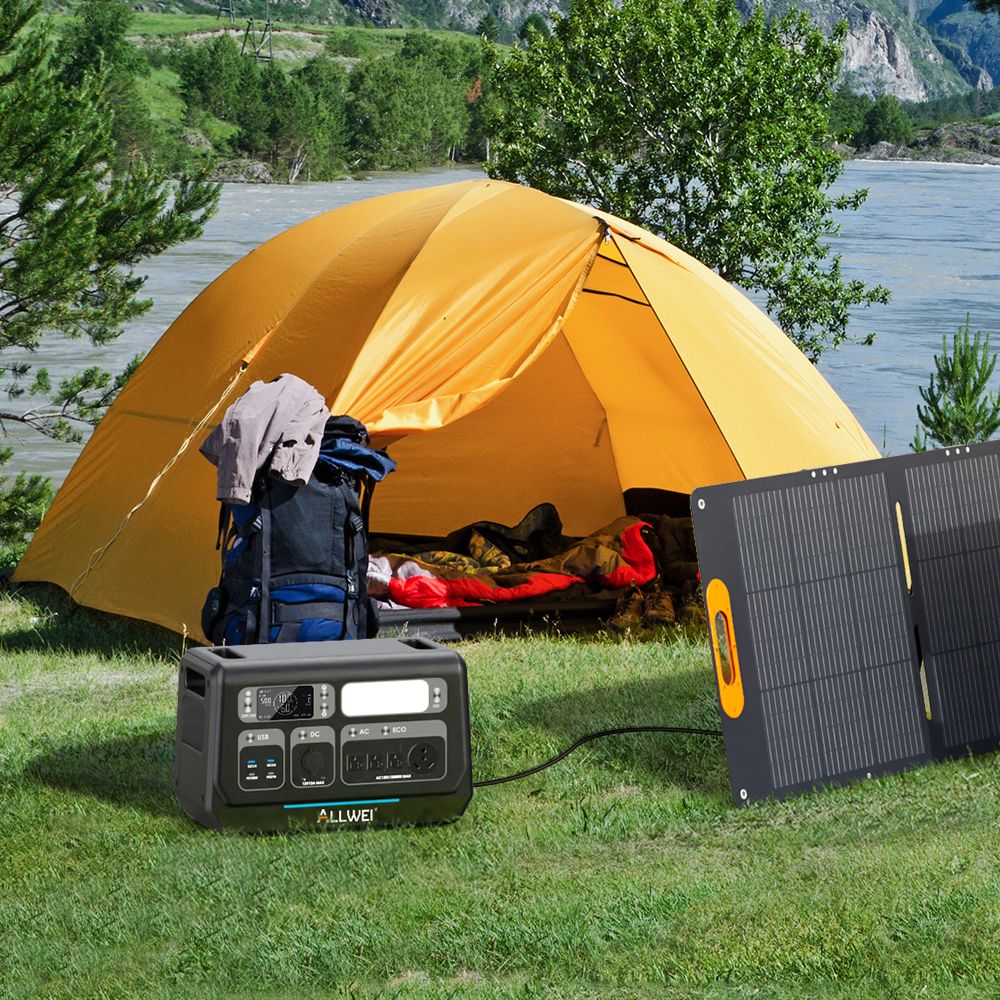
From what I typically see in this category, Allwei style power stations tend to make sense for:
- light emergency backup for phones, laptops, router, lights
- camping where you mostly want device charging and maybe a small appliance
- people on a tighter budget who still want AC output
- occasional use where cycle life is less of a big deal
You might want to skip and look at other options if:
- you need high surge output for compressors or tools
- you want fast charging and high solar input for frequent off grid use
- you want long term heavy cycling (daily)
- you need rock solid warranty support and documented safety testing
Not because Allwei can’t work. Just because your expectations are higher, and the cost of being wrong is annoying.
A quick checklist to use before you click Buy
If you want the short version, here’s what I’d check on an Allwei listing before I commit:
- Capacity in Wh (not just watts)
- Continuous AC output wattage
- Surge rating, if you plan to run motors
- Battery chemistry (LiFePO4 vs lithium ion)
- Charging time on AC, and max input
- Solar input specs: voltage range, max watts, connector type
- USB C PD wattage (if you care about laptop charging)
- Weight
- Return policy and warranty length
- Review photos and 1 star complaints for charging failures and support issues
If you do that, you avoid most of the regret purchases.
Bottom line
Buying an Allwei power station can be totally fine if you match it to the right job. The mistake is buying based on a bold watt number and a few lifestyle photos, then expecting it to behave like a gas generator or a home backup system.
Figure out what you actually want to run. Do the quick Wh math. Double check charging and ports. Then buy.
And if you’re still unsure, honestly, list the 5 devices you want to power and for how long. That’s the whole game. Everything else is just marketing.
FAQs (Frequently Asked Questions)
What exactly is an Allwei portable power station?
An Allwei portable power station is essentially a large rechargeable battery equipped with various output ports like AC outlets, USB ports, and sometimes DC or car sockets. It’s designed to be charged at home, in a car, or via solar panels (depending on the model) and used to power devices when away from traditional wall outlets. Unlike gas generators, it’s quiet, produces no fumes, and requires no engine maintenance.
How do I choose the right Allwei power station capacity for my needs?
The key spec to focus on is capacity measured in watt-hours (Wh), which indicates how much energy the battery stores and thus how long it can run your devices. Watts (W) indicate the power output at any moment but not duration. For example, a 300Wh battery powering a 30W device could theoretically run for about 10 hours (realistically 7-9 hours accounting for losses). Always check the Wh rating first to size your purchase appropriately.
Can an Allwei power station handle high-power appliances like space heaters or microwaves?
Most Allwei models vary in output capacity. While they can easily handle low-power devices like phones and laptops, high-power appliances such as space heaters (750W-1500W) or microwaves (900W-1500W) usually exceed their continuous output limits. Additionally, devices with motors or compressors may require higher surge power at startup. Check both continuous and surge watt ratings carefully before plugging in such appliances.
Why does battery chemistry matter when choosing an Allwei portable power station?
Battery type affects weight, life cycles, and thermal stability. Lithium-ion (NMC) batteries are lighter with higher energy density but generally have fewer charge cycles. LiFePO4 (LFP) batteries are heavier but offer significantly more cycles and better thermal stability, making them ideal for frequent use scenarios like daily work or van life. Knowing the battery chemistry helps you predict longevity and performance.
What should I know about charging options for Allwei power stations?
Consider how you plan to recharge your unit: AC charging speed varies widely—some models take 6 to 10 hours to fully charge, which might be fine overnight but not ideal for quick turnarounds. Car charging is possible but often slow due to limited input wattage; if you rely on charging while driving during road trips, calculate realistically whether this meets your needs. Some models support solar charging as well.
Are there common pitfalls when buying an Allwei portable power station I should avoid?
Yes—many buyers get confused by marketing that emphasizes watt output without clarifying capacity (Wh), leading to mismatched expectations about run time. Others overlook surge power ratings needed for motor-driven devices or fail to verify battery chemistry which impacts lifespan. Also watch out for unclear specs or missing information in listings; thorough research including real user reviews ensures you pick the right size and features for your actual usage.
Read more: velextrics.com