Best DJ Lights of 2026: Pro Stage Looks on a Budget
Walk into any wedding, bar gig or 300-person club night in 2026 and the lights are doing half the work. A crisp light show makes a modest setup look like a touring rig — and a flat, under-lit stage makes even a great DJ feel amateur. The good news: the best DJ lights no longer cost what they did five years ago. Brands shipping factory-direct have collapsed the price of moving heads, beams and par cans, so a working DJ can build a real rig for the price of one premium fixture from a legacy brand.
This guide breaks down what actually matters when you buy stage lighting, the fixture types worth your money, and how to spend a real-world budget without wasting it on gimmicks.
What Makes the Best DJ Lights Worth Buying
Before you compare watts and channels, get the fundamentals right. The best DJ lights for a working performer share four traits:
- DMX control in and out. Every serious fixture should have DMX512 in and out so one controller chains your whole rig. Sound-activated and auto modes are fine for casual use, but DMX is what lets you program a show.
- Honest output. Wattage is a rough proxy, not a guarantee. A well-built 19×15W RGBW moving head throws a punchy beam for a mid-size room; chasing the highest number on a spec sheet rarely pays off.
- Build quality and cooling. Fixtures run for hours. Aluminium housings and quiet, effective fans matter more than people expect — fan noise ruins a quiet ceremony.
- Support and warranty. Lights get gigged hard. A real warranty and reachable support is the difference between a dead fixture and a refund.
A useful sanity check before any purchase is the buyer’s checklist below.
A Quick Buyer’s Checklist
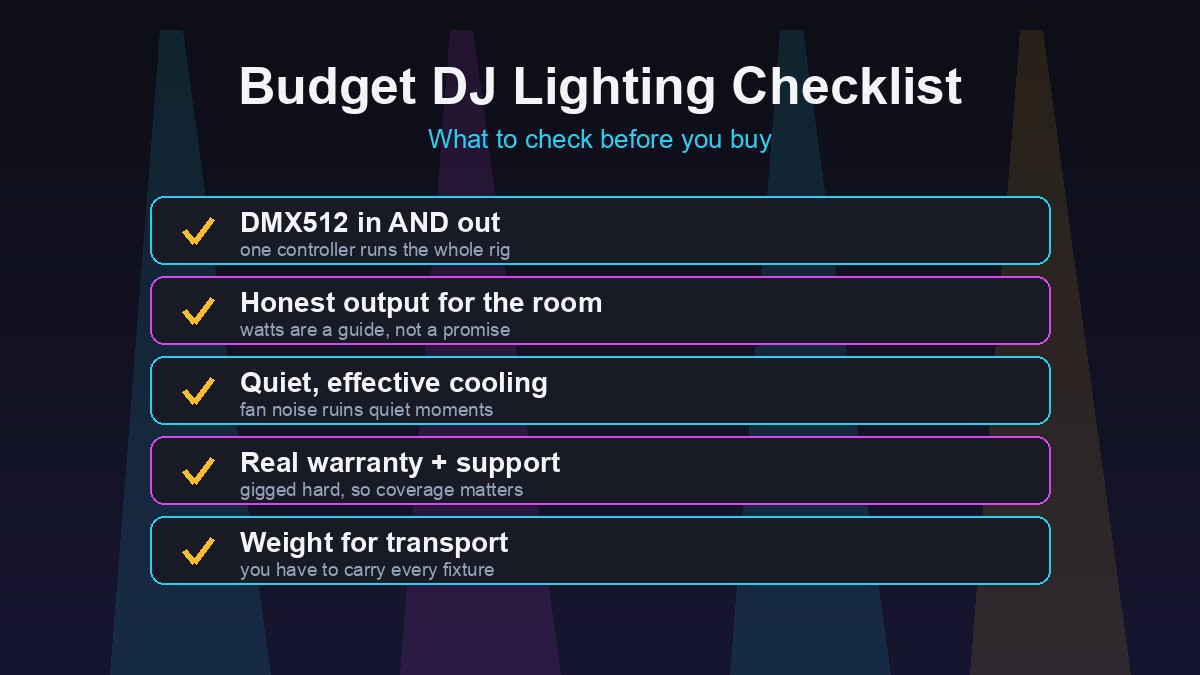
When you compare fixtures, the spec that sells you is rarely the one that matters on the night. Use a short checklist — output, control protocol, noise, weight for transport, and warranty — and rank fixtures against your actual venue size rather than the marketing copy.
The Fixture Types That Earn Their Place
You don’t need one of everything. Most strong rigs are built from three or four fixture families.
Moving Heads (Beam, Wash and Spot)
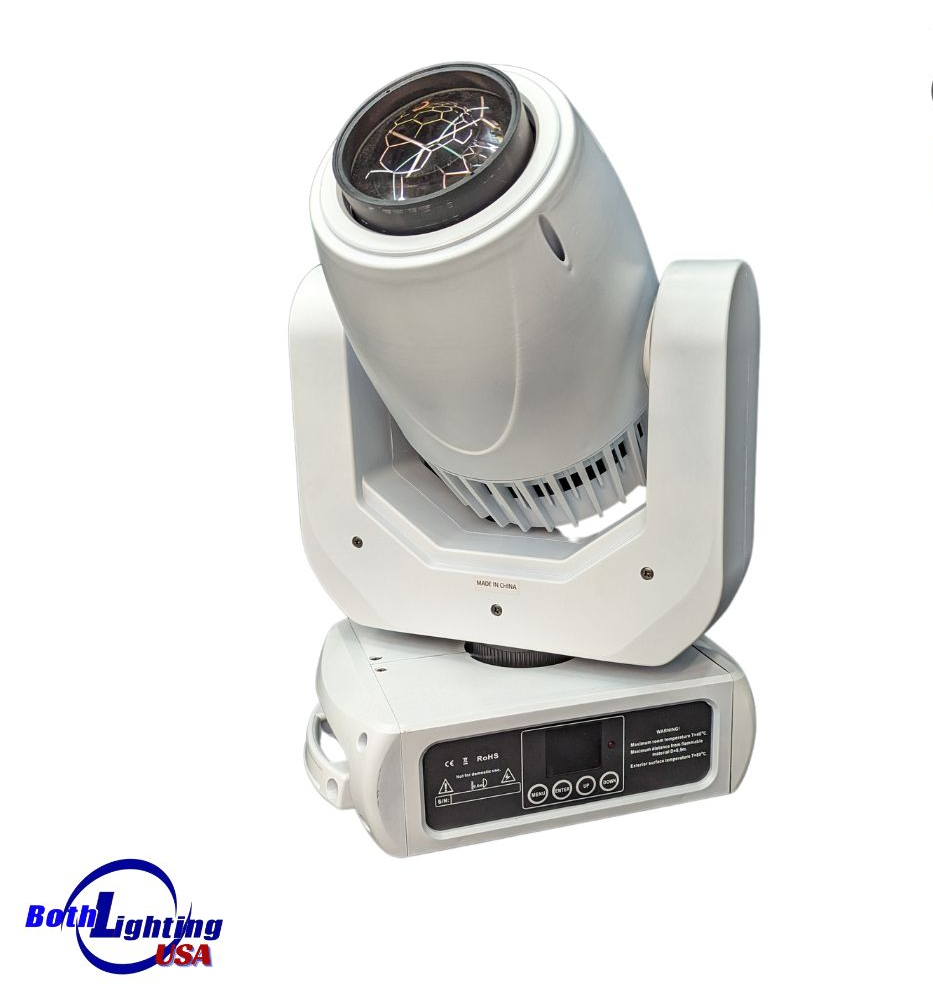
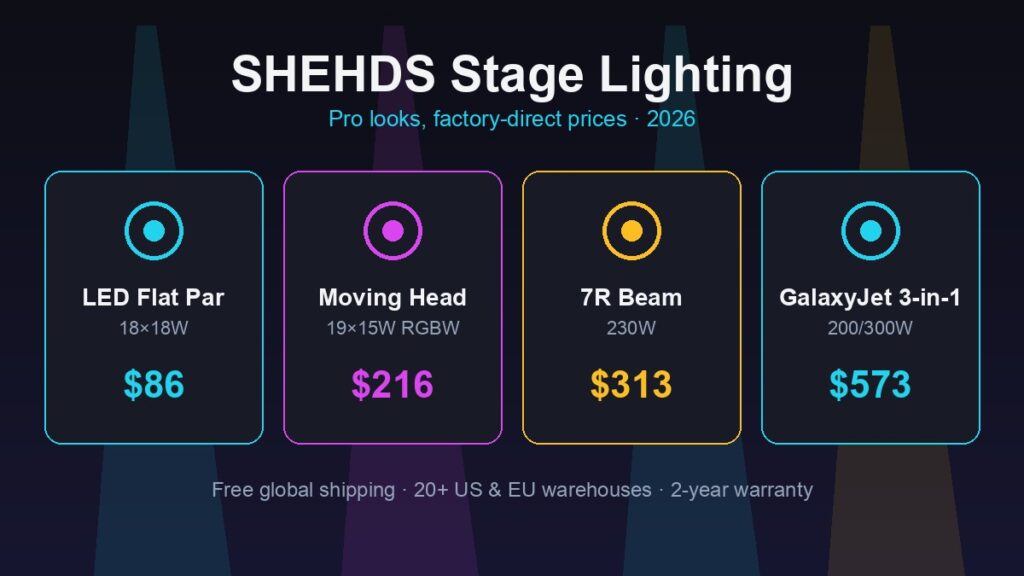
Moving heads are the workhorses of a modern show. Beam fixtures throw tight, aerial shafts of light that cut through haze; wash heads flood the stage in colour; spot heads add gobos and sharper projection. A 3-in-1 design like a SHEHDS GalaxyJet (around $573) covers several roles in one body, while an entry 19×15W RGBW zoom/wash head (around $216) is the easiest first moving head for a mobile DJ.
Par Cans for Colour Wash
LED par cans are the cheapest way to add saturated colour and uplighting. An 18×18W RGBWA+UV flat par runs about $86 — buy four and you can uplight a whole reception room. They’re light, low-power and nearly indestructible, which is why they’re the first thing most mobile DJs add.
Beams and Effects
A dedicated 230W 7R beam (around $313) gives you that piercing, concert-style shaft for drops and big moments. Round things out with strobes, a laser, or a fog/haze machine — beams and washes barely read on camera without a little atmosphere in the air.
How to Spend a Real Budget
Money goes furthest when you build in layers rather than buying one expensive centrepiece.
- Under $400 (starter mobile DJ): 4× LED pars for uplighting + one entry moving head. Add a haze machine when you can.
- $400–$900 (gigging DJ): 2× moving wash heads + 4× pars + a beam for accents, all run from a basic DMX controller.
- $900+ (small venue / band): Mix beams, washes and spots, add a profile/LEKO for front light, and layer in effects. At this tier a factory-direct brand saves you enough to double your fixture count.
For most readers, the value play in 2026 is buying direct from a specialist like SHEHDS rather than paying legacy-brand markups — which is exactly what the full SHEHDS review digs into. Once the fixtures arrive, the budget DJ lighting setup guide walks through wiring and programming them into an actual show.
Frequently Asked Questions
How many DJ lights do I actually need to start?
Four par cans and one moving head cover most small gigs. That gives you room uplighting plus one dynamic fixture, and you can expand from there.
Are cheap DJ lights reliable enough to gig with?
Factory-direct fixtures from a specialist brand with a multi-year warranty are gig-ready. The key is buying from a seller with real support and DMX-standard fixtures, not no-name marketplace listings.
Do I need a DMX controller right away?
Not for a single fixture in sound-active mode. But the moment you run two or more lights and want a coordinated show, a basic DMX controller is the cheapest upgrade you’ll make.
What’s the best single upgrade for a flat-looking show?
A haze or fog machine. Beams and washes only “read” in the air — atmosphere is what turns a few fixtures into a show.
The best rig is the one you’ll actually carry, set up fast and program with confidence. Start small, buy DMX-standard fixtures from a brand that stands behind them, and layer up as the gigs get bigger.