I didn’t plan on writing an Allwei review.
I was just trying to solve a boring problem. Power cuts, quick weekend trips, working from the car sometimes, charging a laptop in places where there is no wall outlet. You know the vibe. And like everyone else, I started with the usual search.
“Portable power station”. Then you fall into that rabbit hole of watt numbers, battery chemistry, and people in the comments yelling at each other about surge power.
Allwei kept popping up as the cheaper, more accessible option. Not always the most hyped. Not the one with the cult following. But it’s everywhere in 2026, and a lot of people are quietly buying it.
So this is a practical review. Not a “spec sheet rewritten” kind of thing. More like.
What it’s good at. What it’s bad at. And where it actually makes sense to spend money on it.
Quick context: what Allwei is (and what it isn’t)
Allwei is basically a consumer portable power brand. The stuff most people call “power stations”, even though they are really big battery packs with an inverter, ports, and a handle.
They’re not generators. No gas. No noise. No fumes. But also, they’re not magic. You don’t buy one Allwei unit and suddenly run your whole house for a week.
In 2026, Allwei models tend to sit in the budget to mid budget tier. They compete with the lower end units from brands like Jackery, BLUETTI, EcoFlow, Anker, etc.
And here’s the main thing.
Allwei usually wins on price and simplicity.
It usually loses on polish, app ecosystems, premium build, and sometimes charging speed. Depending on model.
That’s the whole review in one sentence, but let’s do it properly.
The Allwei lineup in 2026 (how to think about it)

Allwei has had a few different models floating around, and it can get messy because listings are not always consistent. But the way to think about it is:
- Smaller units (around 200Wh to 400Wh)
- These are for phones, tablets, laptops, a small fan, a router, LED lights. The “keep life moving” category.
- Mid size units (around 500Wh to 1000Wh)
- This is the sweet spot for most people. Can run a CPAP machine, charge laptops for days, run a small cooler, power a TV for a bit, and keep your home internet alive.
- Bigger units (1000Wh and up, if available in your market)
- These start edging into “emergency backup” territory. Still not whole house. But you can run more meaningful loads, longer.
If you’re shopping, ignore marketing names and focus on these three things:
- Battery capacity (Wh)
- Inverter output (W)
- Battery chemistry (Li ion vs LiFePO4)
And then, after that, ports and charging.
Because if the capacity and inverter don’t match your real needs, the rest is decoration.
Pros: where Allwei is actually strong
1. Price per watt hour is usually good
This is the reason Allwei sells.
A lot of people don’t want to spend premium money for something they might use a few times a year. Storm season. A couple of trips. A few nights of “I want to work outside”. Done.
Allwei often comes in noticeably cheaper, and that matters because once you start shopping for power stations, it’s easy to go from “I need a backup” to “I’m now spending a month’s rent on batteries”.
Allwei tends to stop you from doing that. In a good way.
2. Simple, no learning curve
A surprising number of power stations feel like they want you to join an ecosystem. Download an app, update firmware, get into power modes, tweak settings.
Allwei is usually simpler.
Buttons. Display. Ports. On and off.
For a lot of people, especially during an outage at 2 am, that’s exactly what you want.
3. Good enough port selection for normal people
Most Allwei units come with a practical mix:
- AC outlets for laptop chargers and small appliances
- USB A for older gear
- USB C on some models (not always high wattage, depends)
- 12V car style output
- Sometimes DC barrel outputs
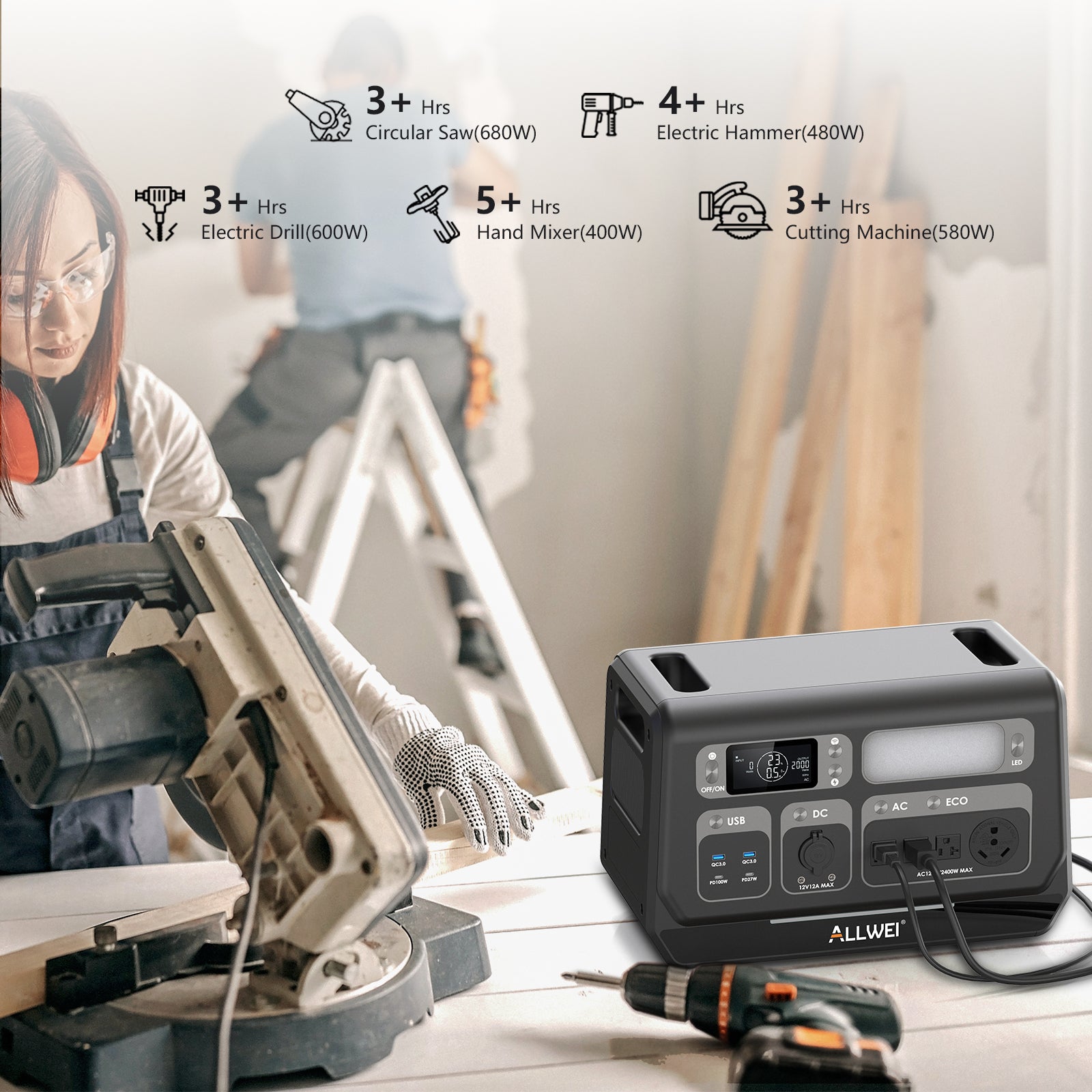
If your use case is “charging devices and powering a couple small things”, you’re fine.
Where you can run into trouble is if you’re a USB C power user. Like, you want 100W USB C, maybe even multiple. Then you have to check the exact model.
Don’t assume.
4. It’s portable in the way people mean portable
Some power stations are technically portable but in reality they are “portable if you are okay carrying a microwave”.
Allwei tends to be more in the manageable range, especially their smaller and mid size units. A handle you can actually grab. Not crazy weight.
This sounds basic, but it changes whether you actually use it.
A power station that stays in the closet might as well not exist.
5. It’s a decent entry point for emergency backup
If you’ve never owned one of these, Allwei can be a reasonable first step.
Not because it’s perfect, but because it teaches you what you really need.
You’ll learn quickly:
- how fast you burn through watt hours
- what devices have annoying surge loads
- whether you need solar input or not
- if you should have bought a LiFePO4 model
And you learn that without spending top tier money.
Cons: the stuff people don’t mention enough
1. Model variation and listing confusion
This is probably my biggest annoyance.
Allwei product listings can vary by marketplace and region, and sometimes the same product name is used across different configurations. Or the photos show one thing and the specs say another.
So you have to be careful.
Before buying, confirm:
- actual Wh capacity
- continuous inverter wattage
- peak or surge wattage
- USB C wattage
- input charging wattage
- solar input range if you care about solar
If you can’t find those clearly in the official listing, that is already a small red flag. Not necessarily a dealbreaker, but it means you need to slow down.
2. Charging speed is not always competitive
EcoFlow spoiled the market with fast charging. Some Anker units too. You plug it in and it’s back up quickly.
Allwei is sometimes slower, especially in older or budget models.
This matters more than people think.
If you’re using it during rolling outages, or you want to top up quickly before leaving, slower charging becomes a real friction point.
You might still be fine if you treat it as “charge overnight, use during day”.
But if you want rapid turnaround, check input wattage and real charging time reports.
3. Not all models use LiFePO4
In 2026, battery chemistry is a bigger deal than it was a few years ago, because LiFePO4 became more mainstream. Longer cycle life, often safer, and better longevity for frequent use.
Some Allwei models are still standard lithium ion (NMC style). That’s not automatically bad. It’s just.
If you plan to cycle it often. Daily use, frequent camping, powering gear every week. You probably want LiFePO4.
If you just want occasional emergency backup and a few trips, lithium ion can still be okay. Just know what you’re buying.
4. Fan noise can be noticeable under load
This is another “depends on model” thing, but generally, budget power stations can have more obvious fan behavior.
If you’re using it in a quiet room at night, running a CPAP or powering a router and lights, it might be fine.
If you run it closer to inverter capacity, expect fans to kick in.
Not a disaster. Just something to consider if you’re noise sensitive.
5. Surge power and “will it run my appliance” confusion
Allwei marketing sometimes leans into “run this, run that”, which is normal in this category. But consumers get burned when they try to run something like:
- a space heater
- a hair dryer
- an air fryer
- a microwave
- a coffee maker
- a full size fridge (especially older)
These can be 1000W to 1800W continuous, and sometimes have startup surges.
If your Allwei inverter is 300W, 500W, even 800W. It’s not happening. Or it’ll trip. Or it will run briefly then shut down.
So you need to match your loads to the inverter output. Not your hopes.
Real use cases: where Allwei makes sense in 2026

Let’s get concrete. Here are the scenarios where an Allwei unit is genuinely useful, and what size range tends to fit.
Use case 1: Keeping home internet up during outages
This one is underrated until you experience it.
If you have a modem, router, maybe a small network switch. That load is usually pretty low. Often 10W to 30W for the router, similar for modem, though it varies.
Even a smaller Allwei unit can keep that running for hours and hours.
The trick is: if you can power your router setup via DC (or USB C) instead of AC, you lose less energy to inverter conversion. But even on AC, it can still be fine.
Who this is for:
- remote workers
- anyone who needs internet for security cameras
- people who just want their WiFi alive during storms
Allwei is a strong fit here due to its efficient power management.
Use case 2: Laptop plus phone charging for work anywhere
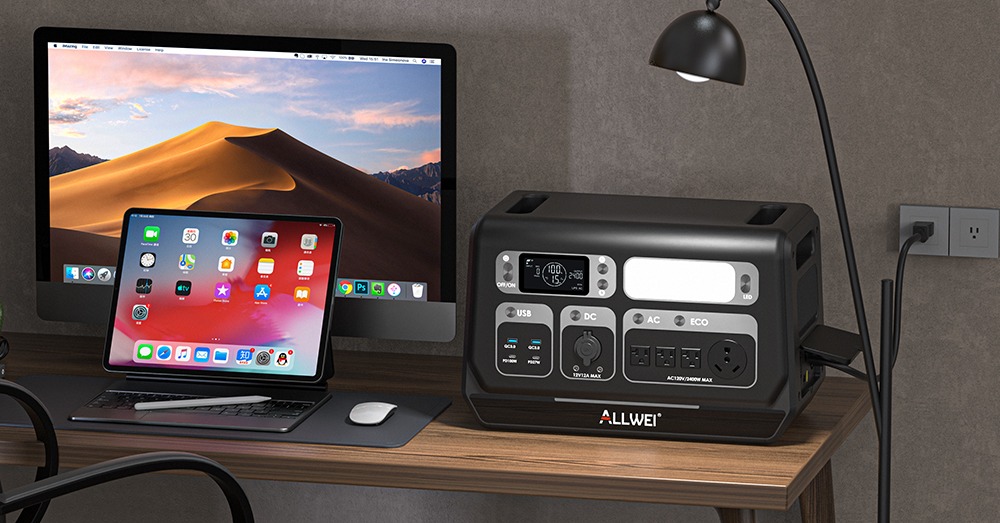
If you’re doing car work sessions, outdoor work, or coworking in weird places, an Allwei unit works as a “wall outlet in a box”.
A mid-size Allwei unit will charge:
- a laptop multiple times
- phone many times
- power a hotspot
- run a small LED lamp at night
Just watch laptop charger wattage. If your laptop brick is 140W and your Allwei AC inverter is 100W. You already know how this ends.
Also, if you have a modern laptop that can charge via USB C, you might prefer an Allwei model with a strong USB C PD output. Not all Allwei units have that.
Use case 3: Camping, but not influencer camping
I mean normal camping.
Charging phones, powering lights, running a small fan, maybe charging a camera battery. Maybe powering a small cooler for a bit.
Allwei is great for that.
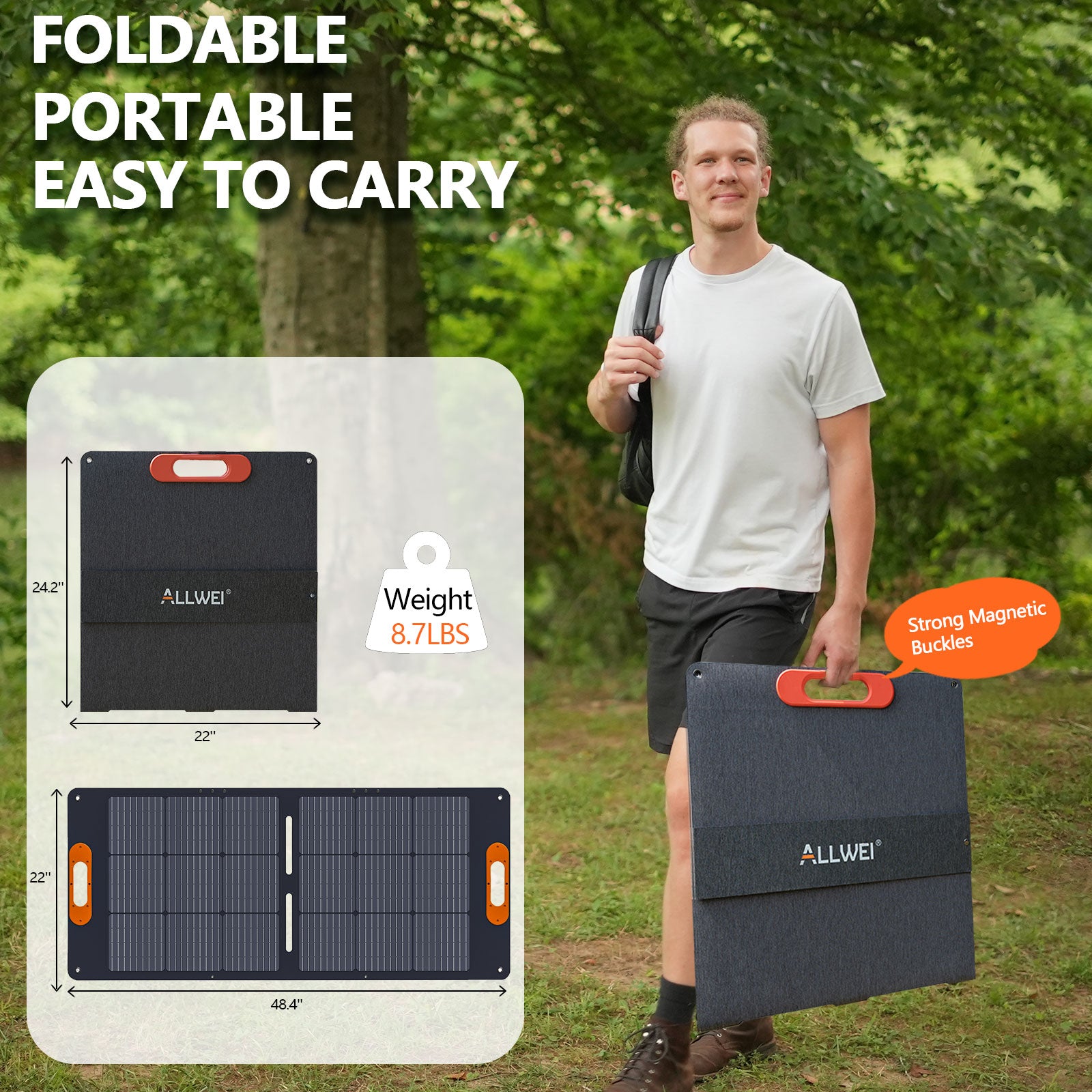
The bigger question is solar. If you camp multiple days, you’ll want the ability to recharge, and you’ll want to check if the model supports solar input and what the voltage range is.
If your camping is “one night, two days”, you might not need solar at all. Charge at home, use, come back.
Use case 4: CPAP backup (this one is important)
A lot of people buy a portable power station specifically for CPAP support during outages or travel.
Allwei can work well here, but you have to do this carefully.
What matters:
- CPAP wattage draw
- whether you use a heated humidifier (big power increase)
- whether you can run on DC with a dedicated CPAP DC cable (usually more efficient)
- battery capacity (Wh)
If you run CPAP on AC with humidifier, your runtime drops fast.
If you run CPAP on DC without humidifier, runtime improves a lot.
So yes, Allwei can be a good budget CPAP backup. But I’d say you should oversize a bit. Don’t cut it close. Sleep is not the place to gamble.
Use case 5: Short term fridge support (with realistic expectations)
People want to know: can it run a fridge?
Sometimes. For a while. But this is where everyone gets disappointed, not because Allwei is bad, but because physics is annoying.
A typical fridge might average 60W to 150W when cycling, but the compressor startup surge can be several times higher. Some inverters handle it, some don’t.
Also, if the fridge is old, it can be worse.
If you want to attempt fridge backup:
- you need enough inverter surge capability
- you need enough Wh to make it meaningful
- you need to be okay with partial coverage, like keeping food cold for several hours, not days
An Allwei mid size unit may help you bridge short outages. A bigger unit is better. But if your goal is “keep the fridge cold for 24 to 48 hours”, you probably need higher capacity plus maybe solar.
Allwei can be part of that plan, just don’t expect miracles from a small unit.
What to look for before buying (so you don’t regret it)
Here’s a quick checklist that will save you money and frustration.
1. Choose capacity based on energy, not vibes
Battery capacity is in watt hours (Wh). If a device uses 50W, and you have a 500Wh power station, you might think you get 10 hours.
In reality, you lose some energy to conversion and inefficiencies, so maybe 7 to 9 hours. Still fine. But don’t plan on perfect math.
If you’re unsure, buy slightly bigger than you think.
2. Inverter wattage is the gatekeeper
Even if you have a huge battery, you can’t run a 1200W appliance on a 300W inverter.
So list your devices and check their wattage. Especially:
- anything with heating
- anything with a motor
- anything with a compressor
3. Prefer LiFePO4 if you will use it a lot
If you’re buying for frequent use, LiFePO4 matters.
If you’re buying for occasional backup, it matters less.
But if the price difference is small, LiFePO4 is usually the smarter long term buy.
4. Check USB C output carefully
Some Allwei models advertise USB C but it’s 18W or 30W, basically phone level.
If you want to charge laptops via USB C, you want 60W to 100W. Sometimes more.
So. Check. Don’t guess.
5. Confirm warranty and support in your region
This is one of those boring adult points, but it matters with battery products.
If Allwei is sold through a marketplace reseller with unclear warranty, you could be stuck if something fails.
If you can, buy from a listing with clear return policy and stated warranty coverage.
Who should buy Allwei in 2026 (and who shouldn’t)
Allwei is a good buy if you are:
- on a budget but still want a real portable power station
- using it for light to moderate loads
- prioritizing simplicity
- buying your first unit and learning what you need
- using it for internet backup, device charging, lights, fans, small electronics
You probably shouldn’t buy Allwei if you are:
- trying to run high watt appliances regularly (heaters, cooking appliances)
- building a serious home backup system
- obsessed with fast charging and app control
- cycling the battery daily and want maximum long term durability (unless you pick a LiFePO4 model specifically)
- needing very high USB C output for modern laptop workflows, unless your exact model supports it
Common mistakes I see (and how to avoid them)
Mistake 1: Buying too small because “I only need it for emergencies”
Emergencies are when you use more than you think.
You start with the router. Then your phone. Then a lamp. Then you want to charge the laptop. Then a fan because it’s hot. Suddenly your tiny power station is empty.
If you can afford it, step up one size tier.
Mistake 2: Running everything through AC when DC would work
If your goal is long runtime, use DC outputs when possible. AC inversion wastes energy.
Not everyone wants to mess with cables, and that’s fine. But if you’re trying to maximize runtime for CPAP or router, it matters.
Mistake 3: Assuming “surge” claims mean it will run anything
Surge ratings help with startup loads, yes. But they are not permission to run a microwave on a small inverter.
Always compare continuous wattage first.
So, is Allwei worth it?
In 2026, Allwei is worth it if you buy it for the right job.
It’s not the brand I’d pick for a premium, fast charging, whole ecosystem setup. It’s not the one I’d pick for heavy duty backup, or for people who want to run kitchen appliances during outages like nothing happened.
But for normal people needs. Device charging. WiFi backup. Camping power. CPAP support with the right expectations. Allwei is a solid budget choice.
Just do the boring part before you click buy.
Match the inverter to your devices. Buy enough watt hours. And if you plan to use it often, seriously consider a LiFePO4 model even if it costs a bit more.
That’s the difference between a power station you love and one that becomes an expensive paperweight in the closet.
FAQs (Frequently Asked Questions)
What is Allwei and how does it compare to other portable power stations?
Allwei is a consumer portable power brand offering budget to mid-tier portable power stations. Unlike gas generators, Allwei units are quiet, fume-free battery packs with inverters and multiple ports. Compared to brands like Jackery, BLUETTI, EcoFlow, and Anker, Allwei generally offers better price per watt hour and simplicity but may lag in build quality, app ecosystems, and charging speed.
What are the different Allwei portable power station sizes and their typical uses?
Allwei’s lineup in 2026 can be categorized into three main sizes: smaller units (200Wh to 400Wh) for charging phones, tablets, laptops, and small devices; mid-size units (500Wh to 1000Wh) ideal for CPAP machines, laptops for days, small coolers, TVs, and maintaining home internet; and bigger units (1000Wh+) that serve as emergency backup solutions powering more significant loads for longer durations.
What should I focus on when choosing an Allwei power station model?
When selecting an Allwei unit, prioritize battery capacity (Wh), inverter output (W), and battery chemistry (Li-ion vs LiFePO4). These factors determine if the unit meets your actual power needs. After that, consider port selection and charging options since these affect convenience but are secondary to capacity and output.
What are the advantages of choosing an Allwei portable power station?
Allwei stands out for its affordable price per watt hour making it accessible for occasional users. It offers simple operation without complicated apps or settings, practical port selections including AC outlets and USB ports suitable for most devices, manageable portability with easy-to-carry handles especially in smaller models, and serves as a good entry point for those new to emergency backup power solutions.
What are some drawbacks or challenges with Allwei products?
One notable issue is model variation and listing confusion where product names and specifications can differ across regions or marketplaces. This inconsistency requires buyers to carefully verify exact specs before purchasing. Additionally, some models might lack premium build quality, have slower charging speeds compared to competitors, limited high-wattage USB-C ports, or less polished app ecosystems.
Is an Allwei portable power station suitable for whole-house backup during extended outages?
No. Allwei units are not designed to run entire houses for extended periods. They function as large battery packs capable of powering essential small devices or specific appliances temporarily. For whole-house backup needs during prolonged outages, more robust systems beyond typical Allwei models would be necessary.
Read more:velextrics.com