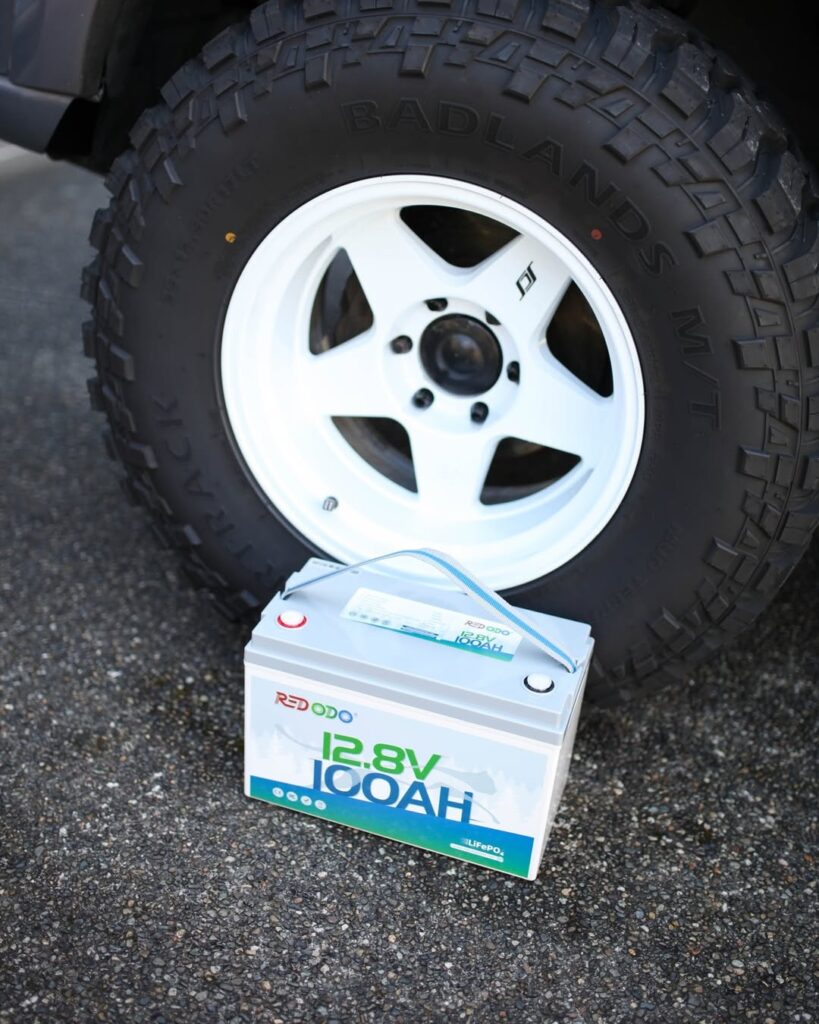
I almost paid $399 for a Battle Born battery. Then I found the Redodo 12V 100Ah.
Not even kidding. I was already in that mode where you talk yourself into the expensive option because, well, it’s the “safe” choice. Big name. Lots of RV folks recommend it. And I’m standing there thinking, ok, I guess this is just what a good 12V 100Ah LiFePO4 costs.
Then I stumbled on the Redodo 12V 100Ah LiFePO4 for around $209.99 and my brain did that annoying thing where it goes, “Wait, what’s the catch?”
So yeah. I bought one to dig in. Specs, build, protection, real use. And the big question. In 2026, is Redodo actually worth it, or is it one of those cheap batteries you regret the second something goes wrong?
Let’s get into it.
What is Redodo, and why does the brand matter in 2026?
Redodo is one of those newer era battery brands that became popular for a simple reason. They’re selling LiFePO4 batteries at prices that used to be unrealistic.
Their catalog is mostly lithium batteries and the stuff around them, like:
- 12V LiFePO4 batteries (especially 100Ah, 200Ah, mini versions)
- 24V / 36V / 48V batteries for bigger systems
- Lithium options aimed at RV, marine, solar, off grid, trolling motors, and sometimes golf cart style builds (depending on the exact model lineup that year)
Why the brand matters in 2026 is pretty straightforward. The LiFePO4 market is crowded now. Almost everyone claims “Grade A cells” and “long cycle life” and “built in BMS.” So what separates brands is usually:
- Whether the specs are real, and consistent
- BMS quality and cutoff behavior
- Warranty length and how they handle claims
- Whether the battery behaves normally in common setups, RV converters, solar charge controllers, trolling motor draws, parallel banks
Redodo is basically competing in that “budget but not sketchy” zone. Not premium priced like Battle Born, but also not the random no name listing that disappears in 8 months.
Their offerings include specialized options like the Redodo 12V 100Ah Smart Bluetooth Lithium Battery which allows for convenient monitoring via smartphone or their Group 27 Bluetooth Dual-Purpose Marine Battery designed specifically for marine usage with impressive cold cranking amps (CCA).
Redodo 12V 100Ah LiFePO4 specs (the exact numbers)
Here are the headline specs you should care about:
- Battery capacity: 12V 100Ah
- Usable energy: 1280Wh usable energy
- Built-in BMS: 100A BMS
- Weight: 24.25 lbs
- Cycle life: 4,000+ cycle life
- Warranty: 5-year warranty
- Expansion: Series/parallel expansion support
On paper, this is the same class of battery most RV and solar people shop for, because 12V 100Ah is the sweet spot for price, portability, and drop in upgrades.
The big deal with 4,000+ cycles (and why lead-acid can’t compete)

Lead-acid reality check: 300 to 500 cycles is normal
If you’re coming from AGM or flooded lead acid, the cycle life difference is the whole story.
A typical lead-acid deep cycle battery, used like a deep cycle battery (actually discharged and recharged), often lands around 300 to 500 cycles depending on:
- how deeply you discharge it
- how often you leave it partially charged
- how hot it gets
- how well it’s charged back up
And the nasty part is you usually don’t even want to use the full capacity. With lead-acid, people aim to use maybe 50 percent if they want it to last.
So your “100Ah” lead-acid battery is often treated like a “50Ah usable” battery if you’re trying to be nice to it.
In contrast, the Redodo 12V 100Ah LiFePO4 battery offers a remarkable cycle life of over 4000 cycles. This is a game changer for anyone relying on deep cycle batteries for their power needs.
What 4,000+ cycles changes
With a LiFePO4 like this Redodo, the advertised 4,000+ cycle life is basically saying: if you use it properly, it can be cycled for years and years and not fall apart quickly.
In real terms, even if you were cycling it often, like solar daily cycling, the math gets silly:
- 1 cycle per day is 365 cycles a year
- 4,000 cycles is roughly 10 to 11 years of daily cycling
Will everyone hit 4,000 exactly? Depends on discharge depth, temps, charge settings, load spikes, and the BMS behavior. But the point is, you’re not comparing “a battery you replace in 2 to 4 years” versus “a battery you replace in 2 to 4 years.”
You’re comparing totally different ownership timelines.
How the built-in 100A BMS protects the battery (and you)
What the BMS is doing behind the scenes
The built-in 100A BMS is the battery’s internal protection and management system. You don’t see it, but it’s basically the reason LiFePO4 can be practical for normal people.
A decent BMS typically handles:
- Overcharge protection (stops charging if voltage is too high)
- Over-discharge protection (cuts off before the cells get damaged)
- Over-current protection (limits or shuts down if draw is unsafe)
- Short circuit protection
- Cell balancing (keeps cell voltages in line so one weak cell doesn’t ruin the pack)
- Temperature protections (exact behavior depends on model)
The important part for most buyers: it prevents “oops” moments from turning into “I killed my battery.”
What a 100A BMS means practically
A 100A BMS usually means you can safely run loads up to that neighborhood continuously, depending on the design.
So for RV and solar use, that’s often plenty:
- lights, fans, water pump, fridge (12V), diesel heater, electronics, charging devices
- inverter loads within reason (more on that in a second)
If you’re running a huge inverter and trying to pull massive current at 12V, you can hit limits fast, because 12V systems mean high amps. A 1000W inverter at full tilt can pull around 80 to 100 amps (plus inefficiency). So yes, you can do it, but you’re basically living right on the edge of the BMS rating.
For most normal builds, the 100A BMS is a good fit. Just don’t pretend it’s a “run anything” battery.
Weight comparison vs AGM: 24.25 lbs vs 60+ lbs is not a small difference
This is the part people don’t understand until they’ve carried both.
The Redodo is 24.25 lbs.
A comparable AGM deep cycle battery is commonly 60 lbs or more. Sometimes 70. Sometimes more, depending on construction.
And it’s not just convenience. Weight matters because:
- RVs have cargo limits and tongue weight concerns
- boats care about handling and performance
- portable solar setups become actually portable with something like the Redodo Portable Battery Box
- installing and removing batteries stops being a two person job
Also, the lighter battery makes you more willing to do the “right” thing. Like actually taking it out for winter storage, or moving it to charge, or reconfiguring your wiring. With lead-acid you avoid touching the system because it’s heavy and annoying. Which leads to laziness. Which leads to battery death.
Is it really a drop-in replacement for AGM?
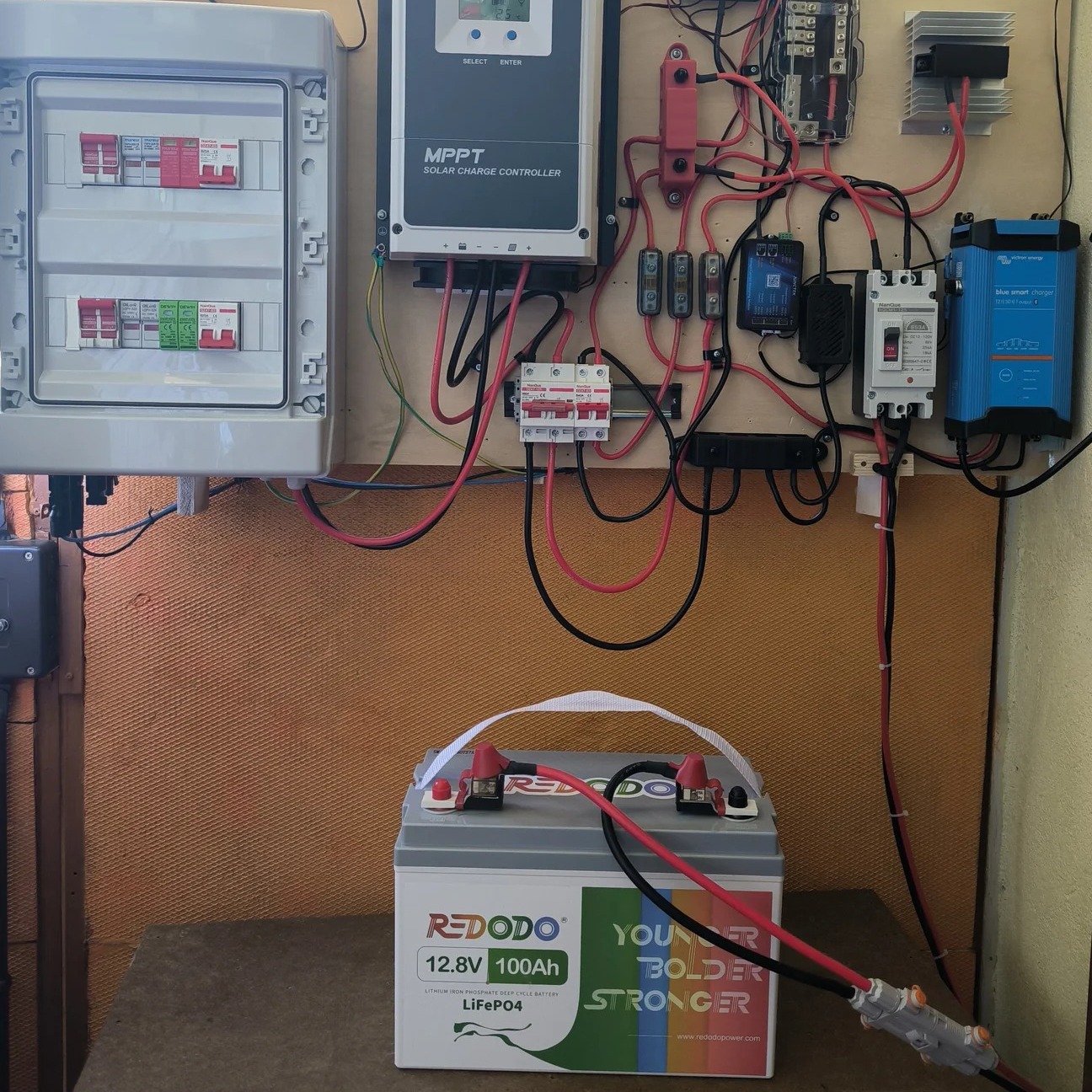
Physically, usually yes
Most 12V 100Ah LiFePO4 batteries are designed to fit in the same general group size footprint you’d expect in an RV battery box or marine tray. So physically, the swap is typically painless.
Electrically, it depends on your charger and settings
This is the part where people get burned, not because lithium is “hard,” but because RV charging systems vary wildly.
If your RV converter is older, it might:
- never fully charge lithium
- float at voltages that aren’t ideal
- have a “desulfation” mode that is meant for lead acid (not great for lithium)
Modern solar charge controllers are usually easier because you can set the battery type and dial in voltages.
So yes, it can be a drop-in replacement, but you should still check the next section.
Charging compatibility (RV converters, solar controllers, alternators)
Solar charge controllers
Most MPPT and PWM controllers that allow lithium settings will work fine. You typically want a LiFePO4 profile or custom settings.
The simple practical goal: don’t overcharge it, don’t keep it at a high float forever, and make sure the charge controller doesn’t do weird lead-acid behaviors.
RV converters
If you have a newer converter that has a lithium mode, great. If not, you might still be able to use it, but you may not get ideal performance or full charge.
Some people live with that and it’s fine. Others upgrade the converter because they want fast, clean charging. For those looking to make the switch to lithium batteries, exploring options like Redodo’s Bluetooth lithium batteries or their range of RV batteries could be beneficial.
Alternator charging
If you’re charging house batteries from the vehicle alternator, many setups need a proper DC to DC charger or an appropriate current limiting setup. Lithium can pull hard current. That’s great for speed, but alternators and wiring can get stressed if the system wasn’t designed for it.
So compatibility is less about “will it charge at all” and more about “will it charge safely, reliably, and fully.”
Real world performance for RV and solar users
RV use: the “it just works” benefit
In typical RV usage, this battery does the things people want lithium for:
- voltage stays steadier under load than lead-acid
- you don’t get the same sag when the battery is half used
- you can use more of the capacity without feeling guilty
- recharge times tend to be faster when the charger can keep up
That steady voltage part is underrated. With lead-acid, everything feels fine at first, then the voltage droops, lights dim, inverters complain, and suddenly you’re managing power constantly.
LiFePO4 tends to feel “flat” in a good way. More consistent.
Solar use: daily cycling without babying it
For solar, the appeal is cycling. You don’t want to nurse lead-acid every day. You want to run loads at night and recharge the next day, over and over, without your battery turning into a weak sponge after a year.
A 4,000+ cycle LiFePO4 is designed for this kind of life. That’s basically what you’re buying.
Redodo vs Battle Born (the comparison everyone cares about)
Battle Born is a brand many trust due to its long-standing presence in the RV lithium space, backed by strong marketing, support reputation, and community presence.
But what does this mean in practical terms?
Where Battle Born usually wins
- brand reputation and track record
- support experience tends to be smoother
- resale value and “peace of mind” factor
For some people, that’s worth paying for. No shame in that.
Where Redodo wins
- price, and it’s not close
- specs are competitive on paper
- you can build a bigger bank for the same money
If you’re working with a fixed budget and aiming for 200Ah or 300Ah usable capacity for an RV, Redodo’s pricing can significantly change your whole build.
Pricing in 2026: around $209.99 vs $399, and what that actually means
As of now, the price of a Redodo battery is approximately $209.99. In contrast, Battle Born’s comparable 12V 100Ah class battery is around $399.
This results in a roughly $189 difference for one battery.
Now let’s look at it from a broader perspective.
If you desire a 200Ah bank:
- 2x Redodo batteries would cost about $419.98
- 2x Battle Born batteries would set you back about $798
That’s a massive gap. And for many people, that gap could be the difference between “I can upgrade to lithium this year” and “maybe next year.”
Moreover, the benefits of switching to Redodo batteries extend beyond just pricing. Customers have shared their positive experiences with these batteries after using them for extended periods.
It’s also worth noting that Redodo has a compelling story behind its brand which resonates with many customers. Their RV battery guide provides valuable insights into making the most out of their products, whether you’re using your RV for overnight trips or full-time living.
Value for money, the honest version
If all you care about is cost per watt-hour and you’re comfortable doing basic due diligence on your charging system, Redodo looks like strong value.
If you’re the type who wants the safest bet, proven support, and a long reputation, you might still buy Battle Born and sleep better. That’s not irrational. It’s just a different priority.
But purely on value, at $209.99, the Redodo 12V 100Ah battery from their collection is hard to ignore.
Best use cases: who should actually buy the Redodo 12V 100Ah?

RV owners
If you’re upgrading from AGM house batteries, this is one of the cleanest upgrades you can do. The weight drop alone is a win. Add the usable capacity and cycle life and it’s usually a “why didn’t I do this sooner” kind of upgrade. This Redodo battery is best for RV owners who:
- boondock sometimes or often
- want more usable power without adding more weight
- have solar or plan to add solar
- don’t want to replace lead-acid every few seasons
Trolling motor users
A 12V 100Ah LiFePO4 can work well for lighter trolling motor use cases, especially if you’re running a 12V motor and your current draw stays within what the battery and BMS can deliver.
The big advantage is the consistent voltage. Your trolling motor feels more consistent through the discharge compared to lead-acid.
Just be realistic about current draw and runtime expectations.
Solar backup users
For small home backup, shed power, DIY solar generators, and basic load shifting, a 12V 100Ah battery is a common building block. The cycle life matters here because backup systems often sit, then cycle, then sit again. You want something that won’t sulfate just because you didn’t use it “perfectly.” The Redodo 12V 320Ah battery could also serve as a reliable backup power source as seen in this customer story.
Golf cart setups
The setup of your golf cart largely depends on its voltage and how you choose to build it. Most golf carts operate on either 36V or 48V systems. The mention of Redodo here is significant as many people are opting for their LiFePO4 batteries when building packs using series connections, assuming the model supports it.
When you’re constructing a cart pack, there are several key factors to consider:
- Ensure you’re using the correct number of batteries for your desired voltage
- Your current draw should match what the batteries and BMS can handle
- Confirm that your charger is suitable for LiFePO4 at that specific voltage
Golf cart builds can greatly benefit from lithium batteries, but they require careful planning rather than guesswork.
So is the Redodo 12V 100Ah LiFePO4 really worth it?
If you’re in the market for a high-quality 12V 100Ah LiFePO4 battery with 1280Wh usable energy, a built-in 100A BMS, weighing only 24.25 lbs, boasting a 4,000+ cycle life, offering a 5-year warranty, and providing series/parallel expansion support, then the Redodo battery is an excellent choice without the hefty price tag associated with brands like Battle Born.
It’s the kind of battery that makes you stop mid-checkout and question why you’re paying double for other brands.
However, it’s crucial not to overlook some important aspects. Check your charger behavior to ensure your system isn’t experiencing any lead-acid desulfation issues. Be honest about inverter loads at 12V. If you take these steps, investing in a Redodo battery could be one of the best value upgrades in the 2026 battery market.
FAQs (Frequently Asked Questions)
What is the Redodo 12V 100Ah LiFePO4 battery and why is it gaining popularity in 2026?
The Redodo 12V 100Ah LiFePO4 battery is a lithium iron phosphate battery known for offering high-quality specs at budget-friendly prices. In 2026, it stands out because it provides realistic specifications, solid built-in Battery Management System (BMS), a strong warranty, and reliable performance in RV, marine, solar, and off-grid setups compared to many other brands in the crowded LiFePO4 market.
How does the Redodo 12V 100Ah LiFePO4 battery compare to traditional lead-acid batteries?
Compared to traditional AGM or flooded lead-acid batteries that typically last around 300 to 500 cycles with limited usable capacity (often only 50%), the Redodo 12V 100Ah LiFePO4 offers over 4,000 cycles of life and full usable capacity (1280Wh). This means significantly longer lifespan, deeper discharge capability, and better overall value for applications like RVs, solar systems, and marine use.
What are the key specifications of the Redodo 12V 100Ah LiFePO4 battery?
Key specs include: 12V nominal voltage with 100Ah capacity; approximately 1280Wh usable energy; integrated 100A Battery Management System (BMS); weight around 24.25 lbs; cycle life exceeding 4,000 cycles; support for series and parallel expansion; and a comprehensive 5-year warranty. These features make it ideal for portable power upgrades and renewable energy setups.
Is the built-in Battery Management System (BMS) on the Redodo battery reliable?
Yes, Redodo’s built-in BMS is designed to provide quality protection including cutoff behavior to safeguard against overcharge, over-discharge, short circuits, and temperature extremes. This ensures consistent performance and longevity in various scenarios such as RV converters, solar charge controllers, trolling motor draws, and parallel battery banks.
Does Redodo offer specialized lithium battery options beyond the standard model?
Absolutely. Besides their standard 12V 100Ah LiFePO4 batteries, Redodo offers specialized models like the Smart Bluetooth Lithium Battery which allows users to monitor battery status conveniently via smartphone apps. They also provide marine-specific batteries like the Group 27 Bluetooth Dual-Purpose Marine Battery featuring high cold cranking amps (CCA) tailored for marine applications.
Is purchasing a Redodo LiFePO4 battery worth it in terms of price and reliability?
Yes. Priced around $209.99 — significantly lower than premium brands like Battle Born — Redodo strikes a balance between affordability and dependable quality. With verified specs, a robust BMS, long cycle life of over 4,000 cycles, and a solid five-year warranty, it’s an excellent budget-conscious choice for RVers, solar enthusiasts, marine users, and off-grid power needs without compromising safety or performance.
Discover it now: velextrics.com