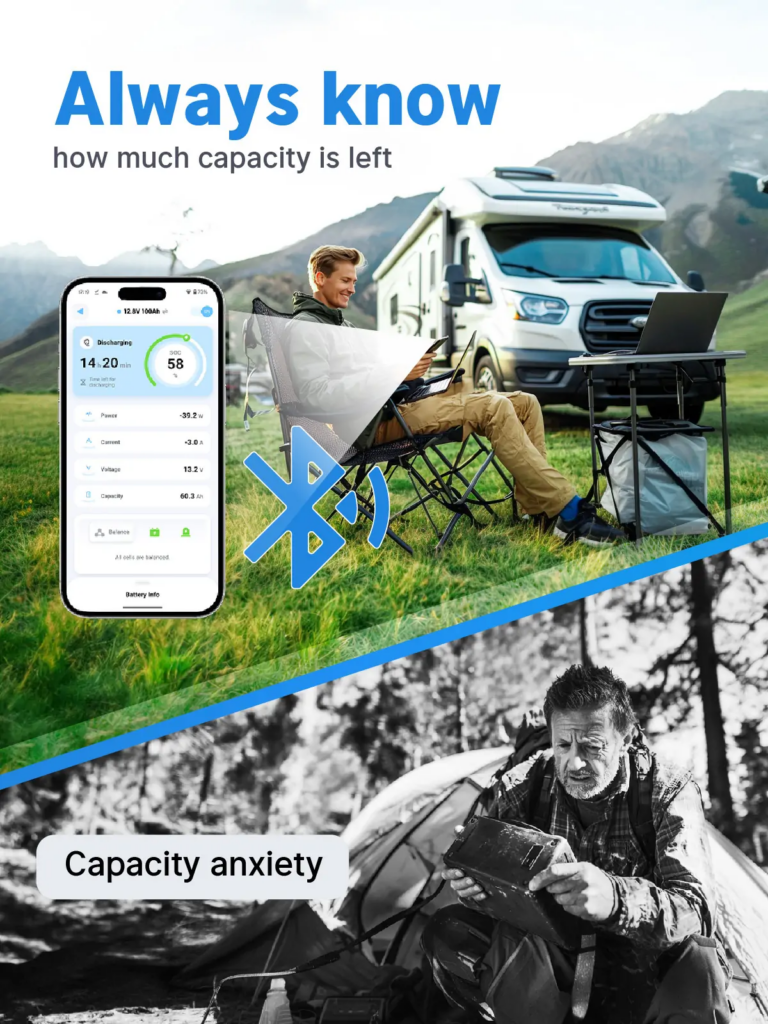
The first time I realized how much I wanted smart battery monitoring wasn’t during some epic off-grid boondock in the desert.
It was in a Walmart parking lot. Rain on the roof. Heater fan running. I’d just made pasta on the induction burner, and my old “basic” LiFePO4 setup was giving me the usual vague clues. Voltage looked fine… but was it actually fine? Was I about to wake up to a dead battery and a cold rig?
That night I kept thinking, I’m living in a vehicle with solar panels and a fridge that’s smarter than my first apartment… and I’m still guessing on the most important part of the system.
That’s the whole reason this Redodo 12V 100Ah Bluetooth LiFePO4 Battery review: monitor your battery from your phone is even worth reading. Because the Bluetooth part changes how you camp. Not in a gimmicky way. In a practical, less stress way.
And yeah, I’ve run plenty of “standard” LiFePO4 batteries without Bluetooth. They work. But they also leave you doing the RV equivalent of checking a campfire by squinting at it in the dark.
Quick snapshot (for skim readers)
Product: Redodo 12V 100Ah Bluetooth LiFePO4 Battery
Best for: RVs, vans, small trailers, trolling motors, compact solar setups
Standout feature: Phone based monitoring (SOC, voltage, current, temps, cycle data)
Big difference vs standard LiFePO4: you can actually see what’s happening in real-time, without adding extra monitors/shunts right away
If you’re also building out solar, you might want to check our other guides on RV solar setups and LiFePO4 battery wiring.
With Redodo’s range of LiFePO4 batteries, including their popular 200Ah model, you’re sure to find one that fits your needs perfectly while providing you with that much-needed peace of mind when it comes to power management.
What it’s like living with a Bluetooth battery in an RV
Here’s a real scenario from my own use.
You roll in late. You’ve got enough daylight left to level the rig, crack a window, and maybe not step in mud. The fridge has been running all day, the alternator charge was “okay-ish,” and you’re not in the mood to troubleshoot anything.
With a standard LiFePO4 battery, you’re usually relying on:
- a cheap voltage readout (which can be misleading under load)
- a basic battery monitor you installed (if you installed one)
- or pure vibes
But with a Redodo 12V 100Ah Bluetooth LiFePO4 battery, you open the app and immediately see:
- State of charge (SOC)
- Charging or discharging amps
- Battery voltage
- Battery temperature
- BMS status and protection events (if any)
That last one matters more than people think. If you’ve ever had a battery mysteriously “stop working” on a cold morning, BMS protection info can save you an hour of head scratching.
And the convenience is addictive. You start checking your system the way you check weather. Quick glance. Make a decision. Move on with your life.
Redodo 12V 100Ah Bluetooth LiFePO4 Battery specs (and what they mean in the real world)
Specs are nice, but I always translate them into “what does this power in a rig?”
Typical highlights you should expect in this class:
- 12V 100Ah capacity (roughly 1.2 to 1.3 kWh usable depending on voltage curve)
- LiFePO4 chemistry (stable, long cycle life)
- Built in BMS protections (over/under voltage, overcurrent, temp, short circuit)
- Bluetooth monitoring through a phone app
In practical RV terms, a single 12V 100Ah LiFePO4 battery is often enough for:
- a 12V fridge (depending on ambient temps)
- lights, fans, water pump
- charging laptops and camera gear
- light inverter use (TV, blender in moderation, maybe a small microwave burst if your inverter is sized right)
But if you’re heavy on inverter loads (induction cooking, espresso machine, air fryer life), you’ll usually want two batteries or a larger bank like the Redodo 12V 140Ah lithium battery with Bluetooth. The difference is that with Bluetooth monitoring, you’ll know exactly how hard you’re pushing the system.
Redodo 12V 100Ah Bluetooth LiFePO4 Battery review: monitor your battery from your phone (the app experience)
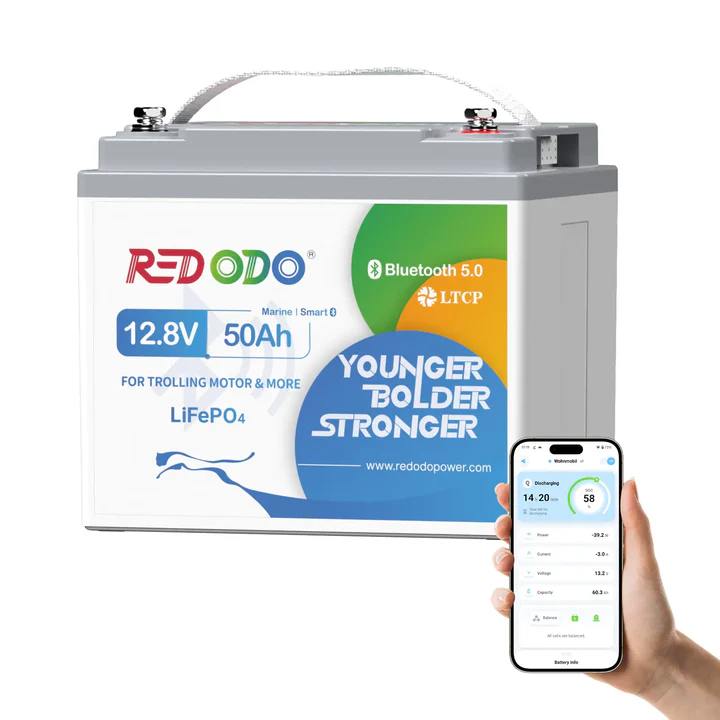
Let’s talk about the part that actually changes day to day RV life.
Smartphone monitoring means you’re not walking outside to open a battery compartment. You’re not kneeling on gravel. You’re not pulling a panel off while a curious neighbor asks if you’re “fixing the generator.”
You just check your phone.
What I look for in a Bluetooth battery app
Not all Bluetooth implementations feel the same. Here’s what matters when you’re full timing or weekend tripping:
- Real time current (amps): This is the big one. It tells you what the fridge is drawing, what the inverter is pulling, what solar is putting back (indirectly, as net current).
- SOC that doesn’t drift wildly: Some battery SOC estimates are jumpy. A decent app makes it usable.
- Temperature readings: Super relevant in shoulder seasons and winter.
- BMS protection status: If charging cuts off, you want a reason, not a mystery.
The Redodo Bluetooth setup is basically about removing uncertainty. That’s the emotional win. Less guessing. More confidence.
And honestly, that confidence is what lets you stay out longer. You stop “playing it safe” and driving into town just because you’re not sure what your battery is doing.
If you’re considering it, you can check the current pricing and availability for various models like the Redodo 12V 280Ah Bluetooth Lithium Battery, Redodo 12V 165Ah Group 31 Bluetooth Lithium Battery, or the Redodo 12V 320Ah Mini Bluetooth Lithium Battery.
For more insights on how these batteries perform in real-life scenarios, take a look at this customer review. If you’re in need of recommendations for marine batteries, explore our range of Redodo marine batteries.
Standard LiFePO4 vs Bluetooth LiFePO4 (what’s actually different?)
A standard LiFePO4 battery can be a fantastic value. No argument there. But without Bluetooth, people often end up buying extra stuff to fill the information gap.
The “standard battery” reality
With a basic LiFePO4, you might add:
- a shunt based battery monitor (extra cost, extra wiring)
- a display panel
- sometimes a second monitor for solar/charger details
That’s fine. I run shunts on some builds because they’re extremely accurate and great for multi battery banks.
But for a ton of RVers, especially running a single 100Ah or 200Ah bank, Bluetooth monitoring is the sweet spot. Simple. Fast. Usually “good enough” accuracy. And you can do it from bed.
Comparison table (easy skim)
Feature | Standard LiFePO4 Battery | Redodo 12V 100Ah Bluetooth LiFePO4 |
Basic power storage | Yes | Yes |
Built in BMS protections | Usually | Yes |
Phone monitoring | No | Yes |
See live amps on your phone | No | Yes |
Diagnose cutoffs quickly | Harder | Easier |
Need extra monitor for visibility | Often | Often not (depends on your needs) |
Convenience factor | Medium | High |
If you’re building a system where you want fewer components, fewer failure points, and less time troubleshooting, the Bluetooth advantage is real.
For those considering which battery to buy, whether it’s a standard or a Bluetooth-enabled LiFePO4, it’s important to weigh these factors carefully.
Installation notes from an RV tech perspective
This battery sits in the “drop in replacement” category, but RVs always have quirks.
A few practical tips that save headaches:
1) Make sure your charging sources are LiFePO4 friendly
- Converter/charger: If your RV has an old lead acid converter, it may undercharge or float weirdly. Some people get by. Some don’t. Best case is a lithium profile charger.
- Solar charge controller: Set the right absorption and float values for LiFePO4 (or use the lithium preset).
- DC DC charger (alternator charging): Highly recommended for vans and newer vehicles. Also protects your alternator.
(Internal link suggestion: link to your “RV lithium converter upgrade” or “DC DC charger guide.”)
2) Cable sizing and fusing still matters
Bluetooth won’t save a bad wiring job. Use proper fuses close to the battery, and size cables for your inverter load.
3) Battery placement
If you camp in cold climates, think about where the battery lives. Inside is usually friendlier than an exterior compartment. And Bluetooth monitoring helps here because you can watch temps and charging behavior without physically checking it.
Real RV scenarios where Bluetooth monitoring earns its keep
Morning coffee without the “battery anxiety”
You wake up. It’s cold. Heater fan is going. You want coffee.
Instead of guessing, you check your phone and see you’re at, say, 63% SOC and pulling 12A with the heater running. Great. You can run the kettle. Or maybe you decide to wait for the solar to ramp.
That’s the difference. Not just data. Better decisions.
Solar troubleshooting in 30 seconds
If solar isn’t charging, standard batteries tell you almost nothing. However, with Bluetooth monitoring, you can see if the battery is accepting current, if you’re already near full, or if the BMS has blocked charging because of temperature. This kind of visibility allows you to narrow down the problem quickly, which is everything when you’d rather be hiking than messing with wiring.
Quiet nights, fewer generator runs
A lot of people run their generator early because they’re unsure how low their bank is. But when you can monitor your battery from your phone, you tend to push your solar system more intelligently. You might realize you don’t need the generator at all or only need it for 30 minutes instead of two hours.
Pros and cons (quick and honest)
Pros
- Bluetooth monitoring is genuinely useful, especially for RV and van life
- Helps reduce guesswork with SOC, amps, and temperature
- Built in BMS protections
- Great “first lithium battery” experience for people upgrading from lead acid
- Makes troubleshooting charging issues easier
Cons
- Bluetooth is convenient but it’s not a replacement for a high end shunt monitor in complex multi battery systems
- App experience can vary by phone model and updates (common to all Bluetooth batteries, not just this one)
- You still need proper charging equipment and wiring for best results
How it compares to a typical 100Ah LiFePO4 without Bluetooth
If you’re shopping in the price range of a typical 100Ah LiFePO4 battery, here’s an honest breakdown:
- Power delivery: similar to other decent LiFePO4 batteries
- The real upgrade: visibility
- Total system cost: sometimes lower because you might skip an external monitor at first
If you love data and already run Victron shunts and panels, you might not care about Bluetooth. But if you’re like most RVers who just want to know whether they can run the fridge overnight without sweating it, Bluetooth is a big deal.
For those interested in enhancing their power management experience while enjoying the great outdoors, consider checking out how Redodo solar batteries have helped others. If you’re looking for a reliable power source for your RV or van life adventures, explore our comprehensive RV battery guide that offers insights into optimizing your energy usage.
If you’re ready to take a look before making a decision on your battery purchase, consider checking the Redodo 12V 100Ah Bluetooth LiFePO4 Battery listing to see if it fits your budget and space requirements.
Smart energy management tips (what I’d do with this battery in a real build)
If I was setting up a simple, reliable system around this battery, here’s the playbook:
- Pair with 200W to 400W of solar for most 3 season camping
- Use a lithium profile converter or charger
- Add a DC DC charger if alternator charging is part of your plan
- Keep inverter use realistic (or size the bank up)
And then actually use the Bluetooth app like a tool, not a toy:
- Check SOC before running heavy loads
- Watch current draw when adding a new appliance
- Check battery temp on cold mornings before charging
This is where the phone monitoring becomes more than convenience. It’s how you avoid the slow death of “why is my battery always low?” and instead get a system that feels predictable.
Who should buy this battery?
This is the part people skip, then regret later. So here’s my take.
You should seriously consider the Redodo 12V 100Ah Bluetooth LiFePO4 if:
- You want simple smartphone monitoring without building a whole dashboard
- You’re upgrading from lead acid and want fewer surprises
- You camp off grid and want confidence running a fridge, lights, fans, and charging devices
- You’re building a small to medium solar setup and want fast troubleshooting
- You’re doing van life and don’t want to crawl into a battery box to check status
For instance, my experience with the Redodo battery has been nothing short of transformative.
You might want a different option if:
- You’re building a large multi battery bank and already plan to use a dedicated shunt based monitor
- You need very specific integration into a bigger smart system (like fully centralized monitoring across multiple devices)
If you’re on the fence, I’d say this. If your current setup has you guessing, Bluetooth is a quality of life upgrade you’ll notice on day one.
Conclusion: Redodo 12V 100Ah Bluetooth LiFePO4 Battery review: monitor your battery from your phone
A lot of LiFePO4 batteries feel the same until you live with one for a while. Then the little differences start to matter.
In this Redodo 12V 100Ah Bluetooth LiFePO4 Battery review, the takeaway is pretty simple. The battery does the basic lithium job well, but the Bluetooth monitoring is what makes it feel like a modern RV power system instead of a mystery box.
Being able to check SOC, amps, and temperature from your phone changes how you camp. It cuts down on battery anxiety. It makes off grid nights easier. And it helps you manage power like someone who actually knows what’s going on.
If you want that kind of control without adding extra monitors right away, it’s worth a closer look at the Redodo 12V 100Ah Bluetooth LiFePO4 battery, which offers such features.
Additionally, if you’re still building out your system and need reliable backup power solutions, consider exploring our other posts on RV solar sizing and lithium charging upgrades.
FAQs (Frequently Asked Questions)
What is the Redodo 12V 100Ah Bluetooth LiFePO4 Battery and who is it best for?
The Redodo 12V 100Ah Bluetooth LiFePO4 Battery is a smart lithium iron phosphate battery designed for RVs, vans, small trailers, trolling motors, and compact solar setups. It stands out by offering phone-based monitoring of state of charge (SOC), voltage, current, temperature, and cycle data, making it ideal for anyone looking to manage their power system with ease and confidence.
How does Bluetooth monitoring improve the experience of using a LiFePO4 battery in an RV?
Bluetooth monitoring allows you to see real-time data about your battery directly on your phone without needing extra monitors or shunts. This means you can quickly check your battery’s SOC, charging status, voltage, temperature, and BMS protection events anytime. It reduces guesswork and stress by providing clear insights into your power system’s health and performance.
What are the key specifications of the Redodo 12V 100Ah Bluetooth LiFePO4 Battery?
Key specs include a 12V 100Ah capacity (about 1.2 to 1.3 kWh usable), LiFePO4 chemistry for stability and long life, built-in battery management system (BMS) protections against over/under voltage, overcurrent, temperature extremes, and short circuits, plus Bluetooth connectivity for smartphone app monitoring.
What appliances or devices can a single Redodo 12V 100Ah LiFePO4 battery power in an RV setup?
A single 12V 100Ah LiFePO4 battery can typically power a 12V fridge (depending on ambient temperatures), lights, fans, water pumps, laptops, camera gear charging, and light inverter loads such as a TV or blender used moderately. For heavier inverter loads like induction cooking or espresso machines, additional batteries or larger capacity options are recommended.
Why is BMS status and protection information important when using a LiFePO4 battery?
BMS (Battery Management System) status and protection info alert you to conditions like overvoltage, undervoltage, overcurrent, temperature issues or short circuits. Knowing this information helps prevent unexpected battery failures or shutdowns—especially in cold weather—and saves time troubleshooting by pinpointing problems early through the app.
Can I integrate the Redodo Bluetooth LiFePO4 batteries into my existing solar setup?
Yes! The Redodo range of LiFePO4 batteries are well-suited for solar setups in RVs or vans. Their Bluetooth monitoring lets you track battery performance alongside your solar system easily. For detailed guidance on wiring and accessories compatible with these batteries, you can refer to Redodo’s guides on RV solar setups and LiFePO4 battery wiring.
Find out more: velextrics.com