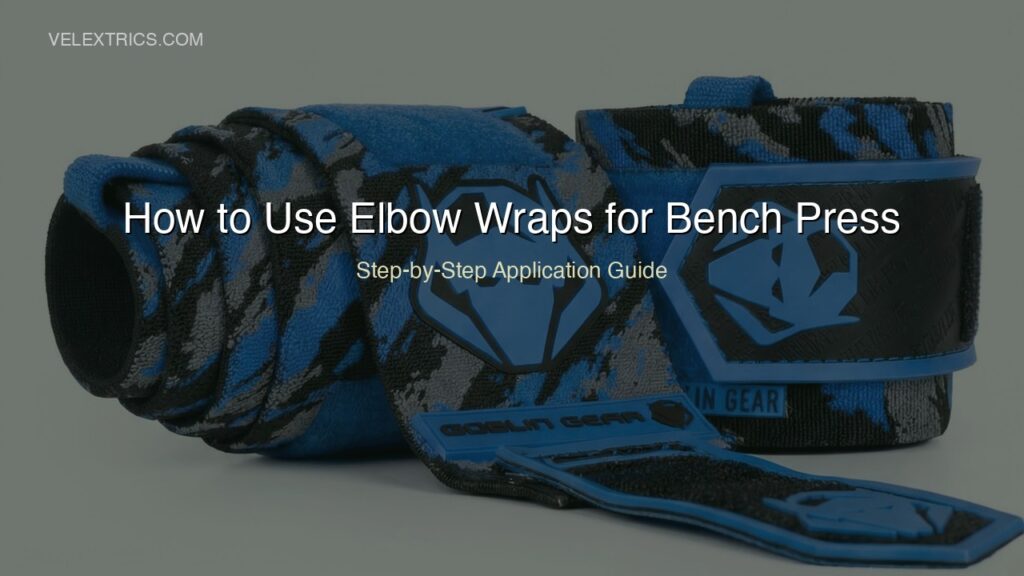
Using elbow wraps incorrectly is almost as common as not using them at all. Applied too loosely, they provide no real support. Applied too tightly, they restrict blood flow and create pressure points that make the problem worse. Knowing how to use elbow wraps for bench press correctly is what separates lifters who get genuine benefit from them and lifters who try them once and give up.
This guide covers the full process: when to wrap, how to apply them step by step, what tension level to use at different training stages, and the situations where you’re better off skipping them.
Disclosure: this article contains affiliate links. We may earn a commission if you buy through our links, at no extra cost to you.
Why Elbow Wraps Matter on Bench Press
The bench press loads the elbow joint in a way that overhead pressing doesn’t – the forearm is angled outward, the load travels through the bar into the wrist, and the elbow bears both the compressive load and the rotational stress of maintaining bar path. On light sets this is unremarkable. Under a near-maximum load, the joint accumulates stress with each rep.
Elbow wraps address this by providing external compression and stability. The elastic tension maintains the joint temperature between sets (when the joint cools faster than surrounding muscle tissue) and provides proprioceptive feedback that helps the lifter maintain consistent elbow position throughout the lift.
For heavy compound pressing, the right wraps at the right tension add actual elastic energy to the movement – stored compression on the way down that assists the drive off the chest. This is why wrapped bench press totals typically exceed raw totals by a meaningful margin at the competitive level.
→ Shop Goblin Gear Club Elbow Wraps
Step-by-Step: How to Apply Elbow Wraps for Bench Press
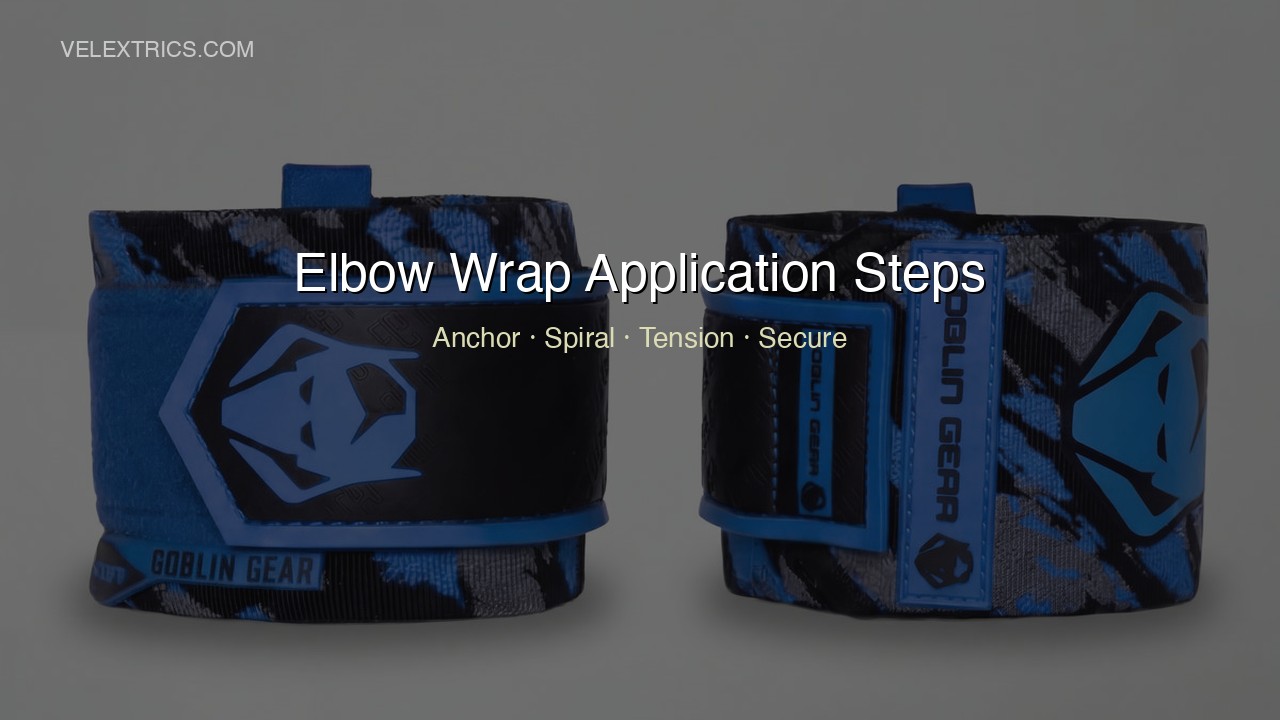
What You Need
- 42-inch elbow wraps (2x or 4x for heavy sets, 1x for volume work)
- Chalk-free hands (oil and chalk both reduce velcro grip)
- About 60-90 seconds per arm
Step 1: Position Your Arm
Extend your arm slightly – not fully locked out, but roughly 150 degrees. The wrap should be applied with the elbow joint in the same general position it’ll be in at the top of the bench press. Wrapping at full extension or full flexion shifts the compression position once you’re under the bar.
Step 2: Establish the Anchor
If your wraps use a traditional thumb loop, thread your thumb to hold the first inch of wrap in place. If they use a self-anchoring design like Goblin Gear’s, position the anchor point at the start of your wrap path – typically just below the elbow crease on the forearm side.
Get the first two inches of wrap pulled taut before you begin spiraling. A loose anchor means the wrap shifts during application and you lose the consistent overlap you need.
Step 3: Apply in Overlapping Spirals
Begin spiraling up from the anchor point with roughly 50% overlap on each pass. You’re creating layered compression across the entire elbow joint, not a tight ring at a single point. This is the most common mistake: wrapping too tightly in one band rather than distributing compression over the joint.
Move upward with each spiral, crossing the joint itself after 1-2 passes. The main compression should cover 2-3 inches above and below the joint center.
Step 4: Manage Tension
The amount of tension you pull into the wrap while applying it determines the final compression. For warm-up sets and volume work: apply with moderate hand tension, roughly 60-70% of what you could pull. For heavy sets: pull with full tension, wrapping firmly enough that the arm feels noticeably compressed but not restricted.
If you’re getting numbness or tingling in the hand within 30 seconds, you’ve over-tightened. Unwrap and reapply with less tension.
Step 5: Finish and Secure
End the wrap 2-3 inches above the elbow joint on the upper arm side. Secure the velcro with your elbow still in the working position. Test the wrap by flexing your arm to the bottom position of the bench press – you should feel firm compression at the deepest point without the wrap cutting into the crease.
If the wrap rolls or slides during this test, the anchor point wasn’t secure. Unwrap and start again from Step 1.
Tension Levels by Training Phase
Warm-up sets (40-60% max): No wraps, or 1x wraps applied loosely. Let the joint move freely and warm up naturally. Wrapping for warm-ups can create dependency and reduces proprioceptive feedback from the joint.
Volume work (65-80% max): 1x or 2x wraps at moderate tension. Enough compression to maintain joint warmth across a high-rep set, not enough to alter your movement pattern.
Heavy sets (85%+ max): 2x or 4x wraps at full tension. This is where wraps make the most difference – joint stability under high load and the elastic energy contribution become significant.
Max effort / competition attempts: 4x wraps, applied as tightly as you can manage consistently. Reapply fresh for each attempt.
Timing: When to Wrap Between Sets
Wraps should be removed between heavy sets and reapplied before each work set. Leaving wraps on during rest periods creates two problems:
- The elastic compression restricts blood flow to the elbow and forearm, slowing recovery between sets.
- Wrap tension shifts as you move around between sets, so the compression on your work set isn’t what you applied.
A 3-5 minute rest for a heavy set gives you about 2 minutes in wraps, 1 minute of unwrapping and then rewrapping before the next set. This rhythm becomes automatic.
Solo lifters should choose wraps with self-anchoring systems specifically because of this timing dynamic. You’ll be applying wraps multiple times per session without a training partner, and consistent application matters more across a session than for a single set.
Common Mistakes and How to Fix Them
Wrapping Too Far Up the Arm
Many lifters wrap too high – too much of the compression on the tricep rather than centered on the elbow joint. Pull the spiral back down so the main compression area is centered on the joint itself, not 3 inches above it.
Rolling During the Set
If the wrap rolls down during a set, the anchor wasn’t firm enough. The fix is establishing the anchor with the first pass pulled very taut before you begin spiraling – the first loop is what the rest of the wrap relies on.
Inconsistent Tension Between Arms
Your dominant hand typically applies wraps tighter than your non-dominant hand. This creates asymmetric support and can contribute to bar path drift. Practice applying both wraps to the same tension by testing both at the bottom position before your set.
Applying Wraps to a Cold Joint
Applying compression wraps before any warm-up can actually be counterproductive – you’re compressing a joint that hasn’t had circulation moved through it yet. Warm up the joint first with light pressing, then apply wraps for heavier sets.
When to Skip Elbow Wraps
Wraps are a tool, not a requirement. Skip them in these situations:
Early training sessions. New lifters benefit more from developing proprioception and joint stability through the full range of motion than from external support. Wraps can mask technique problems that compound into injuries.
Light technique work. Any session focused on movement quality rather than load. Let the joint give you feedback.
High-rep assistance work. Long sets of cable work, light dumbbell movements, or pump work don’t load the joint enough for wraps to be useful. They’ll just restrict blood flow through an extended set.
When you’re symptomatic. If your elbow is already painful, wraps over acute inflammation is not the fix. Address the underlying issue first.
Getting Started with Goblin Gear
If you’re entering the wrap market or upgrading from a pair that’s lost its elasticity, Goblin Gear’s 42″ lineup covers the practical range. The 2x version is the right starting point for most lifters – enough compression to matter, flexible enough not to require advanced technique to apply consistently.
Their current RETRO release brings back original designs at 30% off with code RETRO – a good window to pick up quality wraps at reduced cost if you’ve been looking to add them to your training.
→ Shop Goblin Gear Club Elbow Wraps Now
Frequently Asked Questions
How tight is too tight for elbow wraps on bench press?
Too tight means: hand numbness within 30 seconds of wrapping, visible color change in the forearm, or an inability to reach full depth on the bench press. If any of these happen, unwrap and reapply at lower tension.
Can I use elbow wraps for overhead press?
Yes. The same application method works for overhead press. The joint loading is different – less lateral stress, more compressive load – but the compression benefit is similar for heavy overhead work.
Do I need to break in new elbow wraps?
Yes. New wraps, especially 4x, are stiffer than they’ll be after 10-15 sessions. Your first few sessions with new wraps may feel very stiff at the bottom. This is normal and the wrap settles in with use.
How often should I replace my wraps?
Quality wraps like Goblin Gear’s should last 12-24 months of regular heavy training before the elastic noticeably softens. Replace earlier if velcro loses grip or you notice the wrap isn’t providing the same compression at the same application tension.